
Every year, millions of pregnant women turn to the internet to find out if a medication is safe. They search for answers about pain relievers, antidepressants, asthma inhalers, or even herbal supplements. But here’s the hard truth: online pregnancy medication advice is often wrong. A 2019 study of over 1,400 online posts found that only 57% matched the gold-standard medical guidelines. That means more than 4 in 10 pieces of advice you read could be misleading-or dangerous.
Why Online Advice Gets It So Wrong
Social media, forums, and even some health blogs are full of personal stories: “I took ibuprofen at 12 weeks and my baby was fine!” or “My cousin’s friend had a miscarriage after taking prenatal vitamins.” These anecdotes feel real, but they’re not science. They don’t account for other factors like underlying health conditions, genetics, or timing. And they’re often shared because they’re emotional, not accurate. The biggest problem? Most people don’t know how to spot the difference between real evidence and noise. A 2024 study showed that 76% of pregnant women can’t tell the difference between evidence-based advice and anecdotal claims. Even worse, women who think they’re good at evaluating information-rating themselves 7.8 out of 10-are often the ones who get it wrong. One Reddit thread with over a million members documented 87 cases where women stopped taking necessary antidepressants after reading misinformation. Twenty-nine of them ended up in emergency psychiatric care.The Gold Standard: Teratology Information Services (TIS)
The only system trusted by doctors and researchers is called Teratology Information Services (TIS). It doesn’t just say “safe” or “not safe.” It uses four clear categories:- Safe - Proven safe in multiple human studies
- Contraindicated - Known to cause harm; avoid completely
- On strict indication or second-line - Only use if benefits clearly outweigh risks
- Insufficient knowledge - Not enough human data to say for sure
Where to Find Real Information
Not all websites are created equal. Here are the only three sources you should trust:- MotherToBaby (operated by OTIS) - This nonprofit, backed by the CDC and FDA, offers free, evidence-based advice from specialists. Their website is updated quarterly, and they have a 24/7 hotline: 1-866-626-6847.
- LactMed - Run by the National Library of Medicine, this database gives detailed, peer-reviewed info on drugs in pregnancy and breastfeeding. It’s updated weekly and includes study data, dosages, and risks.
- ACOG Guidelines - The American College of Obstetricians and Gynecologists publishes clear, updated recommendations based on the latest clinical evidence. Their Practice Bulletins are the standard for U.S. obstetric care.

How to Check If a Source Is Legit
You don’t need to be a doctor to spot bad advice. Use this 5-step method-it takes less than 20 minutes.- Check the source - Is it from MotherToBaby, LactMed, ACOG, or a university hospital? If it’s a random blog, YouTube video, or Facebook post, skip it.
- Look for author credentials - Does the writer have an MD, PharmD, or PhD in obstetrics, pharmacology, or maternal-fetal medicine? Check their credentials on the American Board of Medical Specialties website.
- Find the citations - Real advice references specific studies: “A 2021 JAMA study of 95,000 pregnancies found…” Not “Studies show…” or “Experts believe…” Look for the journal name, year, and sample size. If there’s no DOI or link to the original paper, it’s not trustworthy.
- Check the date - Medical knowledge changes fast. Anything older than two years should be treated as outdated. The FDA updated its pregnancy labeling rules in 2015, replacing the old A, B, C, D, X categories with detailed summaries. If a site still uses those old letters, it’s not current.
- Cross-check with at least two other trusted sources - Don’t rely on one site. If MotherToBaby says it’s safe, check LactMed. If both agree, you’re probably good. If they disagree, talk to your provider.
What Experts Say About Common Myths
There are a few myths that keep coming back-and they’re putting lives at risk.- “Natural” means safe - Herbal supplements like ginger, turmeric, or black cohosh aren’t regulated. Only 0.3% of them are tested for safety in pregnancy. A 2024 study found 63% of women thought herbal products needed FDA approval. They don’t.
- “All medications cause birth defects” - This isn’t true. Most common medications-like acetaminophen (Tylenol), certain antibiotics, and asthma inhalers-are safe when used as directed. The real risks come from stopping needed meds. For example, untreated depression during pregnancy increases the risk of preterm birth and low birth weight more than antidepressants do.
- “If it’s on the internet, someone must have checked it” - The global pregnancy app market is worth $1.7 billion. Only 12% of those apps have been independently verified for accuracy. Most are designed to keep you scrolling, not to keep you safe.
What You Can Do Right Now
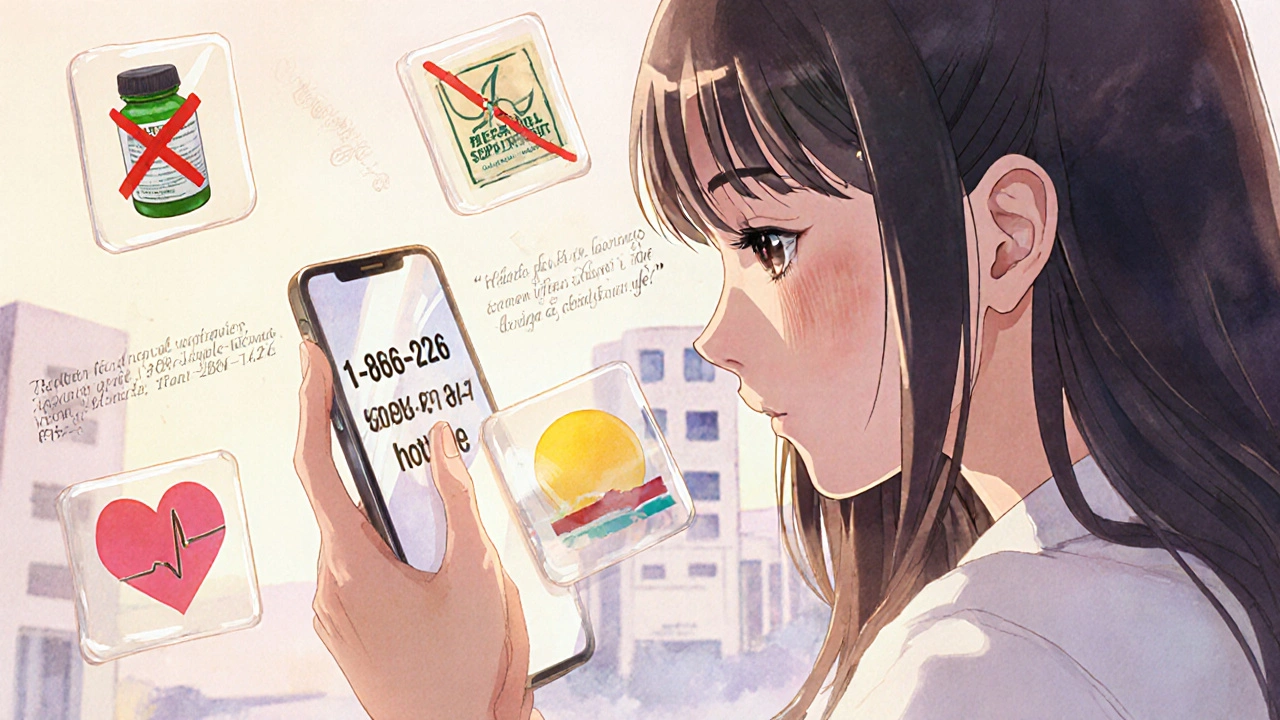
You don’t have to become a medical expert. But you do need to be a smart consumer. Here’s your action plan:- Bookmark MotherToBaby.org and LactMed.nlm.nih.gov
- Save the phone number: 1-866-626-6847
- Before taking any new medication-even a supplement-ask: “Where did this info come from?”
- Bring your online research to your next prenatal visit. Say: “I read this online. Can we check it together?”
- If you’re unsure, don’t guess. Call a specialist. These services are free.
The Future Is Changing-But Not Fast Enough
New tools are coming. In late 2024, the FDA launched a pilot AI tool that scans online claims and flags inaccurate pregnancy medication advice with 83% accuracy. In 2025, the NIH is funding browser extensions that automatically check medication info against OTIS databases. By 2026, the FDA’s new Digital Health Software Precertification Program could force app makers to prove their advice is accurate before selling it. But until then, the responsibility is on you. No algorithm will replace your critical thinking. No app will know your medical history better than you do. The most powerful tool you have is the ability to ask: “Where’s the proof?”Can I trust advice from my OB-GYN if I found it online?
Your OB-GYN should always verify online advice against current guidelines like ACOG or LactMed. But you should too. Don’t assume your provider has time to check every source you bring in. Bring the link, ask them to confirm it, and be ready to discuss alternatives if it’s not reliable.
What if I already took a medication I’m worried about?
Don’t panic. Most medications don’t cause harm, and even many that carry theoretical risks have very low actual risk. Call MotherToBaby at 1-866-626-6847. They specialize in exactly this-answering questions about exposures during pregnancy. They can tell you if the dose, timing, and medication pose any real concern.
Are all prescription medications dangerous during pregnancy?
No. Many are safe-or safer than the condition they treat. For example, untreated asthma can lead to low oxygen for the baby. Untreated depression increases the risk of preterm birth. Medications like albuterol, sertraline, and insulin have decades of safety data. The key is matching the right drug to the right need, not avoiding all drugs.
Why do some websites say a drug is unsafe when my doctor says it’s okay?
Often, those websites are using outdated info, animal studies, or misinterpreting risk. For example, a drug might be labeled “Category C” under the old FDA system, which just meant “not enough human data.” That doesn’t mean it’s dangerous. Modern guidelines look at actual human outcomes, not theoretical risks. Your doctor uses current, evidence-based sources-not old labels.
Is it safe to take over-the-counter meds like ibuprofen or cold pills?
Ibuprofen and other NSAIDs should be avoided after 20 weeks of pregnancy because they can affect fetal kidney development and reduce amniotic fluid. For headaches or pain, acetaminophen (Tylenol) is the preferred choice. Cold medications vary-many contain decongestants like pseudoephedrine, which aren’t recommended in the first trimester. Always check LactMed or MotherToBaby before taking anything, even if it’s sold as “natural” or “non-drowsy.”
Can I trust pregnancy apps that give medication advice?
Only if they’re from a trusted medical organization like ACOG, March of Dimes, or MotherToBaby. Most commercial apps are not reviewed for accuracy. In fact, only 12% of pregnancy apps undergo independent verification. If an app doesn’t cite its sources or link to LactMed or OTIS, treat its advice as unverified.






Austin Simko
November 27, 2025 AT 23:29This is all government brainwash. They want you scared so you’ll take their pills. Natural remedies work better anyway. I know a lady who cured her morning sickness with pickle juice and witch hazel.
Nicola Mari
November 29, 2025 AT 22:31It’s pathetic how easily people believe anything they read online. You don’t need a PhD to understand that if a drug isn’t FDA-approved for pregnancy, you shouldn’t take it. The fact that women are even asking this question is a sign of societal collapse.
Sam txf
November 30, 2025 AT 08:02Oh please. You think a .gov website is the holy grail? Ha. These ‘experts’ are paid by Big Pharma to push their toxic cocktails. I’ve seen the data. Lamotrigine? It’s a chemical lobotomy with a side of fetal damage. And don’t get me started on SSRIs-those are just antidepressants with a side of autism. Wake up, sheeple.
kaushik dutta
November 30, 2025 AT 23:37As someone from India where traditional medicine is deeply woven into prenatal care, I’ve seen both sides. Ayurvedic herbs like ashwagandha are used safely for centuries-but without regulation, risk skyrockets. The key is integration: use TIS as your anchor, but don’t dismiss cultural wisdom outright. Just verify it with peer-reviewed data. The real enemy isn’t the internet-it’s the lack of accessible, culturally competent medical guidance.
doug schlenker
December 2, 2025 AT 00:26I really appreciate this breakdown. My wife was terrified after reading some forum post saying Zoloft was ‘guaranteed’ to cause autism. We called MotherToBaby and they walked us through the actual risk numbers-like, 1 in 100 vs 1 in 50 in the general population. That context changed everything. Sometimes all people need is someone to translate the noise into real numbers.
Olivia Gracelynn Starsmith
December 2, 2025 AT 18:17Bookmark these sites. Save the number. Print this page. Don’t wait until you’re in panic mode. I’ve seen too many women stop meds because they read ‘risk’ and assumed ‘guaranteed harm.’ It’s not about being perfect-it’s about being informed. You don’t have to be a scientist. Just be a careful consumer.
Skye Hamilton
December 2, 2025 AT 18:29lol so now we’re supposed to trust .gov sites… funny how the same people who scream about ‘corporate lies’ suddenly want us to believe the FDA… i took ibuprofen at 16 weeks and my kid’s now 7 and plays violin… maybe the ‘danger’ is just fear marketing
Maria Romina Aguilar
December 3, 2025 AT 10:49...but what if... the studies... are wrong?... I mean... what if... the FDA... is just... repeating... what... they were told...?... and what if... the real danger... is... not taking... the meds...?... because... maybe... the... real... risk... is... being... too scared... to... even... try...?
Brandon Trevino
December 3, 2025 AT 13:04Statistical literacy is non-negotiable. The 57% accuracy rate cited is misleading without context: 43% error rate implies a 2.3x higher probability of harm than baseline risk. The real issue is cognitive bias-confirmation bias and availability heuristic dominate online discourse. Your anecdote is not data. Your fear is not evidence. Your Google search is not a systematic review. Until you understand Bayesian reasoning, you have no business making pharmacological decisions during pregnancy.
Denise Wiley
December 5, 2025 AT 03:52I just want to say-this post saved my life. I was about to quit my antidepressants because a Reddit post said they’d ‘turn my baby into a zombie.’ I called MotherToBaby and they said the risk of untreated depression was 3x higher than the medication risk. I cried. I’m so glad I didn’t listen to the internet. Thank you for this.
Hannah Magera
December 6, 2025 AT 13:57So if I’m pregnant and I have a headache, should I just take Tylenol? What if I’m not sure? Should I call the hotline even if it’s just a little pain? I don’t want to be a burden.
George Hook
December 7, 2025 AT 07:00Let me take a moment to reflect on this. The internet is a mirror. It reflects our deepest fears, our lack of access to care, our isolation, and our desperation for certainty in a world that offers none. We crave simple answers: safe or not safe. But pregnancy isn’t binary. Medications aren’t villains or heroes. They’re tools. And like any tool, their value depends on context, timing, dosage, and human judgment. The real tragedy isn’t misinformation-it’s that so many of us are forced to navigate this alone, with no provider, no insurance, no time, no support. If we want better outcomes, we need better systems-not just better websites.