
Serotonin Syndrome Medication Checker
Check Your Medications for Serotonin Syndrome Risk
This tool checks for dangerous combinations of medications that may cause serotonin syndrome. Remember, about 80% of cases occur when people combine two or more serotonergic drugs.
Select medications and click "Check Risk" to see your potential risk of serotonin syndrome.
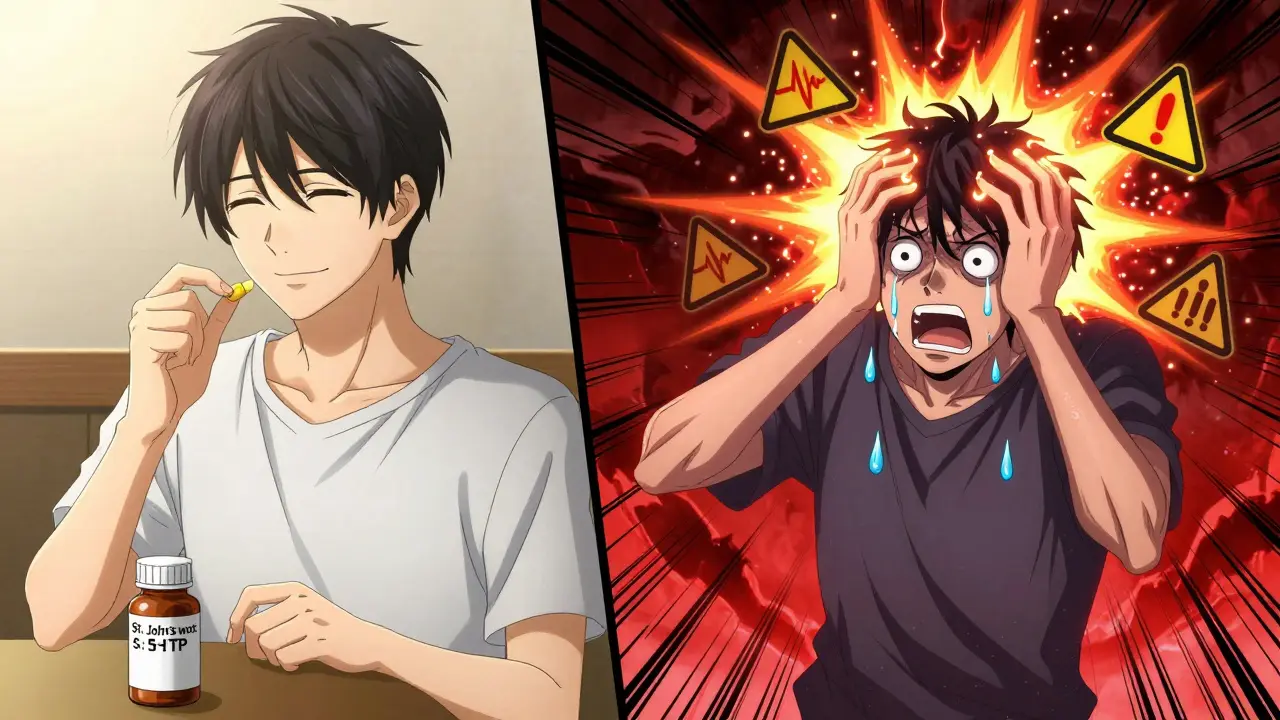
Every year, thousands of people end up in the emergency room because of a reaction they never saw coming. It’s not an allergy. It’s not a flu. It’s something called serotonin syndrome-a dangerous buildup of serotonin in the body that can turn mild jitteriness into a life-threatening emergency in just hours. If you or someone you know is taking antidepressants, migraine meds, painkillers, or even herbal supplements like St. John’s wort, this is something you need to know.
What Exactly Is Serotonin Syndrome?
Serotonin is a natural chemical in your brain that helps regulate mood, sleep, and digestion. But when too much of it builds up-usually because of how medications interact-it overstimulates nerve cells. This leads to a cascade of physical and mental symptoms that can escalate fast.
The condition was first noticed in the 1960s when patients on certain antidepressants took tryptophan supplements and suddenly developed fever, shaking, and confusion. Today, it’s far more common. About 80% of cases happen when people combine two or more serotonergic drugs. The risk spikes within 24 hours of starting a new medication or increasing a dose. And here’s the scary part: mild cases are probably happening to 10-15% of people starting SSRIs, but most go unnoticed because doctors and patients dismiss early signs as "normal side effects."
How Do You Know If It’s Serotonin Syndrome?
There’s no single blood test for serotonin syndrome. Doctors rely on symptoms and a clear history of drug use. The most reliable diagnostic tool is the Hunter Serotonin Toxicity Criteria, which looks for specific combinations of signs:
- Spontaneous clonus (involuntary muscle contractions, especially in the legs)
- Inducible clonus (when you move your ankle and your foot twitches uncontrollably) plus agitation or sweating
- Ocular clonus (eyes darting side to side) plus agitation or sweating
- Tremor plus overactive reflexes
- Stiff muscles plus fever above 38°C (100.4°F) plus clonus in the eyes or legs
These aren’t vague feelings. These are observable, measurable signs. The most common early symptom? A shaking or jittery feeling-like you’ve had too much coffee. It’s often mistaken for anxiety. But if you’re also sweating heavily without exertion, your heart is racing, or you’re feeling unusually agitated or confused, it’s not just stress. It could be serotonin syndrome.
Autonomic symptoms include:
- Heart rate over 100 beats per minute
- Blood pressure swings (up or down more than 25 mmHg)
- Fever above 38°C (100.4°F), sometimes over 41°C (106°F)
- Heavy sweating (diaphoresis)
- Diarrhea (happens in about 70% of cases)
Neuromuscular signs include:
- Tremors
- Muscle spasms (myoclonus)
- Overactive reflexes (hyperreflexia)
- Stiff muscles
- Loss of coordination
Mental changes can range from restlessness and confusion to hallucinations and delirium. In severe cases, people slip into a coma or develop seizures.
What Medications Cause It?
Serotonin syndrome doesn’t happen from one drug alone-it’s almost always caused by combinations. Here are the most common culprits:
- SSRIs: Prozac (fluoxetine), Zoloft (sertraline), Celexa (citalopram), Lexapro (escitalopram)
- SNRIs: Effexor (venlafaxine), Cymbalta (duloxetine)
- MAOIs: Nardil (phenelzine), Parnate (tranylcypromine)-these are especially dangerous when mixed with anything else
- Triptans: Imitrex (sumatriptan) for migraines
- Opioids: Tramadol, fentanyl, meperidine (Demerol)
- Illicit drugs: MDMA (ecstasy), cocaine, LSD
- Supplements: St. John’s wort, tryptophan, 5-HTP
- Other: Linezolid (an antibiotic), dextromethorphan (in cough syrup), certain anti-nausea drugs
The deadliest mix? An MAOI with an SSRI or SNRI. Even if you stopped the MAOI weeks ago, if you took fluoxetine (Prozac), you still need to wait five weeks before starting another serotonergic drug because it lingers in your system so long. Most people don’t know this.

What Happens in an Emergency?
If you suspect serotonin syndrome, stop all serotonergic drugs immediately. That’s step one-no exceptions. Then get to the ER. Time matters. Studies show that if diagnosis is delayed beyond six hours, the risk of death triples.
Emergency response depends on severity:
Mild Cases
These often resolve on their own within 24-72 hours after stopping the offending drugs. But they still need monitoring. Doctors will give benzodiazepines like lorazepam (Ativan) to calm agitation, reduce muscle spasms, and lower body temperature. No other drugs are needed unless symptoms worsen.
Moderate to Severe Cases
These require hospitalization. Here’s what happens:
- Cooling: If body temperature exceeds 41.1°C (106°F), aggressive cooling is started-ice packs, cooling blankets, even cold IV fluids. Heatstroke-level fever can cause organ failure.
- IV fluids: To prevent dehydration from sweating and diarrhea.
- Cyproheptadine (Periactin): This is the only antidote. It blocks serotonin receptors. The dose is 12 mg orally or via feeding tube, then 2 mg every two hours as needed. Maximum is 32 mg in 24 hours. It works fast-often within an hour.
- Dantrolene: Used if fever doesn’t respond to cooling. It relaxes muscles and reduces heat production.
- Intubation: If breathing is shallow or labored, a ventilator is used.
About 30% of hospitalized patients end up in the ICU. Without treatment, severe cases can lead to kidney failure, blood clots, or death. Mortality rates range from 2% to 12%.
Why Do Doctors Miss It?
Because its symptoms look like other things:
- Neuroleptic malignant syndrome (NMS): Often confused with serotonin syndrome, but NMS has "lead-pipe" rigidity (stiffness without tremors or clonus) and usually follows antipsychotic use.
- Anticholinergic toxicity: Causes dry skin, flushed face, and confusion-but no sweating or clonus.
- Malignant hyperthermia: A rare genetic reaction to anesthesia, not medications.
One study found that 68% of patients with serotonin syndrome were misdiagnosed at first. A Reddit thread from 2022 described a woman on sertraline and tramadol who was told she had a "viral illness." Twelve hours later, her fever hit 40.5°C. She nearly died.
Doctors are trained to look for infections, anxiety, or drug withdrawal. They’re not always trained to ask: "What else are you taking?" That’s why patient awareness matters.
How to Prevent It
You can’t control every prescription-but you can control what you tell your doctor.
- Always list every medication, supplement, and OTC product you take-including cough syrup, sleep aids, and herbal remedies.
- Ask: "Could this interact with what I’m already taking?" Don’t assume your doctor knows.
- If you’re switching from an MAOI to an SSRI, wait 14 days. If you were on fluoxetine, wait five weeks.
- Watch for early signs: tremors, sweating, restlessness. Don’t brush them off.
- Use pill organizers with color-coded labels for serotonergic drugs. Many pharmacies now offer interaction alerts-ask for them.
Electronic systems that flag drug interactions have cut serotonin syndrome cases by 22%, but they’re not perfect. They generate false alarms 43% of the time, so doctors sometimes ignore them. That’s why your voice matters.
What Patients Are Saying
One person on Drugs.com wrote: "My doctor said the tremors were normal when I started Prozac. Two weeks later, I took tramadol for back pain. I ended up in the ICU with a 104°F fever. No one asked me about the painkiller."
Another said: "The ER doctor knew right away when I said I was on Zoloft and took sumatriptan for my migraine. He gave me cyproheptadine and saved my life. I didn’t even know these could interact."
The difference? One person didn’t know to speak up. The other did.
What’s Next?
As antidepressant use rises-nearly 1 in 5 Americans now take one-the number of serotonin syndrome cases is climbing. New drugs are being developed, including experimental inhibitors that target serotonin production at the source. But for now, the best defense is awareness.
If you’re on any of these medications, keep a list. Share it with every new provider. Learn the early signs. And if something feels "off"-especially after a new drug or dose change-trust your gut. Serotonin syndrome doesn’t wait. Neither should you.
Can serotonin syndrome happen with just one medication?
Rarely. Over 80% of cases involve two or more serotonergic drugs. However, very high doses of a single drug-like taking way too many SSRIs or using illicit substances like MDMA-can trigger it alone. But the most common scenario is mixing medications that are both safe on their own.
How long does serotonin syndrome last?
Mild cases usually clear up in 24 to 72 hours after stopping the drugs. Moderate to severe cases may take days to weeks, especially if complications like organ damage occur. Some medications, like fluoxetine, stay in the system for weeks, so symptoms can linger longer even after stopping.
Is serotonin syndrome the same as an allergic reaction?
No. Allergic reactions involve the immune system and often cause hives, swelling, or breathing trouble. Serotonin syndrome is a toxic reaction caused by too much serotonin in the nervous system. It doesn’t involve the immune system at all. You can’t be "allergic" to serotonin.
Can I take St. John’s wort with my antidepressant?
Absolutely not. St. John’s wort increases serotonin levels and can cause serotonin syndrome when combined with SSRIs, SNRIs, or MAOIs. It’s not a "natural" alternative-it’s a dangerous interaction. Many people don’t realize herbal supplements can be as risky as prescription drugs.
What should I do if I think I have serotonin syndrome?
Stop taking all serotonergic medications immediately. Call 911 or go to the nearest ER. Tell them you suspect serotonin syndrome and list every drug, supplement, and substance you’ve taken in the last week. Don’t wait to see if it gets better. Early treatment saves lives.







tynece roberts
March 13, 2026 AT 20:12Stephanie Paluch
March 15, 2026 AT 11:00Hugh Breen
March 16, 2026 AT 20:43Rosemary Chude-Sokei
March 17, 2026 AT 21:00Aaron Leib
March 19, 2026 AT 17:41Lorna Brown
March 20, 2026 AT 13:49Rex Regum
March 21, 2026 AT 19:39Kandace Bennett
March 23, 2026 AT 09:40Byron Boror
March 23, 2026 AT 12:32