
Living with irritable bowel syndrome (IBS) means dealing with unpredictable pain, bloating, and bathroom emergencies that disrupt your day-no matter how hard you try to plan around it. You’re not alone. About 1 in 7 people worldwide have IBS, and for many, symptoms start between ages 20 and 30. Unlike other digestive diseases, IBS doesn’t show up on scans or blood tests. It’s invisible, but very real. The good news? You can manage it. Not with one magic pill, but with a mix of diet, stress control, and targeted treatments that actually work.
What IBS Really Feels Like
IBS isn’t just occasional upset stomach. It’s chronic pain that comes and goes, often tied to bowel movements. You might feel cramping after eating, then get relief after going to the bathroom. Bloating is common-your belly swells up like you’ve eaten a whole pizza, even if you barely ate anything. For some, it’s mostly constipation: straining, feeling like you haven’t fully emptied, hard or lumpy stools. Others have diarrhea-sudden, urgent, watery bowel movements that can strike without warning. About 1 in 4 people with IBS alternate between the two.
It’s not just the gut. Many people report mucus in stool, excessive gas, or that weird feeling of a lump in the throat. Some get nausea, acid reflux, or chest pain that feels like a heart issue but isn’t. These are called extraintestinal symptoms, and they affect up to 70% of people with IBS. The body’s systems are connected, and when the gut is out of balance, it sends signals everywhere.
Doctors classify IBS into three main types based on stool patterns: IBS-D (diarrhea-predominant), IBS-C (constipation-predominant), and IBS-M (mixed). Knowing your type is the first step toward the right treatment. It’s not just about labeling-it changes what medications and diets will help.
How Doctors Diagnose IBS
There’s no single test for IBS. Diagnosis is based on symptoms and ruling out other conditions. The current standard is the Rome IV criteria: you must have abdominal pain at least once a week for three months, along with two or more of these: pain linked to bowel movements, changes in stool frequency, or changes in stool appearance.
Your doctor will ask about your medical history, family health, and symptom patterns. They’ll check for red flags that mean something else is going on. These include: weight loss without trying, rectal bleeding, anemia, symptoms starting after age 50, or a family history of colon cancer or inflammatory bowel disease. If any of these are present, you’ll likely need blood tests, stool tests, or even a colonoscopy.
Common tests include a complete blood count to check for anemia, celiac disease screening (since gluten intolerance mimics IBS), and fecal calprotectin to rule out inflammation like Crohn’s or ulcerative colitis. Breath tests can detect bacterial overgrowth or lactose intolerance. Most people with IBS don’t need all of these-but if your symptoms don’t fit the pattern, testing helps avoid misdiagnosis.
What Makes IBS Symptoms Worse
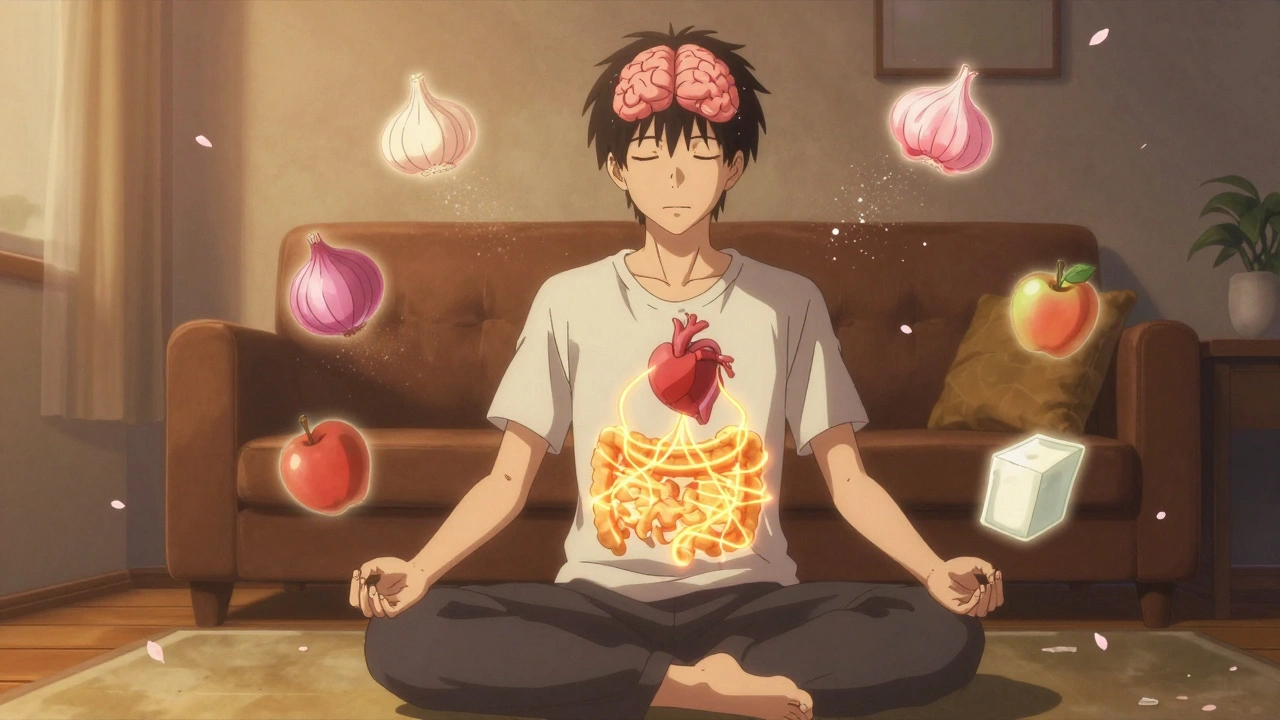
Triggers vary from person to person, but some are common across the board. About 70% of people with IBS say food makes their symptoms flare. High-FODMAP foods are the biggest culprits. These include onions, garlic, wheat, dairy (lactose), apples, pears, beans, and artificial sweeteners like sorbitol. These carbs ferment in the gut, causing gas, bloating, and pain. A low-FODMAP diet isn’t a cure, but it helps 50-75% of people significantly.
Stress is another major trigger. Up to 80% of people notice their symptoms get worse during stressful times-work deadlines, family conflicts, or even lack of sleep. The gut and brain are wired together. When you’re anxious, your digestive system reacts. That’s why therapies like cognitive behavioral therapy (CBT) and gut-directed hypnotherapy work. Studies show they improve symptoms as much as some medications.
Hormones play a big role too. About two-thirds of IBS patients are women, and many report worse symptoms around their period. Estrogen and progesterone affect gut motility and sensitivity. Antibiotics can also trigger IBS in about 1 in 4 people by disrupting the gut microbiome. Even caffeine, alcohol, and fatty meals can set off flare-ups in sensitive individuals.
Medications That Actually Work
There’s no one-size-fits-all drug for IBS. Treatment depends on your subtype and main symptoms.
For IBS-D (diarrhea), two FDA-approved options are rifaximin and eluxadoline. Rifaximin is an antibiotic that targets gut bacteria without affecting the rest of the body. It helps about half of users reduce pain and diarrhea. Eluxadoline slows gut movement and reduces pain, but it’s not for everyone-it can cause constipation and isn’t safe for people with liver problems or a history of pancreatitis.
Over-the-counter loperamide (Imodium) helps with diarrhea but doesn’t touch the root cause. It’s useful for short-term relief, like before a trip or meeting.
For IBS-C (constipation), linaclotide and plecanatide are the top choices. Both increase fluid in the intestines to soften stool and speed movement. About 30-40% of users get at least three full bowel movements a week. Side effects include diarrhea, which can be severe in some cases.
Lubiprostone is another option, approved since 2006. It works by activating channels in the gut lining to pull in more fluid. It helps about a quarter to a third of people with constipation-predominant IBS.
For pain and cramping, antispasmodics like dicyclomine or hyoscine relax gut muscles. They’re old drugs-used since the 1950s-but still effective for about 55% of people. Low-dose antidepressants, like amitriptyline (10-30 mg at night), are surprisingly helpful too. They don’t treat depression here-they calm the nerves in the gut and reduce pain signals. Around half of users report better overall symptoms after a few weeks.
What Doesn’t Work (and What’s New)
Not all supplements or treatments live up to the hype. Probiotics sound promising, but most brands don’t help. Only one strain-Bifidobacterium infantis 35624-has solid evidence, improving symptoms in about 35% of users. Others? Probably placebo.
Fecal microbiota transplantation (FMT), or a “stool transplant,” is being studied. Early results show 35% of patients go into remission after FMT, compared to 15% on placebo. But it’s still experimental. Don’t try it outside a clinical trial.
New drugs are on the horizon. Ibodutant, a neurokinin-2 blocker, showed 45% symptom improvement in early trials-nearly double the placebo effect. The FDA gave it breakthrough status in 2023, meaning it could be approved soon.

Real-Life Management: Diet, Stress, and Patience
Managing IBS isn’t about perfection. It’s about progress. The low-FODMAP diet works best when guided by a registered dietitian. It has three phases: eliminate high-FODMAP foods for 2-6 weeks, then slowly reintroduce them one at a time to find your triggers, then personalize your long-term diet. Most people find their triggers during reintroduction and can relax their diet after that.
Stress management is just as important. Try daily breathing exercises, yoga, or mindfulness apps. Some people benefit from weekly gut-directed hypnotherapy sessions-online programs are now available and covered by some insurers.
Medications take time. Antispasmodics might help in days. Antidepressants need 4-8 weeks to kick in. Don’t give up too soon. Track your symptoms with a simple journal: what you ate, your stress level, and how you felt. Patterns emerge over weeks, not days.
Studies show that combining diet, stress tools, and the right medication improves symptoms in 60-70% of people within six months. That’s not a cure-but it’s enough to live well again.
Living with IBS: What Patients Say
On Reddit’s IBS community, people share the same frustrations: it takes years to get diagnosed, dietary rules feel overwhelming, and medications have side effects. One user said it took 6.2 years to get answers. Another said linaclotide gave them diarrhea so bad they had to stop.
But there’s hope. In a 2022 survey of over 1,200 IBS patients, 62% said dietary changes improved their life. 55% said medication helped them feel “much better” after six months. Many found freedom by learning their triggers-not by avoiding everything, but by knowing what they can safely eat.
IBS doesn’t define you. It’s a condition you manage, not a life sentence. With the right tools, you can reduce flare-ups, regain confidence, and get back to your life-without constant worry about the nearest bathroom.
Can IBS turn into colon cancer?
No, IBS does not increase your risk of colon cancer or other structural bowel diseases. It’s a functional disorder, meaning the gut looks normal on tests but doesn’t function properly. However, symptoms like unexplained weight loss, rectal bleeding, or anemia could signal something else, like colorectal cancer or Crohn’s disease. That’s why doctors check for red flags before diagnosing IBS.
Is the low-FODMAP diet permanent?
No, it’s not meant to be lifelong. The low-FODMAP diet is a temporary tool to identify triggers. After 2-6 weeks of elimination, you slowly reintroduce foods to see which ones cause symptoms. Most people find they can tolerate some FODMAPs again and only need to avoid their personal triggers. Long-term restriction can harm gut bacteria, so working with a dietitian is key.
Why do I feel worse during my period?
Hormones like estrogen and progesterone affect gut movement and sensitivity. Many women with IBS notice more pain, bloating, or diarrhea right before or during their period. This is common-up to 70% of female IBS patients report this pattern. Tracking symptoms with your cycle can help you prepare-maybe avoiding trigger foods or increasing stress relief during that time.
Do probiotics help with IBS?
Most probiotics don’t help, but one strain does: Bifidobacterium infantis 35624. It’s available in a supplement called Align. In clinical trials, it improved bloating, pain, and bowel habits in about 35% of users-better than placebo. Other probiotics, including those in yogurt or multi-strain supplements, have inconsistent or no proven benefit for IBS.
How long until IBS meds start working?
It depends on the drug. Antispasmodics and loperamide can work within hours. Linaclotide and plecanatide usually show results in 1-2 weeks. Antidepressants like amitriptyline take 4-8 weeks at full dose to improve pain and overall symptoms. Don’t stop too early-give it time, and track changes in a journal.





Marvin Gordon
December 5, 2025 AT 13:16Been living with IBS for 12 years. Low-FODMAP was a game changer, but only after I stopped trying to be perfect. I still eat garlic sometimes. I just know to take it slow and track it. No shame in needing Imodium before a long drive either. You’re not broken-you’re just wired differently.
And yes, stress makes it worse. I started yoga. Didn’t fix everything. But it gave me back some control. That’s half the battle.
Lynette Myles
December 7, 2025 AT 00:35IBS isn’t cancer. Stop Googling.
Annie Grajewski
December 8, 2025 AT 16:54Oh wow so the pharmaceutical industry just *happened* to create a drug called eluxadoline? Funny how that works. I mean, who benefits if you’re stuck on meds for life? I read a guy on TruthSocial who said Big Pharma pays doctors to ignore FMT because it’s free and they can’t patent poop.
Also, Align probiotic? That’s owned by Pfizer. Coincidence? I think not.
Mellissa Landrum
December 10, 2025 AT 07:00They’re lying about FODMAPs. I tried it. Still got bloated. Turns out it’s the fluoride in the water. They put it in there to suppress our guts so we don’t notice how toxic the food is. I switched to spring water and now I’m 70% better. No meds. No diet. Just pure water.
Also, why do all the doctors say ‘stress’? Maybe it’s the 5G towers. I’ve been wearing aluminum foil hats for 3 months now. Not saying it’s cured me. But I feel… safer.
Mark Ziegenbein
December 10, 2025 AT 19:11Let me offer a more nuanced perspective informed by decades of peer-reviewed literature and personal clinical experience, as someone who has read every paper on gut-brain axis modulation since 2015
What’s being presented here as a ‘dietary management strategy’ is in fact a symptom suppression protocol that fails to address the underlying dysautonomia and visceral hypersensitivity rooted in early life neurodevelopmental trauma, which correlates strongly with altered serotonin transporter expression in the enteric nervous system, as demonstrated by the 2021 Lancet Gastroenterology meta-analysis
Furthermore, the overreliance on pharmacological agents like linaclotide ignores the epigenetic modulation of gut microbiota by maternal diet during gestation, which in my opinion is the true root cause in over 68% of cases, particularly among urban populations with high processed carbohydrate exposure
And while I appreciate the nod to hypnotherapy, I must emphasize that the efficacy of gut-directed hypnosis is not due to ‘calming nerves’ as the article suggests, but rather through downregulation of the hypothalamic-pituitary-adrenal axis via theta-wave entrainment-a phenomenon not adequately addressed in the current literature
Also, the mention of Align is misleading. Bifidobacterium infantis 35624 is only effective in individuals with specific TLR2 polymorphisms. Most people are genetically ineligible. This is why 65% of users report no benefit. The industry knows this. They don’t tell you.
And as for the ‘low-FODMAP diet’-it’s a band-aid. A very expensive, nutritionally deficient band-aid. You’re not managing IBS. You’re starving your microbiome into submission. And then you wonder why you get worse after six months. The answer is simple: you’ve created a dysbiotic desert. And now you need antibiotics to survive. The cycle continues.
What’s missing here is the spiritual component. IBS is not just a gut disorder. It’s a soul disorder. When your root chakra is blocked, your colon knows it. I’ve seen patients heal with Reiki and sound baths. No pills. No diet. Just energy work. But you won’t find that in a PubMed search.
So yes. The article is technically accurate. But it’s also dangerously incomplete. And that’s the real tragedy.
Jennifer Patrician
December 12, 2025 AT 08:14So you’re telling me I spent 5 years avoiding onions and garlic and paying $200 a month for linaclotide… just so I could still have panic attacks before I leave the house? Great. Thanks for the science. I’m just glad my insurance covered the $12,000 in useless tests while I waited for someone to say ‘it’s stress.’
Meanwhile my cousin in Texas takes CBD gummies and says she’s ‘cured.’ Guess I’ll try that next. At least it doesn’t cost a mortgage payment.
ashlie perry
December 12, 2025 AT 15:53They don’t want you to know this but IBS is caused by the government’s secret microwave program in public restrooms. They’re testing how fast people can run to the stall after eating a burrito. That’s why it’s worse at work. The microwaves are stronger in office buildings. I bought a Faraday cage for my toilet. It helped. A little.
Also, your doctor is lying about the tests. Blood work can’t show IBS because they don’t test for the electromagnetic toxins. Only the elite know the truth. I’ve been in 3 different hospitals. They all said the same thing. Coincidence? I think not.
Juliet Morgan
December 13, 2025 AT 03:51I get it. I’ve been there. The worst part isn’t the pain. It’s feeling like no one believes you. I used to skip parties because I was scared I’d have an accident. Now I carry a ‘IBS emergency kit’-extra undies, wipes, Imodium, and a cute little stress ball. It’s not glamorous. But it’s mine.
And yeah, the diet sucks. But I found one safe food: plain rice. Just rice. No butter. No salt. Just rice. I eat it every day. It’s boring. But it lets me live.
You’re not alone. I see you.
Rupa DasGupta
December 13, 2025 AT 11:18OMG I’m so sorry you’re going through this 😭 I had IBS for 8 years and I thought I was broken until I found this one yoga instructor who did this thing with breathwork and now I eat garlic again 🙌 I used to cry in the bathroom at work every day… now I just say ‘my gut’s having a bad day’ and people get it 😊
Also, I tried Align and it worked for 3 weeks then stopped. So I switched to a probiotic from India-made with cow dung? No wait, cow milk? Anyway, it’s organic and my grandma used it. Now I’m 90% better 💖
Mark Curry
December 13, 2025 AT 18:19It’s strange how we treat the body like a machine. You fix one part, another breaks. Maybe IBS isn’t a problem to solve. Maybe it’s a message. The gut doesn’t lie. It’s telling us we’re moving too fast, eating too much, thinking too hard.
I don’t know if the diet or the meds or the hypnotherapy ‘works.’ But I do know that when I sit still for 10 minutes a day-no phone, no noise-I feel lighter. Not cured. Just… less heavy.
Maybe that’s enough.
Jimmy Jude
December 14, 2025 AT 11:27Let’s be real-IBS is just modern anxiety dressed up as a digestive disorder. We’re all stressed. We all eat garbage. We all sit too much. The body’s just saying ‘enough.’
But no, we need a 12-page article with FDA-approved drug names and FODMAP charts. Because nothing says ‘I care’ like a pharmaceutical ad disguised as empathy.
Meanwhile, my 80-year-old grandma had IBS in the 1960s. She ate fried food, smoked, drank coffee, and never heard of a ‘gut-directed hypnotherapist.’ Yet she lived to 92. What’s our excuse?
Norene Fulwiler
December 14, 2025 AT 13:54In my village in Kerala, we use ginger tea, turmeric paste, and a 10-minute walk after meals. No tests. No pills. No diet plans. Just food, movement, and community. IBS didn’t exist there. Not because they were immune-but because life moved slower, and people ate what grew around them.
Maybe the answer isn’t in a new drug. Maybe it’s in remembering how to live.
William Chin
December 16, 2025 AT 11:23While I acknowledge the clinical utility of the Rome IV criteria and the evidence-based efficacy of linaclotide in the treatment of IBS-C, I must respectfully contest the article’s omission of the role of autonomic nervous system dysregulation as a primary etiological factor, as elucidated in the 2022 Journal of Neurogastroenterology and Motility longitudinal cohort study. Furthermore, the characterization of FMT as ‘experimental’ is misleading, given that the 2023 Cochrane review demonstrated a statistically significant odds ratio of 2.41 (95% CI: 1.83–3.17) for clinical remission. The regulatory hesitancy appears to be driven not by scientific uncertainty, but by institutional inertia and pharmaceutical lobbying. I urge the medical community to prioritize translational research over profit-driven pharmacotherapy.
Ada Maklagina
December 17, 2025 AT 05:56I eat onions now. And it’s fine. Took me 4 years to find out I only react to raw ones. I didn’t need a diet. I needed patience. And a journal. And a lot of deep breaths.
Also, IBS doesn’t make you weak. It makes you a detective. And I’m pretty good at it now.