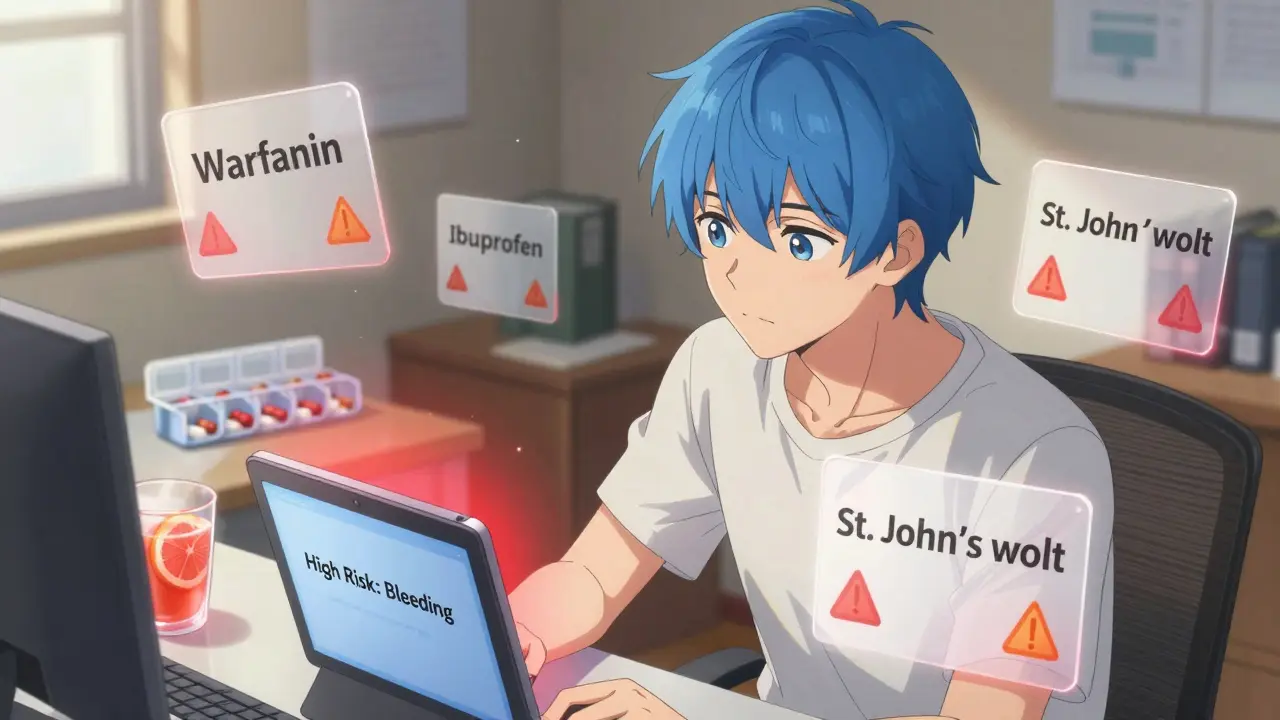
Every year, over 1.5 million adverse drug events are prevented in U.S. hospitals thanks to drug interaction checkers. But if you’re taking more than one medication - and nearly half of Americans do - you need to know how to use these tools properly. A simple mistake like mixing ibuprofen with warfarin could lead to dangerous bleeding. A wrong combo of statins and grapefruit juice might wreck your liver. These aren’t hypotheticals. They’re real, preventable risks.
What Exactly Is a Drug Interaction Checker?
A drug interaction checker is a tool that scans your list of medications, supplements, and sometimes even foods to find dangerous combinations. It doesn’t just say “this might be bad.” It tells you why and how serious it is. Some tools flag interactions as red (avoid completely), orange (monitor closely), yellow (note but no action needed), or green (no known issue). These aren’t magic. They work by matching active ingredients against a database of known pharmacological reactions. For example, if you enter “simvastatin” and “clarithromycin,” the system pulls up data showing that this combo can spike statin levels in your blood, raising your risk of muscle damage. The best systems also account for dosage, route (oral vs. topical), and even your age or kidney function.Step 1: List Every Medication You Take
Start with your prescription list. Don’t forget the ones you take “only when needed.” That includes painkillers, sleep aids, antacids, or even your seasonal allergy pill. Then add over-the-counter drugs. Many people don’t realize that Aleve (naproxen), Sudafed (pseudoephedrine), or even melatonin can interact. Supplements? Yes, those too. St. John’s Wort can knock out the effect of birth control, blood thinners, and antidepressants. Calcium and iron can block absorption of thyroid meds. Garlic pills can thin your blood. If you take anything daily - even a vitamin D tablet - include it.Step 2: Choose the Right Tool
Not all checkers are made equal. If you’re a patient, start with a consumer app. Medisafe is one of the most user-friendly. It lets you build a digital Med Cabinet, then tap a button to scan for interactions. Since its launch, it’s flagged nearly 100,000 risky combos for users. It’s free, works on iOS and Android, and even sends reminders. If you’re a healthcare worker, you’ll likely use hospital systems like Micromedex or Lexi-Interact. These are integrated into EHRs like Epic or Cerner. They’re more accurate but harder to use without training. A 2016 NIH study found Lexi-Interact and Micromedex were the most accurate among 5 major systems, catching over 90% of dangerous interactions. For quick checks, DrugBank offers a web-based version. Just type in drug names - it recognizes both brand and generic names. But if you’re using it for research or coding, its API lets developers build custom tools. It’s the backbone for many pharmacy apps.Step 3: Enter Your Medications Correctly
This is where most people mess up. Don’t just type “aspirin.” Type “81 mg aspirin” or “baby aspirin.” Why? Because 325 mg aspirin and 81 mg aspirin have different interaction profiles. One is for pain, the other for heart protection. If the tool asks you to pick from a dropdown, don’t skip this. Selecting “oral” instead of “topical” matters. A topical steroid cream won’t interact the same way as an oral one. Some systems, like DrugBank, even require product concept IDs for precision - especially if you’re on multiple forms of the same drug. Pro tip: If the tool doesn’t recognize your drug, try the generic name. “Lipitor” might not show up, but “atorvastatin” will.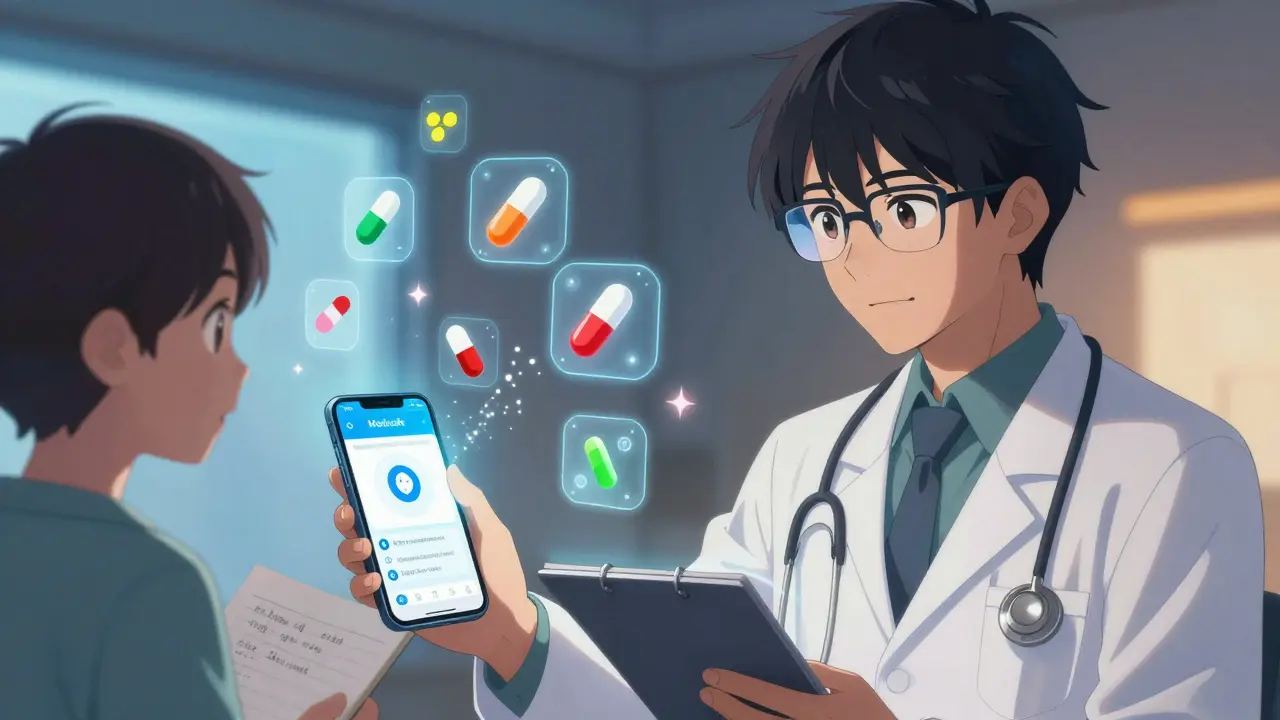
Step 4: Review the Results - Don’t Just Look at Red Flags
Most tools color-code results. Red means stop the combo. Orange means talk to your doctor about monitoring. Yellow means it’s low risk - but still worth noting. Green means no known issue. But here’s the catch: not all warnings are equal. A 2023 SPS survey found that pharmacists use multiple checkers because no single tool catches everything. Lexi-Interact is great for accuracy. Micromedex has the broadest database. Epocrates is fast but misses some supplements. That’s why 68% of pharmacists cross-check two tools. Look for the “i” icon next to each warning. Click it. It’ll explain the mechanism. For example: “Fluoxetine increases serotonin levels. Combining with tramadol raises risk of serotonin syndrome.” That’s way more useful than just seeing “high risk.”Step 5: Don’t Trust It Blindly
Even the best tools miss about 15-40% of dangerous interactions. A 2022 JAMA review found that DDI checkers have a sensitivity rate of only 60-85%. That means one in five dangerous combos slips through. Why? Because databases aren’t complete. New interactions pop up all the time. Some drugs interact only in people with kidney disease. Others only matter if you’re over 65. A checker can’t know your full medical history unless you tell it. That’s why Dr. David Bates, a leading safety expert, says: “Checkers prevent harm - but they don’t replace clinical judgment.”Step 6: Take Action - Or Talk to Your Pharmacist
If you see a red flag, don’t stop the med yourself. Call your doctor or pharmacist. Ask: “Is there a safer alternative?” Sometimes switching from one statin to another avoids the interaction. Or maybe you can take your blood pressure pill at night instead of morning. If it’s an orange alert, ask: “Do I need to get my blood tested? Should I watch for dizziness or muscle pain?” If you’re unsure? Go to a pharmacy with a clinical pharmacist. They’re trained to use these tools and can spot what an app might miss.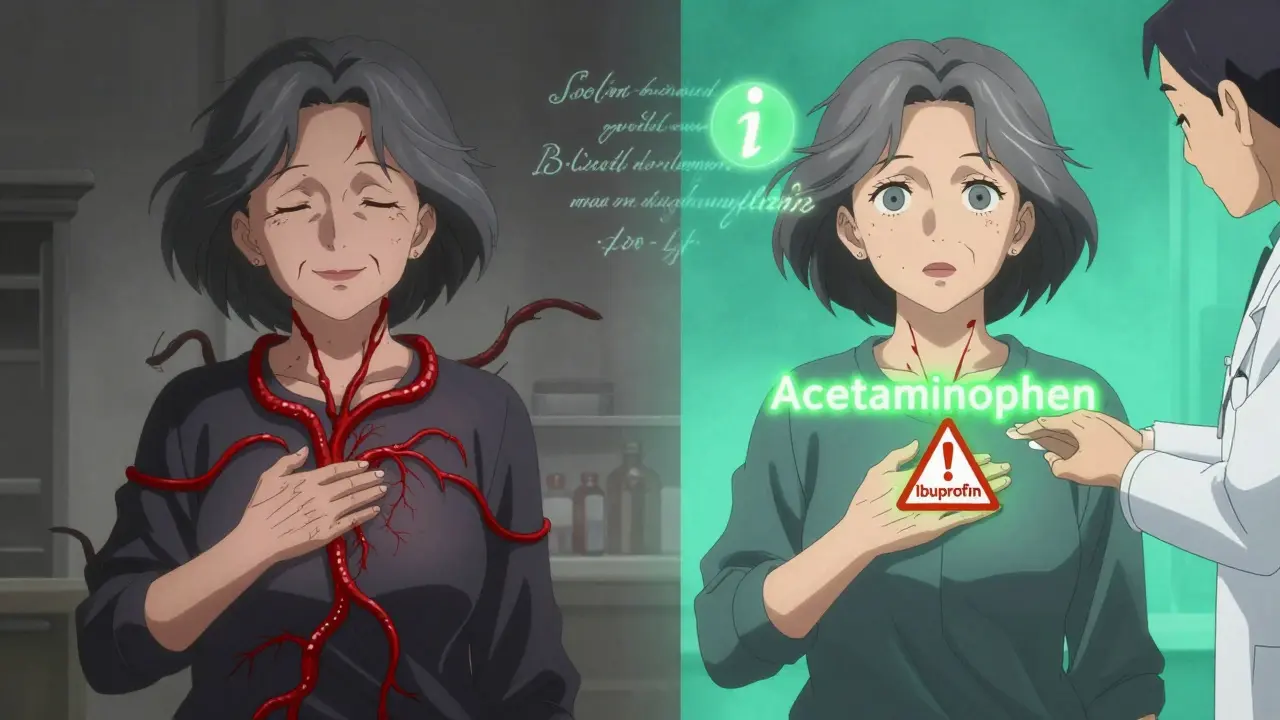
Common Mistakes People Make
- Only checking new prescriptions - forgetting old ones
- Using brand names only - the tool doesn’t recognize “Zoloft” but knows “sertraline”
- Ignoring supplements - “It’s just a vitamin” isn’t true
- Assuming the checker is 100% accurate - it’s not
- Not updating the list when meds change - even a short-term antibiotic matters
Real-World Example: What Went Wrong
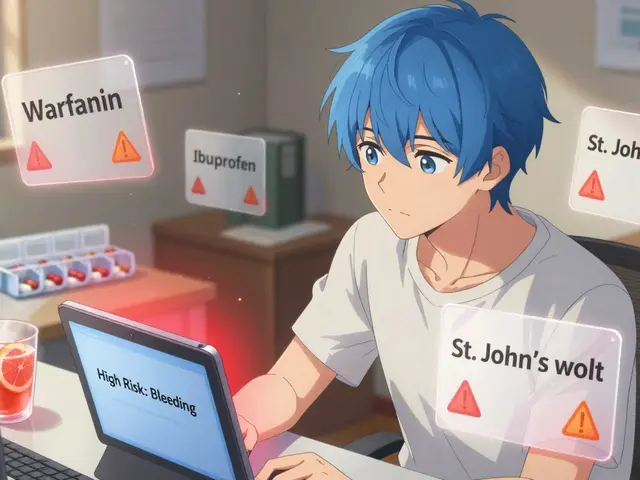
A 72-year-old woman in Asheville took warfarin (a blood thinner) for atrial fibrillation. She started taking ibuprofen for arthritis pain. No one told her it was risky. She didn’t check. Within weeks, she had a gastrointestinal bleed. Her INR - a blood test that measures clotting - was off the charts. She ended up in the ER. If she’d used Medisafe and typed in both meds, the app would’ve flashed a red alert: “Warfarin + NSAID = high risk of bleeding.” She could’ve switched to acetaminophen - a safer pain reliever.What’s Next? The Future of Interaction Checkers
New tools are coming. Lexicomp just added AI that cut false alarms by 22%. DrugBank now includes supplement interactions. Mayo Clinic is testing systems that use your DNA to predict how you’ll react to drugs - something called pharmacogenomics. Early results show a 31% improvement in accuracy. But the biggest change? Integration. By 2027, 95% of U.S. hospitals will use advanced DDI tools built into their EHRs. That means when your doctor writes a prescription, the system will auto-check for conflicts before it even hits your pharmacy. For now, though, you’re your own best safety net. Use the tools. Know their limits. And never assume - always ask.Can I rely only on my pharmacist to catch drug interactions?
Pharmacists are trained to catch interactions, but they can’t check every combo if you don’t tell them everything. Many patients forget to mention supplements, herbal products, or even occasional OTC meds. The best approach is to use a checker yourself - then bring the results to your pharmacist. It’s a team effort.
Are free drug interaction checkers accurate?
Yes, many free tools like Medisafe and DrugBank’s web version are reliable for common prescriptions. They use the same core databases as paid systems. But they may not include rare interactions or updated research as quickly. For critical meds like blood thinners or seizure drugs, cross-check with a second tool or ask your pharmacist.
Why do some interaction checkers give so many false alarms?
Some systems are overly cautious to avoid missing real risks. For example, Micromedex might flag a combo like amoxicillin and birth control as “possible interaction” - even though evidence is weak. This is called alert fatigue. Hospitals reduce this by tuning alerts for specific units (e.g., only flagging high-risk combos for ICU patients). For personal use, learn which warnings matter most - focus on red and orange flags.
Do food and alcohol count as drug interactions?
Absolutely. Grapefruit juice can triple the effect of some statins. Alcohol with benzodiazepines or opioids can cause fatal breathing depression. Even high-sodium meals can interfere with blood pressure meds. Good checkers include food and alcohol interactions. If yours doesn’t, look for one that does - or ask your pharmacist about dietary risks.
How often should I check my meds?
Check every time you start, stop, or change a medication - even if it’s just for a few days. Also check every 3-6 months if you’re on 5+ drugs. Polypharmacy (taking 5+ meds) increases interaction risk by 400%. A simple monthly review with a tool like Medisafe can prevent serious problems.



jerome Reverdy
March 20, 2026 AT 20:05Man, I’ve been using Medisafe for like two years now-seriously changed how I manage my meds. I’m on like seven things, including that weird thyroid combo and a random magnesium supplement I started for cramps. The app caught a red flag between my beta-blocker and that herbal sleep aid I was taking. Turns out, it tanks your heart rate even more. I almost didn’t think twice about it. Now I just screenshot the warnings and bring ‘em to my doc. No more guessing.
Also, side note: always type in the exact dosage. I once typed “aspirin” and it didn’t flag the interaction with my anticoagulant. Then I typed “81 mg enteric-coated” and boom-red alert. Tools ain’t magic, but they’re way better than nothing.
Stephen Habegger
March 22, 2026 AT 01:47Just used DrugBank for the first time. Found out my fish oil and blood pressure med might be a problem. Didn’t know supplements counted. Lesson learned.
Justin Archuletta
March 22, 2026 AT 23:56Yesss!! I always forget my melatonin!! And my OTC allergy pills!! And my gummy vitamins!! I just checked and holy crap-my Zoloft + melatonin + ibuprofen combo is an ORANGE alert!! I’m calling my pharmacist tomorrow!!
Melissa Starks
March 24, 2026 AT 23:37Okay, I’m gonna say this loud so it sticks: you CANNOT rely on your doctor to catch everything. I had a 70-year-old aunt who was on warfarin and started taking turmeric capsules because ‘it’s natural’-no one asked, no one told, and she ended up in the hospital with internal bleeding. I’m not even mad, I’m just disappointed. These tools exist for a reason. You think your ‘just a vitamin’ is harmless? It’s not. Your body doesn’t care if it’s FDA-approved or not. It cares about chemistry. So LISTEN. Input everything. Even the garlic pills. Even the chamomile tea. Even the CBD gummies your cousin swore by. Your life isn’t a gamble. Don’t be the person who says ‘I didn’t know.’ You know now.
cara s
March 26, 2026 AT 07:08It is of paramount importance to acknowledge that the efficacy of pharmaceutical interaction detection systems is contingent upon the fidelity of the data input by the end-user. Inadvertent omission of concomitant substances, including but not limited to dietary supplements, herbal preparations, and over-the-counter pharmacological agents, may significantly compromise the predictive accuracy of such tools. Furthermore, the prevailing literature, as evidenced by peer-reviewed studies published in the Journal of the American Medical Informatics Association, indicates that current systems exhibit a sensitivity range of approximately 60% to 85%, thus underscoring the necessity of corroborative verification through multiple platforms or consultation with a licensed clinical pharmacist.
Amadi Kenneth
March 27, 2026 AT 17:05Wait… so you’re telling me the government and Big Pharma are okay with people bleeding out because they don’t want you to know the real truth? These ‘checkers’? They’re designed to make you THINK you’re safe so you keep buying pills. The real interaction? The one between your money and their profits. Why do you think they don’t tell you that grapefruit juice is banned in 12 countries for statin users? Why do you think Lexi-Interact hides the fact that 80% of ‘red’ alerts are just for profit-driven drug combos? I’ve seen the documents. They’re not trying to save you-they’re trying to sell you more meds. Don’t trust the app. Trust yourself. And stop taking everything.
Shameer Ahammad
March 27, 2026 AT 19:16While I appreciate the general utility of the article, I must point out a critical oversight: the piece fails to address the pharmacokinetic implications of CYP450 enzyme polymorphisms across ethnic populations. For instance, individuals of East Asian descent exhibit significantly reduced CYP2C19 activity, which renders many interaction algorithms-built on Caucasian-centric databases-grossly inaccurate. This is not merely a technical flaw; it is a systemic bias in clinical informatics. The reliance on tools like Medisafe without acknowledging pharmacogenomic variability is, frankly, irresponsible. I have published on this. You should too.
Alexander Pitt
March 29, 2026 AT 18:46Just want to add: if you're on warfarin, check your vitamin K intake. Spinach, kale, broccoli-even if you’re not taking supplements, eating more greens than usual can throw off your INR. I’ve seen this happen twice. Always mention diet changes to your pharmacist. And yes, even if it’s ‘just’ a salad.
Manish Singh
March 30, 2026 AT 07:48I’m from India and we don’t always have access to fancy apps, but I’ve been telling my cousins to write down every pill they take-even the ones from the local pharmacy. We have a guy in our village who was on blood pressure meds and started taking ashwagandha because his friend said it ‘reduces stress.’ He ended up with dizziness and fainting. No one told him it might lower BP too much. So I made a simple paper list with pen and showed him how to cross-check with the free DrugBank site. He’s fine now. You don’t need tech to be smart. Just be consistent.
Nilesh Khedekar
March 30, 2026 AT 21:47Look, I get it-you think you’re safe because you use an app. But here’s the truth: 90% of these tools are just repackaged data from the 2000s. They don’t even know about new supplements like NMN or NR. And don’t even get me started on how they miss interactions with CBD oil. I tried to warn my buddy about his tramadol + CBD combo-he ignored me. Two weeks later? Seizure. He’s lucky he’s alive. These apps? They’re a joke. If you’re serious, go to the NIH’s DrugBank database. Not the app. The real one. And read the papers. Not the color-coded nonsense.