How much does a 30-day supply of metformin cost? If you’re a doctor, you might guess $40. The real price? $4. That’s not a typo. And if you think insulin costs $200 because that’s what you’ve seen on a patient’s bill, you’re not alone-but you’re also wildly off. Provider cost awareness isn’t just about knowing prices. It’s about understanding how those prices shape whether a patient takes their medicine-or skips it entirely.
For years, clinicians have been flying blind. A 2007 review of 29 studies found doctors consistently overestimated the cost of cheap generics by 31% and underestimated expensive brand-name drugs by 74%. That’s not a small mistake. It’s a systemic failure. And it’s costing patients their health.
Why Clinicians Don’t Know What Drugs Cost
It’s not that doctors don’t care. In fact, 92% of physicians in a 2007 survey said they wanted cost information-but couldn’t find it. The problem isn’t motivation. It’s access.
Drug pricing is a maze. The same pill can cost $15 at one pharmacy and $320 at another. Insurers negotiate different rates. Patients have different copays. Manufacturer coupons change the math. And none of that shows up in the EHR unless it’s specifically built in.
Medical schools rarely teach it. A 2021 study found 56% of U.S. medical schools don’t include drug pricing in their curriculum. Students graduate knowing how a drug works-but not how much it costs. One resident told Reddit users: “I had to Google every prescription for the first six months. I felt like I was cheating.”
Even experienced doctors aren’t immune. A 2016 study of 254 doctors and students showed only 5.4% of generic drug costs were estimated within 25% of the actual price. For brand-name drugs, it was 13.7%. Most guessed wildly wrong-overestimating cheap drugs, underestimating expensive ones. And only 30% correctly estimated dispensing fees.
The Consequences of Ignorance
When doctors don’t know the price, patients pay the price.
Twenty-eight percent of adults in the U.S. skip doses or don’t fill prescriptions because they can’t afford them. That’s 70 million people. And it’s not just low-income patients. Even those with insurance are getting hit. A 2023 KFF survey found 82% of adults think drug prices are unreasonable.
Doctors prescribing a $300 monthly injectable when a $15 oral alternative exists isn’t just a cost issue-it’s a safety issue. Non-adherence leads to more ER visits, hospitalizations, and complications. The American Medical Association estimates that poor medication adherence adds $300 billion annually to U.S. healthcare costs.
And it’s not just about money. It’s about trust. When a patient says, “I can’t afford this,” and the doctor has no idea what “this” actually costs, the conversation breaks down. The patient feels dismissed. The doctor feels helpless. The cycle continues.
What’s Changing: EHR Cost Alerts Are Making a Difference
Change is happening-but slowly. The biggest breakthrough? Real-time cost data built into electronic health records.
At UCHealth, doctors started seeing out-of-pocket cost estimates pop up next to prescription fields in 2021. Within months, one in eight physicians changed a prescription after seeing the alert. When potential savings exceeded $20, that number jumped to one in six.
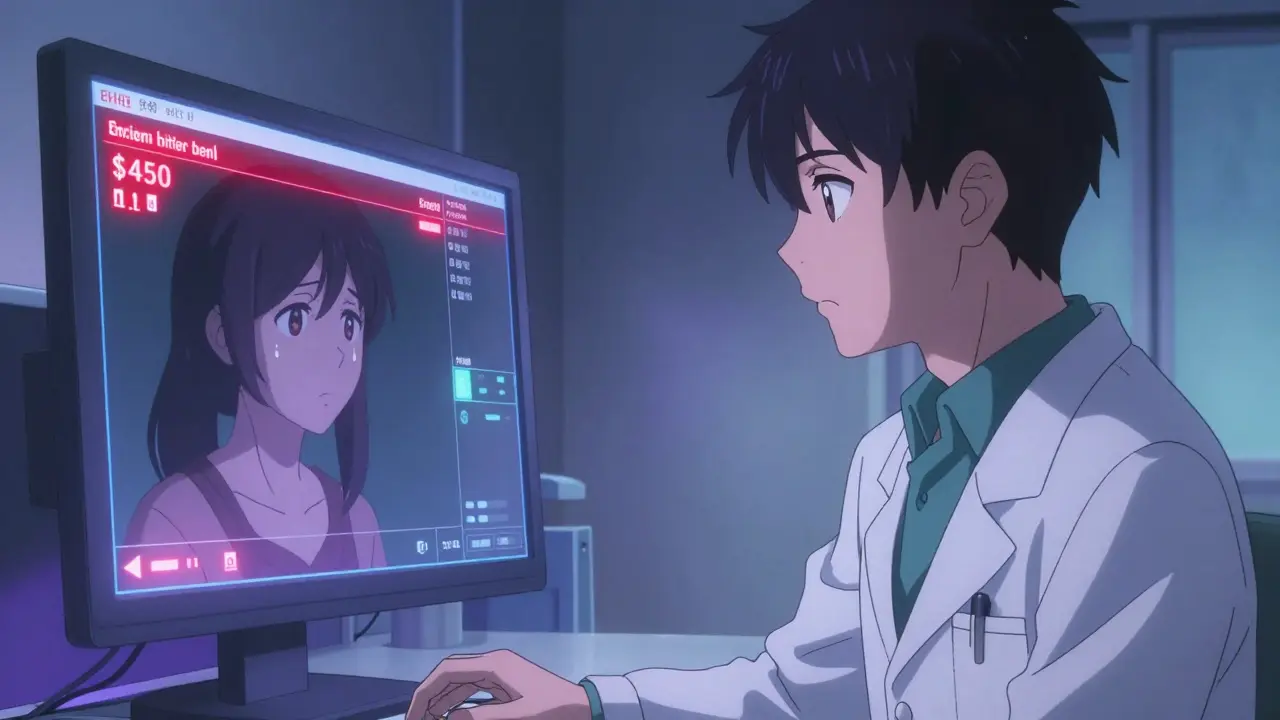
One primary care doctor in Colorado switched a patient from a $450 monthly biologic to a $12 generic. The patient cried. Not from sadness-from relief. “I thought I’d have to choose between my rent and my medicine,” she said.
Studies in JAMA Network Open and JAMA Internal Medicine confirm the trend. Clinicians with access to cost data perform significantly better on cost estimation tasks. They’re more likely to choose lower-cost alternatives. And patients report higher adherence.
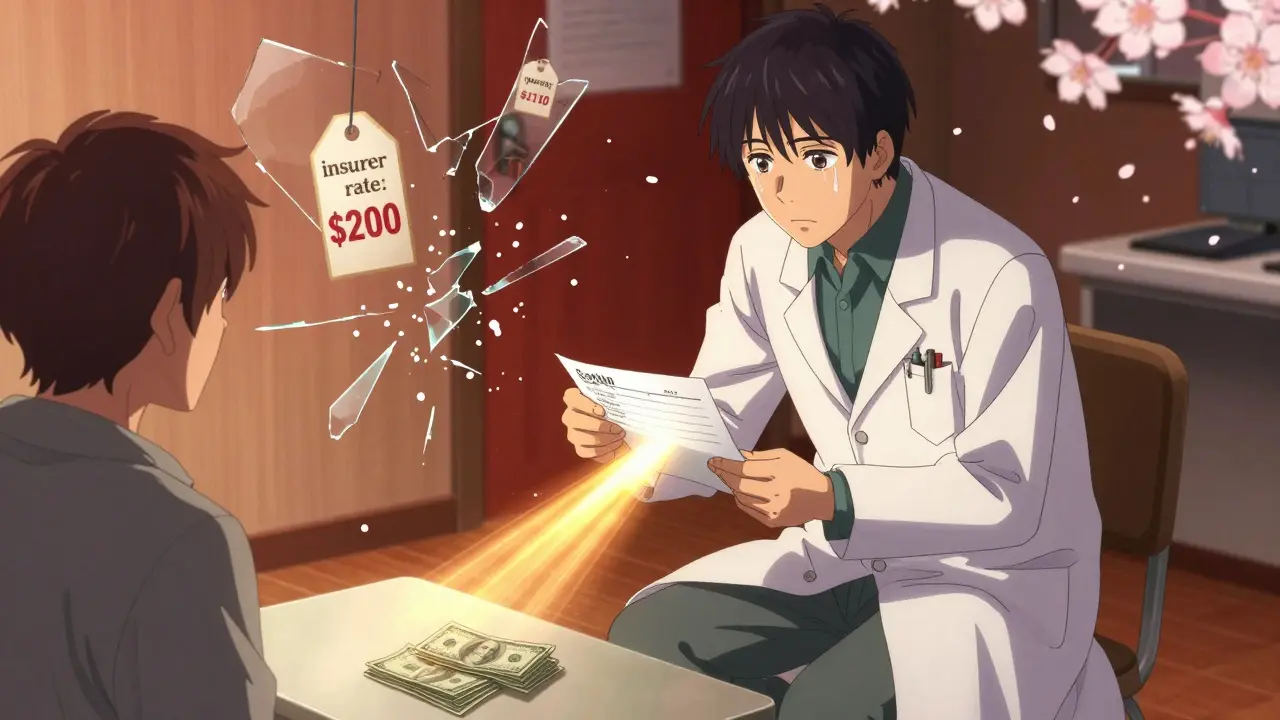
But it’s not perfect. A resident in a Reddit thread wrote: “Our Epic system shows insurer pricing, but not my patient’s actual copay. I thought I was saving them $50. They ended up paying $110.” That’s the problem with fragmented data. If the system doesn’t account for individual insurance plans, it’s just noise.

Who’s Getting It Right-and Who’s Falling Behind
Not all health systems are equal. Mayo Clinic’s Drug Cost Resource Guide, updated quarterly since 2019, has a 4.7/5 rating from over 1,200 physicians. It’s detailed, accurate, and easy to use.
Compare that to the generic Medicare Part D formulary reference, rated just 2.8/5 by 850 users on Doximity. Why? Because it’s outdated, cluttered, and doesn’t reflect real-world pricing.
Younger doctors are adapting faster. A 2024 study showed 78% of physicians under 40 regularly use cost tools, compared to just 52% of those over 55. That’s not about tech-savviness. It’s about training. The younger generation learned in a world where cost data is available. The older generation learned in a world where it wasn’t.
And it’s not just about individuals. Safety-net clinics-those serving low-income, uninsured, or underinsured patients-are seeing the biggest gains. Preliminary data from a 2024 AcademyHealth presentation showed 22% higher prescription modification rates in these clinics when cost alerts were active. Why? Because their patients have the most to lose.
The Bigger Picture: Why Prices Keep Rising-and Why It Matters
Even if doctors knew every price, they’d still be fighting a broken system.
In 2023, the net price of five major drugs increased-without any new clinical benefit. Humira’s price went up 4.7%. No new indication. No new formulation. Just a price hike. And it’s not rare.
Patients are told drug prices reflect research and development. But only 14% of doctors believe that’s true. A 2016 study found fewer than half of medical students understood that R&D costs have almost nothing to do with what a pill sells for. Most drug profits come from marketing, patent extensions, and pricing power-not innovation.
The 2022 Inflation Reduction Act gave Medicare the power to negotiate prices for 10 high-cost drugs. It’s a start. And 80% of Americans-across party lines-support it. But it only applies to Medicare. Millions of privately insured patients still face the same confusion.
What Needs to Happen Next
Cost awareness isn’t a luxury. It’s clinical competence.
Here’s what needs to change:
- Medical schools must teach drug pricing. It’s as essential as pharmacology. No student should graduate without knowing how to find and interpret real-world drug costs.
- EHRs need smarter cost tools. Alerts must show patient-specific copays, not just insurer list prices. They need to factor in coupons, patient assistance programs, and pharmacy discounts.
- Transparency laws must expand. The 2023 CMS rule requiring manufacturers to report out-of-pocket costs is a step forward. It needs to cover all drugs, not just Medicare ones.
- Doctors need time. One study found checking drug costs adds 30+ minutes to a clinic day. That’s not sustainable. Cost tools must be fast, accurate, and integrated-no extra clicks, no extra steps.
The goal isn’t to make doctors price-checkers. It’s to make them decision-makers who can balance clinical need with economic reality. Because a drug that’s effective but unaffordable isn’t a treatment-it’s a trap.
What You Can Do Today
If you’re a clinician:
- Ask your EHR vendor: “Do we have real-time, patient-specific cost data?” If not, push for it.
- Start asking patients: “What’s the most you’ve paid for this medication?” You’ll be surprised what you learn.
- Use free tools like GoodRx or NeedyMeds as a stopgap. They’re not perfect-but they’re better than guessing.
If you’re a patient:
- Ask your doctor: “Is there a cheaper option?” Don’t wait for them to bring it up.
- Check your pharmacy’s cash price. Sometimes it’s lower than your copay.
- Ask about patient assistance programs. Many manufacturers offer free or discounted drugs if you qualify.
Cost awareness isn’t about cutting corners. It’s about making sure the right treatment reaches the right person-without breaking them financially.
Why don’t doctors know how much drugs cost?
Doctors aren’t trained to know drug prices. Medical schools rarely teach pricing, and EHRs rarely show real-time, patient-specific costs. Even when pricing data exists, it’s often fragmented-showing insurer rates instead of what a patient will actually pay out-of-pocket. As a result, most clinicians rely on estimates, which are frequently wrong.
Do cost alerts in EHRs actually change prescribing habits?
Yes. Studies show that when physicians see real-time out-of-pocket cost estimates in their EHR, one in eight change a prescription-and one in six when savings exceed $20. At UCHealth, alerts led to a 12.5% reduction in high-cost prescriptions. The effect is strongest when alerts are accurate, fast, and show the patient’s actual copay-not just a list price.
Are generic drugs always cheaper than brand-name drugs?
Usually, but not always. Sometimes insurance plans put brand-name drugs on a lower tier, making them cheaper than the generic. Or a patient’s copay structure might make a $10 brand-name drug cheaper than a $15 generic. That’s why patient-specific cost data matters-general assumptions can backfire.
How much do drug prices vary between pharmacies?
A lot. The same 30-day supply of a common generic drug can cost $15 at one pharmacy and $320 at another, depending on insurance, location, and pharmacy benefit manager deals. That’s why checking cash prices with tools like GoodRx can save patients hundreds of dollars a month.
Is the lack of cost awareness a problem only in the U.S.?
No-but it’s most severe here. In countries with single-payer systems, drug prices are standardized, so clinicians don’t need to guess. In the U.S., the lack of price transparency is unique and directly linked to higher rates of medication non-adherence and avoidable hospitalizations.





Julie Chavassieux
December 22, 2025 AT 16:29Jeremy Hendriks
December 23, 2025 AT 21:02jenny guachamboza
December 25, 2025 AT 04:38Sai Keerthan Reddy Proddatoori
December 25, 2025 AT 23:25Tarun Sharma
December 27, 2025 AT 12:23Kiranjit Kaur
December 27, 2025 AT 20:27Jim Brown
December 28, 2025 AT 22:16Sam Black
December 29, 2025 AT 06:55Jamison Kissh
December 29, 2025 AT 22:25Tony Du bled
December 31, 2025 AT 08:41Kathryn Weymouth
January 1, 2026 AT 13:31Nader Bsyouni
January 2, 2026 AT 23:49Herman Rousseau
January 3, 2026 AT 23:42Vikrant Sura
January 5, 2026 AT 23:22