
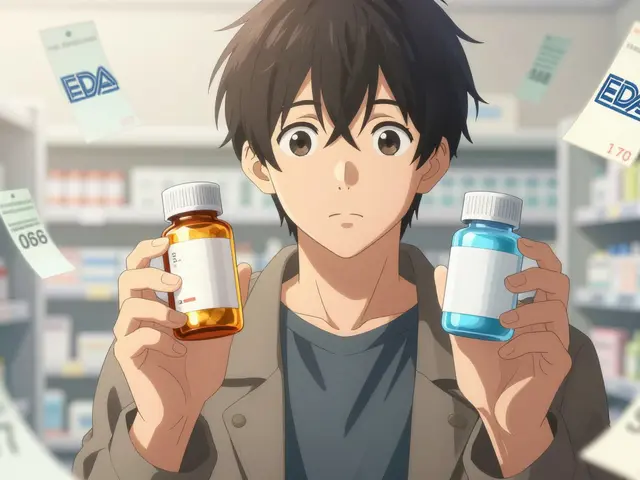
Ever wonder why your pharmacist can swap your expensive brand-name prescription for a cheaper generic without calling your doctor first? It isn't just a guess or a lucky hunch. It comes down to a strict set of alphanumeric labels called Therapeutic Equivalence Codes is a standardized system used by the FDA to identify prescription drugs that can be safely and effectively substituted for one another. Commonly known as TE Codes, these ratings ensure that the generic version of a drug performs the same way in your body as the original brand.
If you've ever seen a code like "AA" or "B" in a medical report or pharmacy database, you're looking at the engine that drives the U.S. generic drug market. These codes are the reason generic medications often cost 80-85% less than brand names while delivering the same clinical results. For the average patient, this means saving hundreds of dollars a month on chronic medications for things like high blood pressure or cholesterol without risking their health.
The Orange Book and the Rules of Substitution
The primary home for these codes is the Orange Book, officially titled "Approved Drug Products With Therapeutic Equivalence Evaluations." This massive database, managed by the FDA's Office of Generic Drugs, serves as the gold standard for every pharmacy in the country. When a pharmacist sees a prescription, they check the Orange Book to see if a generic version has an "A" rating.
This system started back in 1984 after the Hatch-Waxman Amendments changed how generic drugs were approved. Before this, substitution was a bit like the Wild West-different states had different rules, and there was less scientific certainty about whether a generic was truly the same as the brand. Today, all 50 states use the Orange Book as the legal basis for automatic substitution laws. If a drug is rated as therapeutically equivalent, the pharmacist can swap it unless the doctor explicitly writes "do not substitute" on the prescription.
Decoding the Letters: What Do AA, AB, and B Mean?
TE Codes aren't random. They follow a logic that tells a healthcare provider exactly how a drug was evaluated. The first letter is the most critical piece of information.
- The "A" Rating: This means the drug is therapeutically equivalent. It is pharmaceutically equivalent (same active ingredient, strength, and dosage form) and bioequivalent (it gets into your bloodstream at the same rate and extent as the brand name).
- The "B" Rating: This means the drug is not therapeutically equivalent. Even if it has the same active ingredient, the FDA hasn't found enough evidence to prove it works exactly like the brand. Pharmacists cannot automatically substitute a "B" rated drug.
The second letter provides more detail about the specific formulation. For example, an "AA" code is common for powders used in oral solutions, while "AN" typically refers to injectable solutions. Sometimes a drug gets an "AB" rating, which usually means the FDA was satisfied with the bioequivalence evidence even if the original testing had some quirks. Regardless of the second letter, as long as it starts with "A", it's generally a green light for substitution.
| Code Prefix | Meaning | Substitution Status | Example Scenario |
|---|---|---|---|
| A (e.g., AA, AB) | Therapeutically Equivalent | Allowed | Generic Atorvastatin replacing Lipitor |
| B | Not Therapeutically Equivalent | Not Allowed | A generic with a different absorption rate |

The Science Behind the Swap: Bioequivalence
To get an "A" rating, a generic manufacturer can't just copy the formula; they have to prove Bioequivalence, which is the property of two pharmaceuticals to produce the same effect in the body by reaching the same blood concentration levels. This is a rigorous process where manufacturers must show that the generic drug's peak concentration (Cmax) and total exposure (AUC) fall within a 80-125% confidence interval of the brand-name drug.
This means if the brand drug puts 100 units of medicine in your blood, the generic must consistently put between 80 and 125 units to be considered equivalent. While a 20% difference might sound like a lot to a patient, clinical studies, such as those published in JAMA Internal Medicine, show that for most drugs, this range has zero impact on the actual health outcome. For instance, patients using TE-rated generics for LDL cholesterol reduction saw the same results as those on the brand name.

Where TE Codes Fall Short: The "Gray Areas"
Despite the success of the system, it isn't perfect. There are certain types of medications where a simple "A" or "B" code might not tell the whole story. The biggest concern for experts is Narrow Therapeutic Index (NTI) drugs. These are medications where a tiny change in the dose or blood level can lead to a huge change in the drug's effect-or even cause toxicity.
Drugs like warfarin (a blood thinner) or levothyroxine (for thyroid issues) are classic examples. While they may have TE codes, some patients report feeling a difference when switching between different generic manufacturers. This isn't necessarily because the drug is "bad," but because the body is incredibly sensitive to these specific chemicals. In some cases, a patient might do better on one specific generic manufacturer's version than another, even if both are "AA" rated.
Another challenge involves complex delivery systems. In 2019, the FDA had to withdraw TE ratings for certain generic budesonide inhalers. Why? Because while the chemical was the same, the way the inhaler delivered the medicine into the lungs was inconsistent. This proves that for inhalers and topical steroids, the formula is only half the battle-the delivery device matters just as much.

Real-World Impact on Your Wallet and Health
The economic impact of this system is staggering. Since 1995, the ability to reliably substitute generics based on TE codes has saved the U.S. healthcare system over $2.2 trillion. This is why almost every Pharmacy Benefit Manager (PBM) and hospital uses these codes to design their formularies. They know that if a drug is TE-rated, they can move patients to a cheaper alternative without compromising safety.
From a pharmacy perspective, the system is a lifesaver. Instead of spending hours on the phone with doctors to ask if a generic is okay, pharmacists use software integrated with the Orange Book. This allows them to process prescriptions in seconds. While some patients worry that "generic" means "lower quality," the data shows that over 90% of all prescriptions filled in the U.S. are now generics, and the vast majority of patients experience the same clinical success as they would with the brand name.
Is a generic drug with an "AB" code as good as one with "AA"?
Yes. Both "AA" and "AB" indicate that the drug is therapeutically equivalent to the brand name. The difference in the second letter usually relates to the specific evidence the FDA used to reach that conclusion or the specific dosage form, but for the patient, both are considered safe and effective substitutes.
What happens if a doctor writes "Dispense as Written" (DAW)?
When a doctor uses a DAW instruction, it overrides the TE code system. Even if a generic is rated "AA", the pharmacist must provide the brand-name drug. This is usually done if the doctor believes a patient is having a specific reaction to a generic filler or if the drug has a very narrow therapeutic index.
Can a "B" rated drug ever be substituted?
Not automatically. A "B" rating means the FDA does not consider the drug therapeutically equivalent. For a pharmacist to dispense a "B" rated drug in place of a brand, they would need a direct order and approval from the prescribing physician.
Why do some generics feel different if they have the same TE code?
While the active ingredient is the same, generics use different "inactive ingredients" called excipients. These fillers, binders, or dyes can occasionally affect how a specific individual absorbs the drug or cause a mild allergic reaction, even though the overall therapeutic effect remains the same for the general population.
How often is the Orange Book updated?
The FDA updates the Orange Book regularly, with major editions and monthly updates to reflect new drug approvals and updated therapeutic equivalence evaluations. Pharmacy management systems usually sync with these updates automatically.
Next Steps for Patients and Caregivers
If you are managing a complex medication list, there are a few things you can do to ensure you're getting the right drug for your body:
- Ask your pharmacist: If you feel a change in how your medication works after a pharmacy switch, ask them to check the TE code and the manufacturer.
- Keep a log: For NTI drugs like thyroid or blood pressure meds, write down the manufacturer of the generic you are using. If you switch pharmacies, you can request the same manufacturer to avoid fluctuations.
- Check the Orange Book: If you're curious, you can access the FDA's online database to see the rating of your specific medication.
- Discuss "DAW" with your doctor: If you have a history of reacting poorly to generics, talk to your physician about a "Dispense as Written" order for your most critical medications.







Ethan Davis
April 10, 2026 AT 09:01The FDA basically just rubber stamps these codes so big pharma can move their junk around while we pay for it. Who actually believes a "confidence interval" of 20% is safe? They're just playing with our health to keep the profit margins high for the PBMs.
Windy Phillips
April 11, 2026 AT 09:41One simply cannot ignore the psychological toll that switching manufacturers takes on a fragile patient... It is truly disheartening that we prioritize cost-cutting over the spiritual stability of a consistent medication routine!!!
jack hunter
April 11, 2026 AT 14:26everybody thinks they're safe cuz of some letters but what is actualy "safe" in a world of corporate greed? the idea that 80% is the same as 100% is just a social construct to make us feel better about eating cheap fillers... its all a lie anyway
dwight koyner
April 12, 2026 AT 20:54For those managing NTI drugs, it is highly advisable to request a specific manufacturer. While the active ingredient remains the same, the excipients can indeed alter the absorption rate in certain individuals, which can lead to suboptimal therapeutic outcomes if you are switched frequently.
Stephen Luce
April 13, 2026 AT 09:48I totally get how scary it is to feel different on a new generic. It's really stressful when you don't know if your meds are working the same way.
Ruth Swansburg
April 14, 2026 AT 20:55Stay strong everyone! You can handle this!
Jitesh Mohun
April 15, 2026 AT 02:46stop whining about the fillers and just trust the system if you want to save money you have to accept some variation its just basic economics
Jay Vernon
April 15, 2026 AT 20:23I just ask my pharmacist nicely and they help me out 😊 👍
shelley wales
April 15, 2026 AT 23:06It's so wonderful that we have a system that makes life-saving medicine affordable for so many people. I'm sure most of us can find a way to work with our doctors to make sure we get the best fit for our individual needs.
Nikhil Bhatia
April 17, 2026 AT 13:56Too long, didn't read.
Jamar Taylor
April 17, 2026 AT 17:25You've got this! Just keep a log of your meds like the post suggests and you'll be in total control of your health journey. Small steps lead to big wins!