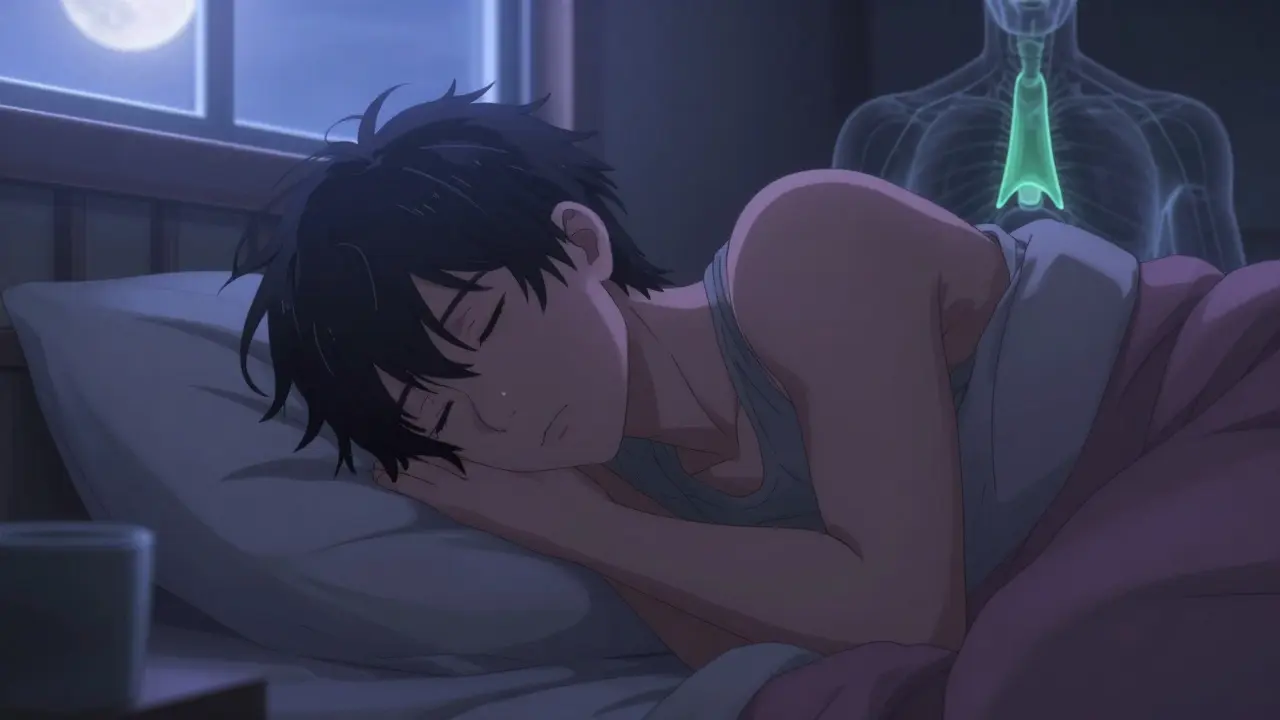
Have you ever woken up gasping for air, only to realize you were lying flat on your back? You are not alone. For millions of people with Obstructive Sleep Apnea (OSA), a condition where the airway collapses during sleep, gravity is the enemy. When you lie on your back-the medical term is supine position-your tongue and soft tissues fall backward, blocking your throat. But here is the good news: simply turning onto your side can keep that airway open. This isn't just a tip for better rest; it is a clinically proven treatment strategy known as positional therapy.
Why Back Sleeping Worsens Sleep Apnea
To understand why position matters, we have to look at anatomy. Imagine your upper airway as a flexible tube. When you stand or sit, gravity pulls your tongue down and forward, keeping the tube open. Now, imagine lying flat on your back. Gravity now pulls those same tissues straight back into your throat wall.
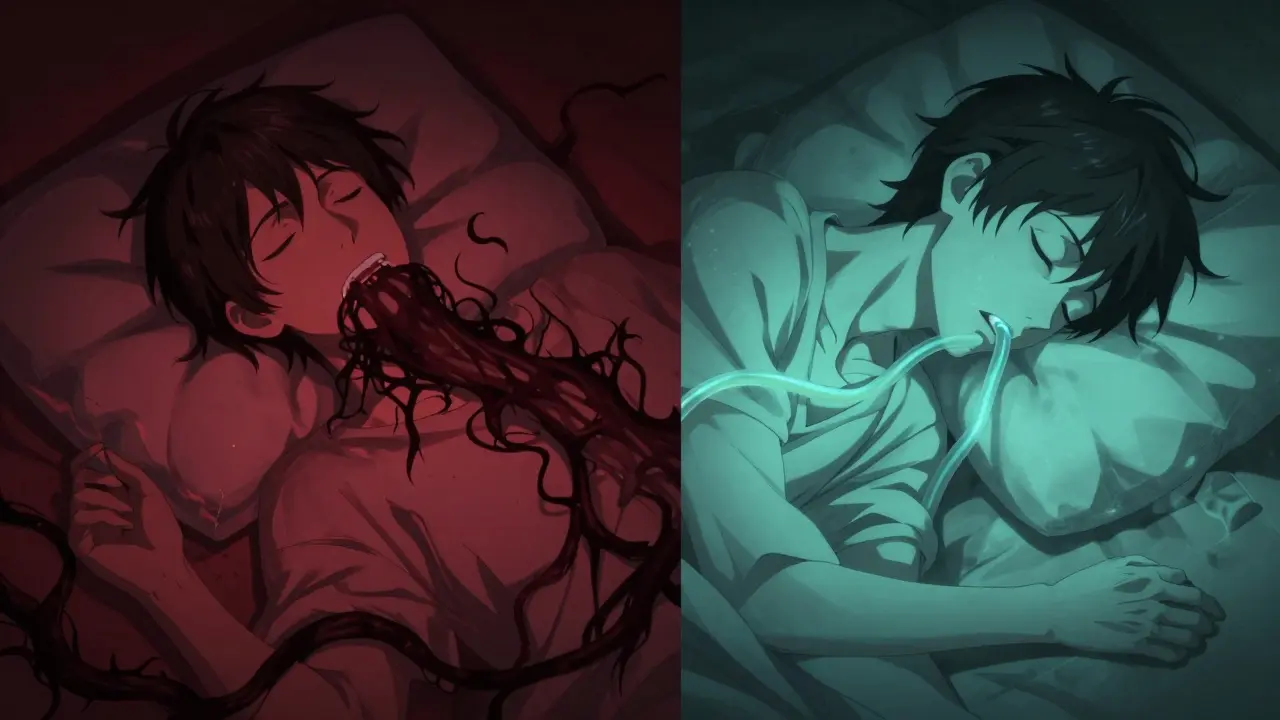
Research published in Sleep Medicine Research (2023) shows that this shift reduces the space in your upper airway by approximately 30-40%. It’s like pinching a garden hose. That reduced space makes it much easier for the muscles in your throat to collapse completely when they relax during deep sleep. This leads to apnea-hypopnea events, which are pauses or shallow breaths.
The difference can be drastic. For many patients, sleeping on their back might cause 30 breathing interruptions per hour. Flip them onto their side, and that number might drop to fewer than 5. That is the power of positional change. It doesn’t just reduce the frequency of these events; it also lessens their severity. Studies show that oxygen drops (desaturation) and heart rate spikes are significantly worse when sleeping supine compared to lateral (side) positions.
What Is Positional Obstructive Sleep Apnea?
Not everyone with sleep apnea benefits equally from changing positions. To qualify for positional therapy, you need to have what doctors call Positional Obstructive Sleep Apnea (POSA). This is a specific subtype of OSA where symptoms are dramatically worse on the back than on the side.
How do doctors define "dramatically worse"? The standard clinical criteria require that your Apnea-Hypopnea Index (AHI) while supine is at least double your AHI when sleeping in non-supine positions. If your back-sleeping AHI is 20 and your side-sleeping AHI is 10, you likely have POSA. If both are 20, changing position won’t help much because your airway collapses regardless of gravity.
About 50-60% of all sleep apnea patients fall into this category. Some studies suggest the number could be even higher. This means more than half of people struggling with OSA might find relief without heavy machinery, provided they stay off their backs. Diagnosing this requires a detailed sleep study (polysomnography) that breaks down respiratory events by body position. Without this data, you might underestimate how much your position affects your health.
How Positional Therapy Works: From Tennis Balls to Smart Wearables
If you know you need to stop sleeping on your back, how do you actually do it? Willpower rarely works because you don’t wake up when you roll over. You need a cue. This is where positional therapy devices come in. They range from low-tech DIY hacks to high-tech wearables.
- The Tennis Ball Technique (TBT): This is the classic, budget-friendly method. You sew a pocket into the back of a t-shirt and put a tennis ball inside. When you roll onto your back, the ball presses against your spine, creating discomfort. Your brain subconsciously shifts you back to your side. It’s effective but can be uncomfortable. Informal surveys suggest about 45% of users quit within three months due to irritation.
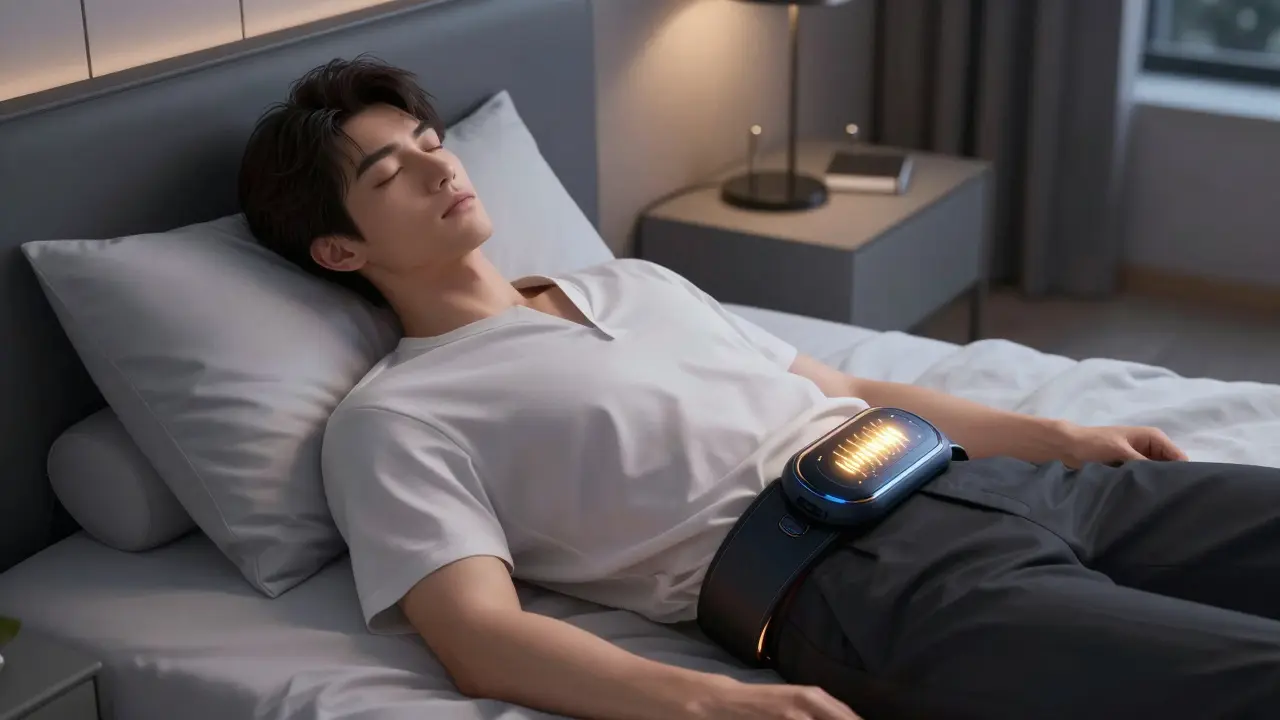
- Vibration Feedback Devices: Modern devices like the Sleep Position Trainer (SPT) or Smart Nora use sensors to detect when you are on your back. Instead of pain, they send a gentle vibration or slight motion to nudge you sideways. These are more expensive-ranging from $300 to $500-but they offer a smoother experience.
- Specialized Pillows: Wedge pillows or body pillows can physically block you from rolling flat, though they are less precise than electronic devices.
A comparative study in the Journal of Clinical Sleep Medicine (2015) found that both the tennis ball technique and advanced SPT devices were equally good at reducing time spent on the back (median 0%). However, the SPT group had better long-term compliance and reported higher quality of life scores. Why? Because comfort matters. If the cure hurts, you’ll stop using it.
| Method | Cost Estimate | Comfort Level | Effectiveness (AHI Reduction) | Long-Term Adherence |
|---|---|---|---|---|
| Tennis Ball Technique | $1 - $5 | Low (Physical Discomfort) | High (if used consistently) | Low (~55% continue after 3 months) |
| Wearable Vibration Device (e.g., SPT) | $300 - $400 | Medium-High (Gentle Nudges) | High | High (>85% continue long-term) |
| Smart Bedding Systems | $500+ | High (Automated Adjustment) | High | High |
Positional Therapy vs. CPAP: Which Is Better?
This is the big question. Continuous Positive Airway Pressure (CPAP) is the gold standard for treating OSA. It uses a mask and machine to blow air into your throat, keeping it open mechanically. It works for almost everyone, no matter their position.
However, CPAP has a major flaw: adherence. Many people hate wearing a mask every night. They feel claustrophobic, dry out, or find it noisy. According to the American Academy of Family Physicians (AAFP), patients demonstrate significantly better adherence to positional therapy-roughly 35-40% higher than CPAP usage rates over the long term.
Here is the trade-off:
- CPAP is more effective at lowering AHI across the board, especially for severe cases.
- Positional Therapy is less invasive and easier to stick with, but it only works if you have positional OSA.
Who Should Try Positional Therapy?
Before you buy a device or sew a tennis ball into your shirt, you need to know if you are a candidate. Not everyone with snoring or sleep apnea qualifies.
You are a strong candidate if:
- Your sleep study shows your AHI is at least twice as high on your back as on your side.
- You have mild to moderate OSA (AHI between 5 and 30).
- You have tried CPAP but couldn’t tolerate it.
- You snore heavily only when on your back, according to your partner.
- Your airway collapses equally in all positions.
- You have central sleep apnea (CSA), where the brain fails to signal breathing. While side sleeping helps CSA slightly, the effects are much smaller than for OSA.
- You have severe OSA (AHI > 30) without significant positional dependence.
Practical Tips for Success
If your doctor clears you for positional therapy, here is how to make it work in real life. 1. Combine with Head Elevation Lying on your side is great, but slouching can still narrow the airway. Use a wedge pillow or elevate the head of your bed by 4-6 inches. This keeps your neck aligned and uses gravity to your advantage further. 2. Allow an Adaptation Period It takes about two weeks for your body to learn the new habit. During this time, you might wake up a few times as the device nudges you. This is normal. Stick with it. 3. Monitor Your Progress Many modern devices sync with apps to show you how much time you spent on your back. Aim for less than 10% of the night. If you see improvement in daytime energy and reduced snoring, you’re on the right track. 4. Consider Cardiovascular Benefits Emerging research suggests that avoiding the supine position may reduce risks associated with heart failure exacerbation and stroke, as supine sleeping puts extra strain on the cardiovascular system during apnea events. While more studies are needed, staying on your side seems to be a win-win for heart health too.
Can I use positional therapy if I have severe sleep apnea?
Generally, positional therapy is recommended for mild to moderate cases. If you have severe sleep apnea (AHI > 30), it usually only works if your symptoms are strictly positional (much worse on your back). Even then, you should consult your sleep specialist. In many severe cases, CPAP or oral appliances are safer first-line treatments.
Does positional therapy work for central sleep apnea?
The benefits are much smaller for central sleep apnea (CSA) compared to obstructive sleep apnea (OSA). CSA is caused by the brain failing to send proper signals to breathe, rather than physical blockage. While side sleeping may help slightly by improving lung mechanics, it is not a primary treatment for CSA.
Is the tennis ball technique safe?
Yes, it is generally safe, but it can be uncomfortable. The pressure from the ball prevents you from sleeping on your back by causing mild discomfort. Some people develop skin irritation or find it disrupts their sleep too much, leading them to abandon the method. If you try it, ensure the ball is securely enclosed in fabric.
How do I know if I have positional sleep apnea?
You cannot diagnose this yourself. You need a polysomnography (sleep study) that analyzes your breathing events by body position. Look for a report that lists your AHI separately for supine and non-supine positions. If your supine AHI is at least double your non-supine AHI, you likely have positional OSA.
Will positional therapy stop my snoring completely?
For many people with positional OSA, yes, it can stop snoring almost entirely because the airway stays open. However, some individuals may still snore lightly on their sides due to other anatomical factors. Most partners notice a significant reduction in volume and frequency immediately.