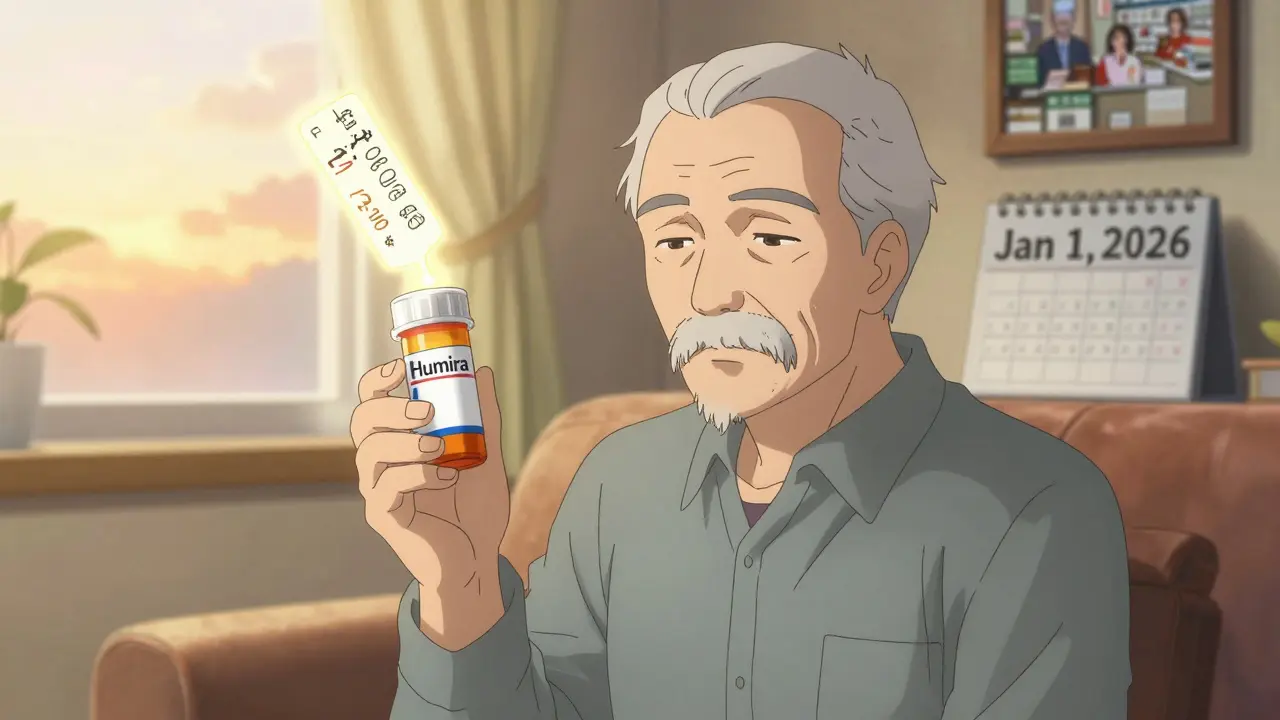
For years, Medicare couldn’t negotiate drug prices at all. That changed in 2022 when the Inflation Reduction Act gave Medicare the power to directly bargain with drugmakers for the most expensive medications. Starting January 1, 2026, the first wave of negotiated prices kicks in - and for 10 top-selling drugs, discounts range from 38% to 79%. This isn’t just a policy shift. It’s a direct hit to what you pay at the pharmacy counter.
What Changed with Medicare’s New Power to Negotiate?
Before 2022, Medicare Part D - the part that covers prescription drugs - was stuck in a system where private insurers negotiated rebates behind closed doors. Medicare itself had no say. Drug companies set list prices, insurers got discounts through rebates, and beneficiaries still paid based on those inflated list prices. The result? In 2021, Medicare spent nearly $150 billion on prescription drugs. Meanwhile, the VA - which has long negotiated prices - paid about 40% less for the same drugs.
The Inflation Reduction Act (IRA) broke that logjam. For the first time, the federal government can now set a Maximum Fair Price (MFP) for drugs with no generic or biosimilar competition. These are drugs that have been on the market for at least seven years (or 11 for biologics), making them well past their patent protection window. The goal? Cut costs for seniors and the government - and make sure the savings actually reach patients.
The First 10 Drugs: What’s Being Negotiated?
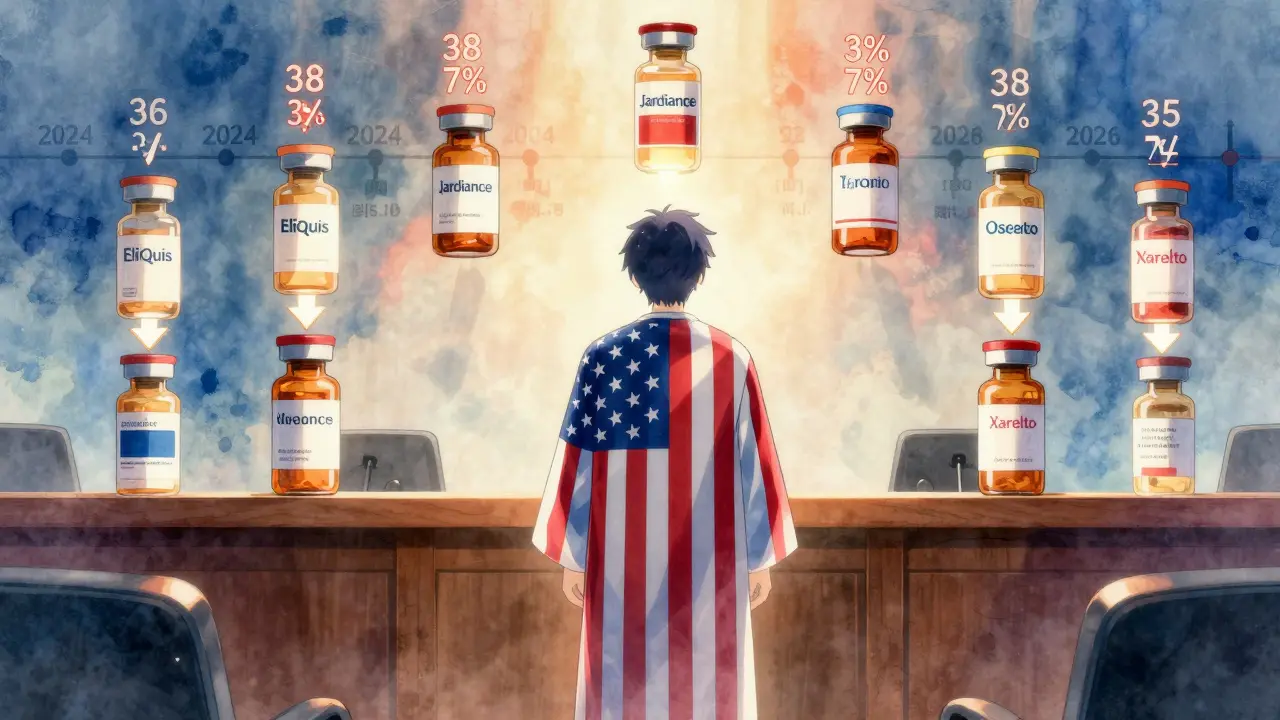
The first batch of drugs selected for negotiation in 2024 includes some of the most widely prescribed and costly medications in the U.S. Here’s what’s on the list:
- Eliquis (apixaban) - used for blood clots
- Jardiance (empagliflozin) - for type 2 diabetes and heart failure
- Xarelto (rivaroxaban) - another blood thinner
- Farxiga (dapagliflozin) - also for diabetes and heart failure
- Lyrica (pregabalin) - for nerve pain
- Advair (fluticasone/salmeterol) - asthma and COPD
- Enbrel (etanercept) - for autoimmune diseases
- Humira (adalimumab) - the most expensive drug in U.S. history
- Revlimid (lenalidomide) - for multiple myeloma
- Stelara (ustekinumab) - for psoriasis and Crohn’s
These 10 drugs cost Medicare $50.5 billion in 2022 alone. Eliquis, for example, accounted for $6.3 billion. Now, after negotiations, CMS expects to pay 38% to 79% less for each. That doesn’t mean drugmakers are losing money - it means they’re no longer able to charge what they used to.
How the Negotiation Process Actually Works
This isn’t a backroom deal. It’s a legally defined process with deadlines, rules, and paper trails.
- February 1, 2024: CMS sent initial price offers to all 10 manufacturers. Each offer included a breakdown of how it was calculated - based on what other countries pay, what the VA pays, and how much Medicare spent on the drug in the past.
- March 2, 2024: Drug companies had exactly 30 days to respond with counteroffers.
- Spring-Summer 2024: CMS met with each company three times. In some cases, CMS raised its offer slightly; in others, manufacturers lowered their counteroffers.
- August 1, 2024: The negotiation window closed. Five drugs agreed during meetings. The other five were finalized through written offers.
- August 16, 2024: Final prices were published. These are the prices that will be used starting January 1, 2026.
There’s a hard cap: the final price can’t exceed the lower of two numbers - either the weighted average of what insurers actually paid last year (after rebates), or a percentage of the drug’s average non-Federal Average Manufacturer Price (non-FAMP). This stops CMS from overpaying.
What Happens When These Prices Take Effect?
Starting January 1, 2026, Medicare Part D plans must use the new Maximum Fair Prices to calculate what beneficiaries pay. Here’s the real-world impact:
- Patients in the coverage gap (donut hole): They’ll see the biggest drop. Because their out-of-pocket costs are based on the drug’s negotiated price, not the list price, they’ll pay less immediately.
- Patients in catastrophic coverage: The benefit is smaller. Their cost-sharing is already capped at 5% of the drug’s cost - so even if the drug price drops, they’re still paying 5% of whatever that new price is.
- Pharmacies and insurers: They’ll update their systems by October 15, 2025. That means your pharmacy will see a new price in its database - and your copay will change accordingly.
For example, if Humira’s list price was $3,000 per month and the new MFP is $1,200, your copay could drop from $600 to $240 - depending on your plan’s structure. That’s a $360 monthly savings.
Will Private Insurers Also Get Discounts?
Yes - indirectly.
Drugmakers can’t charge Medicare one price and private insurers another. If they want to keep selling to Medicare, they have to offer the same price to all payers. This is called the “single-price rule.” So if the MFP for Jardiance is $150, that’s what CVS, UnitedHealthcare, and Aetna will also pay.
That’s why analysts estimate private insurers could save $200-250 billion over the next decade. It’s not because they negotiated - it’s because drugmakers had to lower prices to stay in the Medicare market.
What About Medicare Part B?
Part B covers drugs given in doctor’s offices - like chemotherapy, injections, or infusions. Right now, doctors get paid based on the drug’s average sales price (ASP) plus 6%. That creates an incentive: the more expensive the drug, the more money the doctor makes.
Starting in 2028, that changes. Part B drugs will also be subject to negotiation. But instead of ASP + 6%, doctors will get paid MFP + 6%. That means their reimbursement drops - and some practices could lose millions in revenue. The American Medical Association estimates this could cost physician practices $1.2 billion a year.
Doctors are worried. But the bigger picture? Patients will pay less. And the government will stop overpaying for drugs that have been on the market for over a decade.
Are There Downsides?
Drugmakers say yes. PhRMA claims the program could cut innovation funding by $112 billion over 10 years. But the Office of Management and Budget says those numbers are inflated. Real-world data from the VA and other countries show that price negotiation doesn’t kill innovation - it just stops companies from charging whatever they want.
Another concern: will patients lose access to their favorite drugs? So far, no. The law doesn’t allow Medicare to remove drugs from formularies just because they’re negotiated. If your doctor prescribed Eliquis, you’ll still get it - just at a lower price.
What about biosimilars? The program only applies to drugs with no biosimilar competition. That means if a cheaper version of Humira enters the market, the negotiation process stops. But right now, biosimilar uptake in the U.S. is under 30%, even after 18 months on the market. So for now, the negotiation program has plenty of targets.
What Comes Next?
The program doesn’t stop at 10 drugs. In 2027, 15 more will be added. In 2028, another 15. Then 20 each year after that. That means by 2030, over 70 drugs could be under negotiation.
And it’s not just about Medicare. The VA, the Department of Defense, and even Medicaid could use these negotiated prices as a benchmark. If the federal government says a drug shouldn’t cost more than $1,000 a month, private insurers will follow.
Legal challenges are still ongoing. Four drug companies sued, claiming the law is unconstitutional. But in August 2024, a federal judge dismissed those lawsuits. Appeals are expected, but the program is moving forward.
What Should You Do Now?
If you’re on Medicare and take one of the 10 negotiated drugs, you’ll start seeing savings in January 2026. But you don’t need to wait.
- Check your plan’s formulary. Look for changes in 2025 - many plans will update early to reflect the new prices.
- Ask your pharmacist: “Is my drug on the Medicare negotiation list?” If it is, expect your copay to drop next year.
- Consider switching to a generic or biosimilar if one exists. Even without negotiation, generics can cut costs by 80%.
- Don’t assume your drug is too new to be affected. The program expands yearly. If you’re on a drug that’s been out for 5+ years, it might be next.
This isn’t a one-time fix. It’s the start of a new system - one where drug prices are based on what’s fair, not what’s profitable. And for millions of seniors, that means paying less - right at the pharmacy counter.
What drugs are included in the first Medicare price negotiation?
The first 10 drugs include Eliquis, Jardiance, Xarelto, Farxiga, Lyrica, Advair, Enbrel, Humira, Revlimid, and Stelara. These were chosen because they’re high-cost, single-source medications with no generic or biosimilar competition and have been on the market for at least seven years. Together, they cost Medicare $50.5 billion in 2022.
When do the new prices take effect?
The negotiated prices for the first 10 drugs take effect on January 1, 2026. Medicare Part D plans must update their formularies and pricing systems by October 15, 2025, to prepare for the change. Patients will see lower copays starting in 2026.
Will my private insurance also get lower prices?
Yes - indirectly. Drugmakers can’t charge Medicare one price and private insurers another. To keep selling to Medicare, they must offer the same price to all buyers. This means private insurers will also pay less, which could lead to lower premiums and out-of-pocket costs for millions of Americans.
How are the negotiated prices calculated?
CMS calculates the Maximum Fair Price (MFP) using two benchmarks: the weighted average of what Medicare paid for the drug in the past (after rebates), and a percentage of the drug’s average non-Federal Average Manufacturer Price (non-FAMP). The final price is set at the lower of the two. This prevents overpayment while still giving manufacturers a fair return.
Can drug companies refuse to negotiate?
They can try, but there’s a penalty. If a company refuses to negotiate, Medicare will impose a tax on the drug equal to 95% of its total sales to Medicare. That’s a massive financial hit - so all 10 companies participated. Refusal is not a viable option.
Does this affect drugs I get through my doctor’s office?
Not yet. The first round only affects Part D drugs you pick up at the pharmacy. But starting in 2028, Part B drugs - like chemotherapy and injections - will also be subject to negotiation. This will change how doctors are paid and could lower costs for patients receiving infusions or injections.
Will I lose access to my medication because of price negotiation?
No. The law explicitly prohibits Medicare from removing a drug from its formulary just because it’s being negotiated. If your doctor prescribed it, you’ll still get it - just at a lower price. The goal is to reduce cost, not restrict access.
How many more drugs will be negotiated in the future?
The program expands yearly: 15 drugs in 2027, 15 in 2028, and 20 annually after that. By 2030, over 70 drugs could be under negotiation. Only drugs that are at least 7 years old (or 11 for biologics) are eligible - so newer drugs won’t be affected until they’re past their patent window.


Timothy Haroutunian
February 20, 2026 AT 21:34Erin Pinheiro
February 22, 2026 AT 04:11Michael FItzpatrick
February 23, 2026 AT 13:53Brandice Valentino
February 24, 2026 AT 09:41Larry Zerpa
February 24, 2026 AT 12:10Gwen Vincent
February 25, 2026 AT 16:05Nandini Wagh
February 26, 2026 AT 14:22Holley T
February 28, 2026 AT 10:25Ashley Johnson
March 1, 2026 AT 16:28tia novialiswati
March 2, 2026 AT 23:00Timothy Haroutunian
March 3, 2026 AT 13:22Michael FItzpatrick
March 3, 2026 AT 20:42