Serotonin Syndrome Risk Assessment Tool
This tool helps you assess your risk of serotonin syndrome when taking SAMe with antidepressants. It's based on clinical guidelines and FDA data. Important: This is not medical advice. If you're experiencing symptoms, seek emergency care immediately.
Risk Assessment Result
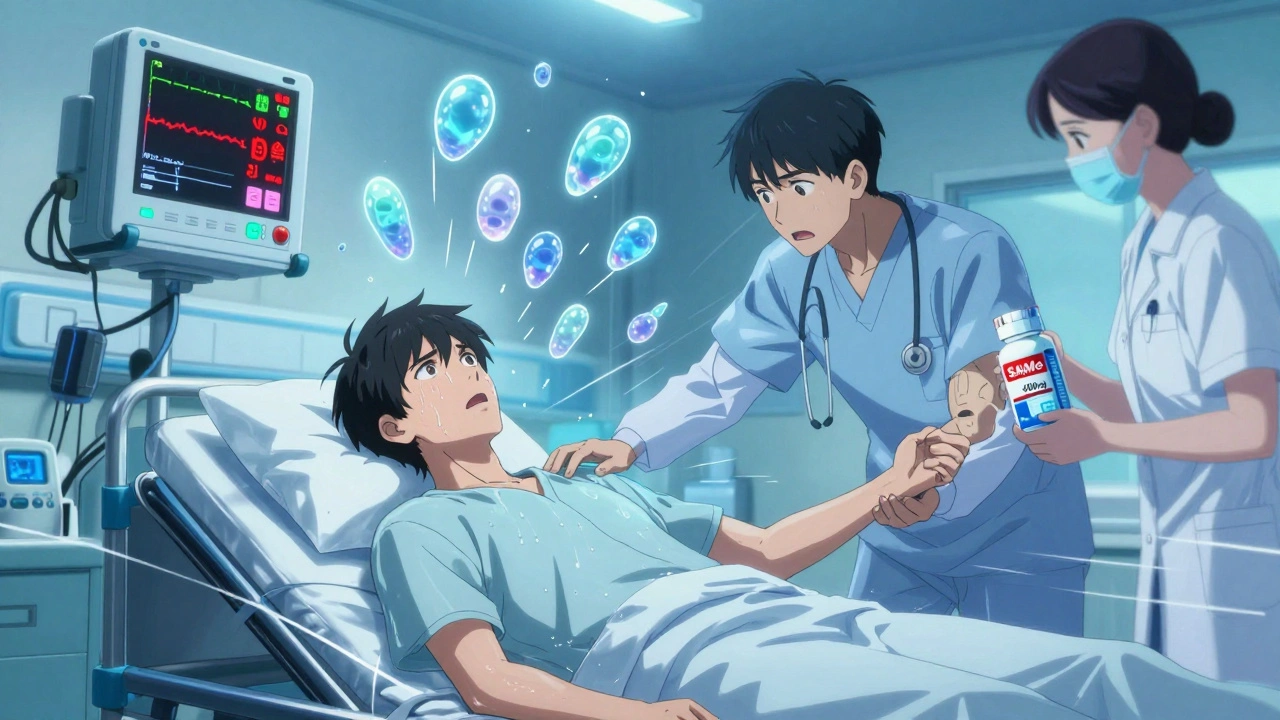
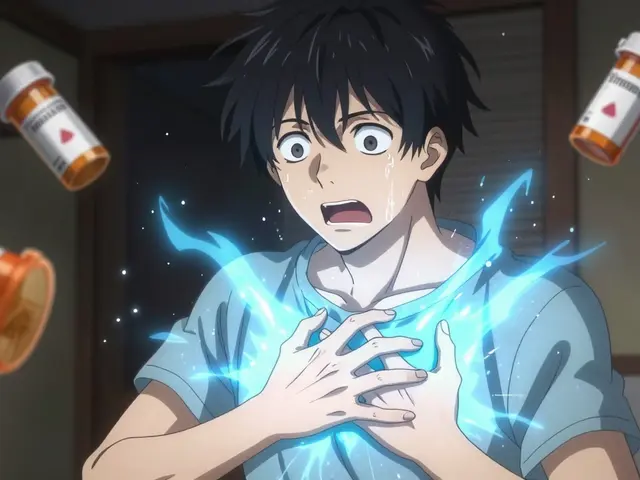
People turn to SAMe for depression because it works faster than most antidepressants. Some feel better in under a week. But if you’re already taking an SSRI like Prozac or Zoloft, mixing SAMe could land you in the ER. This isn’t theoretical. Real people have ended up in hospitals with racing hearts, muscle stiffness, and confusion-all signs of serotonin syndrome. And it’s not rare. Between 2018 and 2022, the FDA recorded 32 adverse events involving SAMe and antidepressants. Nine were classified as serious. Two were confirmed serotonin syndrome cases.
What Is SAMe, Really?
S-adenosylmethionine, or SAMe, is a compound your body makes naturally. It’s not a drug. It’s sold as a supplement, which means the FDA doesn’t test it for safety or effectiveness before it hits store shelves. That’s why you’ll find SAMe in gummy form at Walmart and enteric-coated pills at health food stores. Most products contain 400 mg per capsule, with doses ranging from 200 mg to 1,600 mg daily.
It works by donating methyl groups-tiny chemical units-to brain chemicals like serotonin, dopamine, and norepinephrine. More of these neurotransmitters means better mood regulation. In clinical trials, SAMe improved symptoms in 35-50% of people with mild-to-moderate depression. That’s less than SSRIs (which help 60-70%), but it kicks in faster: 7-10 days versus 2-4 weeks. For people with both depression and joint pain, SAMe can reduce discomfort by 30% more than antidepressants alone.
But here’s the catch: SAMe doesn’t work for everyone. In severe depression, remission rates drop to just 18%, compared to 42% with venlafaxine. It also costs a lot-$80 to $120 a month. And quality? A 2022 ConsumerLab test found 32% of SAMe supplements contained less active ingredient than labeled. You might be paying for nothing.
Why Mixing SAMe and Antidepressants Is Risky
Antidepressants like SSRIs and SNRIs increase serotonin in your brain. SAMe does the same-by boosting production and blocking reuptake. When you combine them, serotonin levels can spike dangerously. That’s serotonin syndrome.
Symptoms include:
- Racing heart or high blood pressure
- Muscle rigidity or twitching
- Shivering or sweating
- Confusion, agitation, or hallucinations
- Body temperature above 38°C (100.4°F)
The Hunter Criteria-a clinical standard-says if you have spontaneous clonus or inducible clonus plus agitation and sweating, you likely have serotonin syndrome. It can kill if not treated fast.
Dr. David Mischoulon from Massachusetts General Hospital says the risk of serotonin syndrome jumps about 35% when SAMe is added to an SSRI. That’s not a small number. And while only 12 published case reports exist since 2000, real-world data tells a different story. Reddit user u/DepressionWarrior2020 took 400 mg of SAMe with 20 mg of Prozac. Within three days: racing heart, muscle rigidity, confusion. ER visit. Diagnosis: serotonin syndrome.
On the flip side, some people report success. SarahJ on Healthline added 800 mg of SAMe to her Zoloft after six months of partial response. Her depression score dropped from 16 to 7. No issues after eight months. But her case is anecdotal. It doesn’t mean it’s safe for you.
The Reality of Combining Them
Most people who take SAMe with antidepressants do it without medical supervision. A 2022 National Health Interview Survey found 68% of SAMe users for depression were also on prescription meds. That’s a lot of people self-managing a high-risk combo.
Doctors rarely bring it up. Only 37% of SAMe products include clear interaction warnings on the label. Most assume you know. You don’t.
The Mayo Clinic, Natural Medicines Database, and FDA all warn against combining SAMe with antidepressants. The interaction is rated ‘Major - Use Caution’ with a severity score of 7.3 out of 10. That’s the same level as mixing MAOIs with certain painkillers. It’s not a suggestion. It’s a red flag.
Even if you’ve been on an SSRI for years, adding SAMe isn’t safe. The risk peaks in the first two to four weeks. That’s when 85% of adverse events happen. Your body is adjusting. Your serotonin levels are climbing. You might feel fine-until you’re not.
Who Should Avoid SAMe Altogether?
Don’t use SAMe if:
- You’re already on any antidepressant (SSRI, SNRI, MAOI, tricyclic)
- You have bipolar disorder-it can trigger mania
- You’re pregnant or breastfeeding
- You have a history of serotonin syndrome
- You take tramadol, dextromethorphan, or certain migraine meds (triptans)
Even if you’re not on meds, SAMe isn’t for everyone. About 22% of users report increased anxiety in the first week. Some get insomnia. Others have nausea or stomach upset. Taking it with food helps 65% of people with GI issues. Splitting the dose (morning and afternoon) reduces sleep problems.
And don’t assume ‘natural’ means ‘safe.’ SAMe is made through bacterial fermentation. It’s not herbal tea. It’s a powerful biochemical compound. Refrigeration is required-2°C to 8°C. If your bottle sat on a hot shelf for months, it’s probably useless.
What Does the Science Say Now?
The American Psychiatric Association’s 2023 guidelines say SAMe ‘lacks sufficient evidence for routine clinical recommendation.’ That’s not a dismissal. It’s a call for better studies.
Current trials are underway. The NIH is funding a multicenter study (NCT04821234) looking at SAMe with escitalopram. Results are expected in mid-2024. Until then, the European College of Neuropsychopharmacology advises against combining SAMe with antidepressants outside research settings.
Some researchers think SAMe might work for specific subgroups-people with certain gene variants that affect methylation. But we don’t have tests for that yet. Until we do, guessing is dangerous.
What If You’re Already Taking Both?
If you’re already combining SAMe and an antidepressant and feel fine, don’t panic. But don’t ignore the risk either.
Here’s what to do:
- Stop taking SAMe immediately if you develop any serotonin syndrome symptoms. Call 911 or go to the ER.
- Talk to your doctor. Don’t quit your antidepressant cold turkey. That can cause withdrawal.
- Ask about alternatives. St. John’s wort has similar risks. Omega-3s and vitamin D have better safety profiles and some evidence for mood support.
- If your doctor approves continuing SAMe, start at 200 mg twice daily. Increase by 200 mg every 5-7 days. Monitor closely.
There’s no safe dose when mixed. Only a less dangerous one. And even that requires constant supervision.
The Bigger Picture
The global antidepressant market is worth $14.7 billion. SAMe makes up just 2.3% of that. But interest is growing. NIH funding for SAMe research jumped from $1.2 million in 2015 to $4.7 million in 2022. Companies are developing new versions-SAMe-PEG and SAMe-phospholipid complexes-that may reduce interaction risks by 40% in early trials.
But here’s the truth: supplements aren’t regulated like drugs. Manufacturers don’t have to prove they work. They just have to say they’re ‘for dietary support.’ That’s why you’ll see ads claiming SAMe ‘cures depression.’ That’s illegal. The FDA sent warning letters to three SAMe brands in 2023 for making those claims.
Until SAMe becomes a regulated drug-with standardized dosing, proven safety data, and clear interaction guidelines-it’s a gamble. And when you’re mixing it with antidepressants, the stakes are life or death.
If you’re struggling with depression and your current treatment isn’t working, talk to a psychiatrist. There are evidence-based options: switching meds, adding therapy, trying TMS or ketamine. Don’t risk serotonin syndrome on a supplement you bought online without knowing what’s in it.
Can I take SAMe with my SSRI if I’ve been on it for years?
No. Even if you’ve been stable for years, adding SAMe increases serotonin levels in ways that are unpredictable. The risk of serotonin syndrome doesn’t disappear with time-it’s highest in the first few weeks of combining them. There’s no safe window. Medical supervision doesn’t eliminate the risk; it only helps catch symptoms early.
Is SAMe better than antidepressants?
Not for most people. SAMe works faster but is less effective overall. In mild-to-moderate depression, it helps about half of users. Antidepressants help 60-70%. For severe depression, SAMe fails in over 80% of cases. It’s not a replacement-it’s a potential add-on, and even then, only under strict medical oversight.
What are the signs of serotonin syndrome from SAMe and antidepressants?
Look for: sudden muscle twitching or rigidity, uncontrollable shivering, rapid heartbeat, high blood pressure, sweating, confusion, agitation, or fever above 38°C (100.4°F). If you have two or more of these-especially clonus (involuntary muscle contractions) plus agitation or sweating-seek emergency care immediately. Don’t wait.
Can I take SAMe instead of antidepressants?
Only if your depression is mild and you’re under a doctor’s care. SAMe isn’t FDA-approved for depression. It’s a supplement with inconsistent quality, variable absorption, and no long-term safety data. Stopping prescribed antidepressants without a plan can cause withdrawal, rebound depression, or worse. Never switch without medical guidance.
Are there safer supplements for depression than SAMe?
Yes. Omega-3 fatty acids (especially EPA), vitamin D, and magnesium have strong safety profiles and some evidence supporting mood benefits. St. John’s wort has similar interaction risks as SAMe and should be avoided with antidepressants. Always check with your doctor before starting any supplement, even ones labeled ‘natural’ or ‘safe.’


Lara Tobin
December 12, 2025 AT 18:51I took SAMe for three weeks last year after my therapist suggested it. Felt amazing at first-like a weight lifted. Then one morning my heart was pounding like I’d run a marathon. I thought I was having a panic attack… turned out it was serotonin syndrome. ER visit. Scared the hell out of me. Never again. Stay away from the combo. 💔
Jamie Clark
December 13, 2025 AT 23:02Let’s be real-this whole ‘natural remedy’ myth is just capitalism repackaging biochemistry as wellness magic. SAMe isn’t a supplement, it’s a neurotransmitter modulator with no oversight. The FDA doesn’t regulate it because they can’t afford to chase every snake oil vendor. Meanwhile, people are dying because they think ‘organic’ means ‘safe.’ Wake up. This isn’t yoga. It’s neurochemistry with a side of Walmart gummies.
Keasha Trawick
December 14, 2025 AT 09:47Okay, but let’s geek out for a sec-SAMe’s methyl donation pathway is *wild*. It’s not just boosting serotonin, it’s tweaking epigenetic methylation, influencing dopamine synthesis, and modulating phospholipid membranes in the prefrontal cortex. That’s why it works faster than SSRIs-direct substrate delivery, not reuptake inhibition. But here’s the kicker: if you’ve got MTHFR mutations? You’re basically pouring gasoline on a fire. And don’t get me started on the bioavailability nightmare-most capsules degrade if the warehouse wasn’t refrigerated. You’re paying $100 for a placebo with side effects. 🧬💥
Bruno Janssen
December 16, 2025 AT 07:16I’ve been on Zoloft for 7 years. Stable. Happy. Then I saw a TikTok ad for SAMe gummies. ‘Natural mood booster.’ So I bought a bottle. Didn’t feel anything. Then I felt… off. Like my brain was vibrating. Couldn’t sleep. Heart racing. I didn’t connect it until I read this post. Now I’m terrified. What if I’ve already damaged something? I don’t even know who to talk to.
Emma Sbarge
December 18, 2025 AT 01:22People in this country think if it’s sold in a health food store, it’s legal and safe. That’s not how this works. We have real medicine with clinical trials and dosing guidelines. SAMe? It’s a loophole. The FDA doesn’t regulate it because Congress won’t fund it. And now we have a generation of people self-prescribing neuroactive compounds like they’re vitamins. This isn’t freedom. It’s negligence dressed up as empowerment. Stop buying into the myth.
Deborah Andrich
December 19, 2025 AT 21:47I get it-you’re tired of feeling numb. I was too. I tried SAMe with my SSRI because I felt like I’d hit a wall. I didn’t know the risks. I just wanted to feel alive again. I’m lucky I didn’t end up in the hospital. But I’m also lucky I found a psychiatrist who didn’t judge me. She helped me switch to therapy + omega-3s. You’re not broken for wanting help. But please, don’t risk your life for a quick fix. Talk to someone who knows the science. You deserve better than a gummy from Amazon.
Tommy Watson
December 21, 2025 AT 13:45lol i took sam e for 2 weeks and felt like a god. no joke. then i got the shakes and thought i was dying. turned out i was. my dr said i was lucky. now i just do yoga and drink green tea. also i think antidepressants are for wimps. but still dont mix stuff. dumb.
Casey Mellish
December 21, 2025 AT 23:35Down under, we’ve got stricter supplement controls, but the same myths persist. I’ve seen mates in Australia take SAMe with SSRIs and swear it’s ‘perfectly fine.’ Then they end up in the ED with clonus and confusion. The science’s clear: this combo is a ticking time bomb. Don’t romanticize it. Don’t normalize it. If you’re struggling, reach out to a mental health professional-not a supplement brand. Your brain’s worth more than a marketing slogan.
Michael Gardner
December 23, 2025 AT 18:43Everyone’s acting like SAMe is some dangerous drug. SSRIs cause weight gain, sexual dysfunction, and emotional blunting. SAMe doesn’t. And yeah, there are risks-but so does driving to the grocery store. People die from falling in the shower. Should we ban showers too? This fearmongering is worse than the supplement itself. If you’re smart, you monitor your symptoms. You don’t need a panic attack over a methyl donor.
Willie Onst
December 23, 2025 AT 19:16Hey, I just want to say-I’ve been where you are. Felt like I was drowning in my own mind. Tried SAMe after reading a Reddit thread. Took 400mg with Lexapro. Felt weird, but not bad. Then I talked to my psychiatrist. She didn’t yell. She didn’t shame me. She said, ‘Let’s try something safer.’ We switched me to light therapy + fish oil. Three months later, I’m doing better than I have in years. You’re not alone. And you don’t have to risk your life to feel better. Just ask for help. 💙