
When you hear the word allergy, you probably think of pollen, peanuts, or pet dander. But what about medications? A drug allergy isn’t just a rash or upset stomach-it’s your immune system going into overdrive, treating a harmless drug like a dangerous invader. And it’s more common than you think. About 10% of people say they’re allergic to penicillin. But here’s the twist: most of them aren’t. Studies show that 90 to 95% of people labeled as penicillin-allergic can safely take it again after proper testing. That’s not a small mistake. It’s a nationwide health issue that’s costing billions and putting lives at risk.
What Really Counts as a Drug Allergy?
Not every bad reaction to a drug is an allergy. Many people confuse side effects with allergies. If you got nauseous after taking an antibiotic, that’s likely a side effect. If you broke out in hives, swelled up, or had trouble breathing within minutes or hours of taking the pill, that’s an allergic reaction. True drug allergies involve your immune system producing IgE antibodies, which trigger a cascade of symptoms ranging from mild to life-threatening.
The most common drug allergies? Penicillin and related antibiotics like amoxicillin. Then come sulfa drugs, NSAIDs like ibuprofen, and certain chemotherapy agents. But here’s what most people don’t know: a rash you got as a kid from amoxicillin doesn’t mean you’re still allergic 20 years later. The immune system forgets. Studies show that up to 80% of people who had a penicillin allergy in childhood lose it over time-without even trying.
Why Mislabeling Is Dangerous
When a doctor sees “penicillin allergy” in your chart, they avoid the most effective, safest, and cheapest antibiotic for your infection. Instead, they reach for something broader, costlier, and more likely to cause side effects. Take a simple strep throat. Penicillin costs about $4 for a full course. A common alternative like azithromycin? Around $26. That’s not just a wallet issue-it’s a public health crisis.
Using broader-spectrum antibiotics increases your risk of Clostridium difficile infection, a nasty gut bug that causes severe diarrhea and can be fatal. Patients labeled as penicillin-allergic have a 40% higher chance of getting this infection. They also stay in the hospital 30% longer. Why? Because doctors are forced to use less targeted drugs, which don’t work as well and create more complications.
And here’s the kicker: 78% of patients with documented drug allergies say their label has changed their treatment at least once. Some got worse drugs. Others got the wrong dose. A few even had surgeries delayed because doctors couldn’t safely use painkillers or antibiotics they needed.
How to Know If You’re Really Allergic
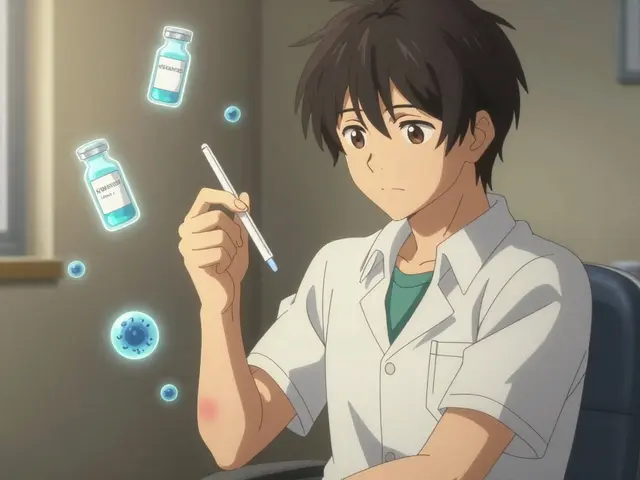
If you think you’re allergic to a drug, don’t just assume. Get tested. The gold standard is skin testing, especially for penicillin. It’s simple, safe, and highly accurate. A small amount of the drug is injected just under the skin. If you’re allergic, a red, itchy bump appears within 15 to 20 minutes. If not? You’re cleared.
For people with a history of severe reactions-like anaphylaxis within the last 10 years-testing is done in a hospital setting. But for most people with a mild rash from years ago? Testing can be done right in your doctor’s office. The CDC now recommends outpatient skin testing for low-risk patients. And the results? Over 95% of people who get tested turn out not to be allergic at all.
One patient, a 37-year-old teacher from Ohio, had avoided all penicillin-based drugs since age 7 after a rash. She spent years on expensive antibiotics that gave her stomach pain. After a simple skin test, she was cleared. Within weeks, she took amoxicillin for a sinus infection. No reaction. No side effects. Just relief.

What If You’re Truly Allergic?
Some people are. And for them, finding safe alternatives matters. But it’s not as simple as picking another antibiotic. Cross-reactivity is real-but often misunderstood. For years, doctors told patients with penicillin allergies to avoid all cephalosporins. That’s outdated. The risk of reacting to a third-generation cephalosporin like ceftriaxone is less than 5%. That’s lower than the risk of being struck by lightning.
Safe alternatives for penicillin-allergic patients include:
- Macrolides like azithromycin and clarithromycin-effective for respiratory infections, but can cause stomach upset.
- Fluoroquinolones like levofloxacin-powerful, but carry risks of tendon damage and nerve issues.
- Tetracyclines like doxycycline-great for acne and Lyme disease, but not for kids or pregnant women.
- Vancomycin-used for serious infections, but only in hospitals.
Each has trade-offs. They’re often more expensive. They hit more types of bacteria, which increases antibiotic resistance. And they’re not always as effective as penicillin for certain infections.
For example, if you have syphilis and are pregnant, penicillin is the only drug that cures it. No alternatives work. That’s why doctors will do something called desensitization-a carefully controlled process where you’re given tiny, increasing doses of penicillin over several hours under medical supervision. Success rates? Over 80%. It’s not risky when done right. And it’s lifesaving.
How to Protect Yourself
Here’s what you need to do right now:
- Check your records. Look at your medical chart. Does it say “penicillin allergy” with no details? That’s not helpful. You need to know: What was the reaction? When did it happen? How many doses did you take? Did you have hives? Swelling? Trouble breathing?
- Ask for testing. If your allergy happened years ago or was just a rash, ask your doctor about skin testing. It’s covered by most insurance.
- Carry proof. If you’ve been tested and cleared, get a wallet card or update your phone’s health app. Bring it to every appointment.
- Teach your family. If you can’t speak for yourself, someone else needs to know your allergy history. Make sure your spouse, parent, or caregiver knows what to say.
Many people get frustrated when their old allergy label pops up in a new hospital system. One woman in Michigan had her allergy cleared in 2019, but every time she went to the ER, they still wrote “penicillin allergy.” She had to show her test results 12 times. Don’t let that be you. Print it. Save it. Send it.

What’s Changing in 2026
The healthcare system is finally catching up. In 2023, the American Academy of Allergy, Asthma & Immunology launched the “Choose Penicillin” campaign. Twelve pilot hospitals cut unnecessary alternative antibiotic use by 65%. The CDC updated its guidelines to encourage outpatient testing. The FDA is working on standardizing how allergies are recorded in electronic health records.
By 2027, half of all penicillin allergy evaluations will happen in primary care clinics-not just allergist offices. That’s huge. It means your family doctor could be the one to clear you, not a specialist you have to wait months to see.
And the numbers speak for themselves. Every time someone gets tested and cleared, it saves an estimated $1,200 in unnecessary drugs and hospital stays. Multiply that by millions of people. That’s not just better care. It’s smarter spending.
Final Thought: Your Allergy Label Is Not Set in Stone
You don’t have to live with a label from 20 years ago. If you’ve been told you’re allergic to a drug, especially penicillin, ask: Is this really true? Could I be cleared? What’s the risk of avoiding it? The answer might surprise you. And it could change your health-for the better.





William Minks
March 6, 2026 AT 14:33Just got my penicillin skin test done last week 😊 Turns out I wasn't allergic since I was 5. My doctor said I’ve been overpaying for antibiotics for 22 years. $1,200 saved already. Mind blown. 🙌
Jeff Mirisola
March 6, 2026 AT 18:26This is why we need to stop treating medical labels like tattoos. They’re not permanent. If you got a rash as a kid, you’re probably fine. Stop letting hospitals scare you with outdated info. 💥
Susan Purney Mark
March 8, 2026 AT 05:49I’m a nurse and I’ve seen this firsthand. A patient came in with a UTI, labeled penicillin-allergic. They gave her a 5-day course of cipro. She got C. diff. Three weeks later, she came back. We tested her-no allergy. Gave her amoxicillin. She was fine in 48 hours. So many unnecessary hospitalizations. 😔
Always ask: ‘Was it a rash? Or breathing trouble?’ Big difference.
Ian Kiplagat
March 8, 2026 AT 06:59UK data shows similar trends. 87% of penicillin-labeled patients were not truly allergic. NHS is rolling out GP-led testing this year. Long overdue.
Amina Aminkhuslen
March 9, 2026 AT 00:32Wow. So we’ve been letting hospitals play Russian roulette with antibiotics because people are too lazy to get tested? Brilliant. I’ve got a cousin who’s been on vancomycin since 2010 because her mom said she ‘got sick’ once. She’s 24. She’s never even tried penicillin. This isn’t healthcare. It’s negligence with a stethoscope.
Andrew Poulin
March 10, 2026 AT 02:34My mom had a rash on penicillin at 8. She’s 72 now. We got her tested last month. Zero reaction. She’s been on azithromycin for every infection since. That’s 50 years of unnecessary meds. This needs to be standard.
Weston Potgieter
March 10, 2026 AT 10:46Doctors are scared to change labels. They’d rather prescribe 500 bucks of broad-spectrum junk than risk a lawsuit. Meanwhile patients get gutted by C. diff. It’s not incompetence. It’s cowardice.
Vikas Verma
March 10, 2026 AT 20:45As a primary care provider in India, I can confirm this global pattern. Penicillin avoidance leads to increased resistance, higher costs, and prolonged hospitalization. We are initiating outpatient skin testing clinics in rural centers. Early results show >90% negative rates. This is scalable.
Sean Callahan
March 11, 2026 AT 14:39so i had this thing in 2015 where i took amoxicillin and got a rash but i was also sick with mono so idk if it was the drug or my immune system going haywire like omg i just found out today that 80% of people outgrow it?? like i’ve been avoiding penicillin for 9 years?? i need to get tested like rn
Aaron Pace
March 12, 2026 AT 20:51My sister got anaphylaxis once. She’s terrified. But I told her: if it was 15 years ago and it was just hives? Get tested. If it was a full-blown ICU moment? Maybe not. But don’t just assume. 🤷♂️❤️
Joey Pearson
March 13, 2026 AT 23:59My mom got cleared last year. She cried. Said she finally felt heard. We printed the results, put it in her wallet, and emailed it to all her doctors. Small thing. Huge impact.
Roland Silber
March 14, 2026 AT 12:07What’s wild is how many people don’t even know what IgE-mediated means. A rash ≠ allergy. Nausea ≠ allergy. Only true IgE reactions-hives, swelling, wheezing-count. Everything else? Side effect. Mislabeling causes real harm. We need public education, not just testing.
Imagine if we treated food allergies like this. ‘Oh you had a stomach ache after peanuts once? You’re fine.’ No. But we do it with drugs. Why?
Patrick Jackson
March 15, 2026 AT 02:50It’s not just about penicillin. It’s about how we treat medical truth as a fixed point in time. We don’t do that with vision. We don’t do that with hearing. We update. We reassess. But with allergies? We freeze people in 1998. That’s not science. That’s superstition with a clipboard.
We’re not just saving money. We’re reclaiming agency. You are not your childhood rash. You are not your 2003 ER note. You are a person who deserves accurate care. And that? That’s worth fighting for.