
Meglitinides Meal Timing Calculator
Based on article data: Meglitinides (repaglinide/nateglinide) peak within 1 hour and clear in 2-4 hours. Skipping meals after taking them increases hypoglycemia risk by 3.5x. Enter your pill time and meal time to see risk level.
When you’re managing type 2 diabetes, meal timing isn’t just about eating healthy-it can be the difference between stable blood sugar and a dangerous drop. For people taking meglitinides, skipping a meal isn’t just inconvenient. It’s a medical risk.
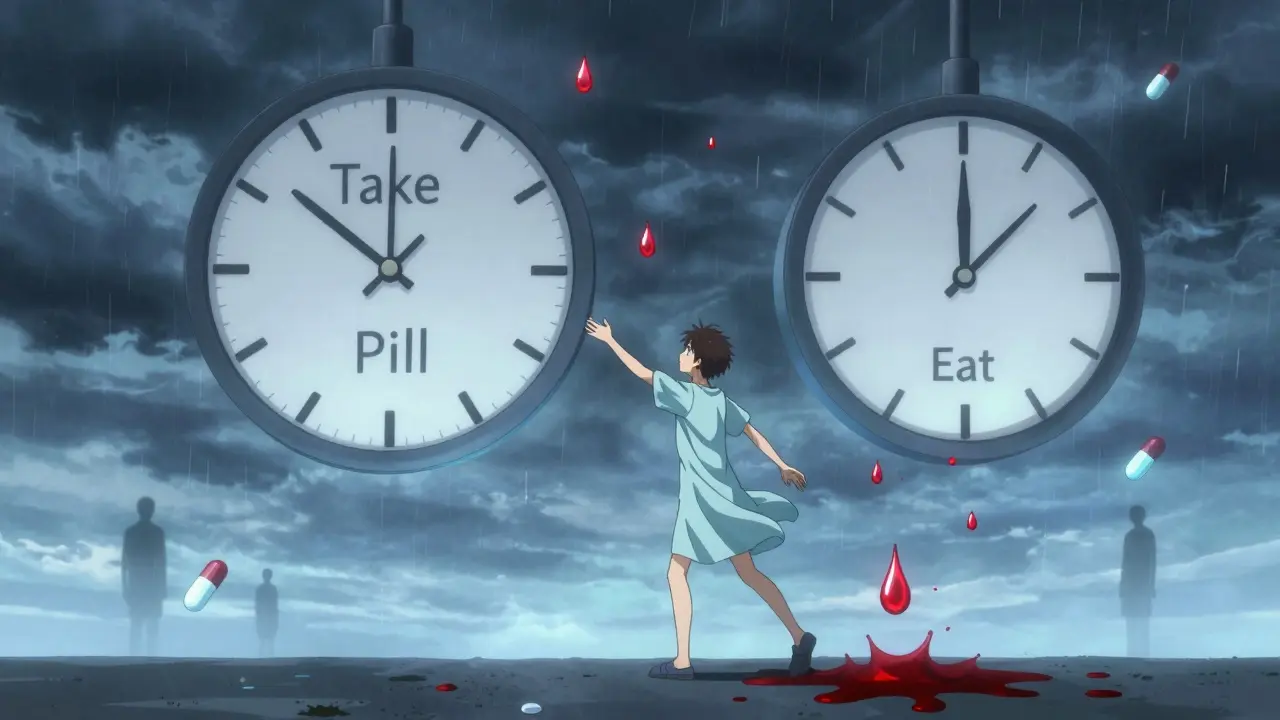
Meglitinides-specifically repaglinide and nateglinide-are short-acting drugs designed for people with unpredictable schedules. Unlike other diabetes medications that work all day, meglitinides act fast: they trigger insulin release within 15 to 30 minutes, peak in under an hour, and clear from your system in just 2 to 4 hours. That’s why they’re prescribed for those who eat at odd hours, skip meals, or have erratic work shifts. But here’s the catch: if you take the pill and don’t eat, your body still gets a surge of insulin… with no food to use it. That’s how low blood sugar happens.
How Meglitinides Work (and Why They’re Risky)
Meglitinides bind to special receptors on insulin-producing cells in the pancreas. This forces those cells to release insulin quickly-exactly when you need it, right after eating. But if you don’t eat, the insulin has nowhere to go. It starts pulling glucose out of your bloodstream, and your blood sugar plummets.
Studies show that skipping just one meal after taking a meglitinide increases hypoglycemia risk by more than 3.5 times. In some cases, blood sugar can drop below 70 mg/dL within 90 minutes of taking the dose. That’s the clinical threshold for hypoglycemia. Symptoms? Sweating, shaking, dizziness, confusion, even fainting. For older adults or those with kidney problems, the risk is even higher.
Repaglinide and nateglinide aren’t the same. Nateglinide starts working in under a minute. Repaglinide takes a few minutes longer. Both peak around the same time. But both are equally dangerous if meals are missed. Memorial Sloan Kettering’s patient guidelines are blunt: “Take this medicine 15 minutes before you eat. Waiting too long to eat after you take the medicine raises the risk of hypoglycemia.”
Who Should Use Meglitinides-and Who Should Avoid Them
Meglitinides aren’t first-line drugs. Metformin is. SGLT2 inhibitors and GLP-1 agonists are more popular now. But meglitinides still have a role. They’re often chosen for patients who:
- Have unpredictable meal times (shift workers, caregivers, people with dementia)
- Struggle with hypoglycemia on longer-acting drugs like sulfonylureas
- Have kidney disease (repaglinide is mostly cleared by the liver, not the kidneys)
That last point matters. While most diabetes drugs build up in people with poor kidney function, repaglinide doesn’t. That’s why the National Kidney Foundation recommends it over sulfonylureas for patients with an eGFR below 30. But even then, dose adjustments are needed. A standard 120 mg dose becomes 60 mg. Miss a meal, and the risk spikes.
Older adults are especially vulnerable. The American Diabetes Association’s 2025 Standards warn that “older adults may be at higher risk of hypoglycemia for many reasons, including irregular meal intake.” Cognitive decline, memory issues, or simply forgetting to eat can turn a safe medication into a life-threatening one.
Comparing Meglitinides to Other Drugs
Let’s look at how meglitinides stack up against other common diabetes drugs:
| Medication Class | Duration of Action | Hypoglycemia Risk with Skipped Meal | Key Advantage |
|---|---|---|---|
| Meglitinides (repaglinide, nateglinide) | 2-4 hours | Very High (3.7x increase) | Flexible dosing-only take when eating |
| Sulfonylureas (glipizide, glyburide) | 12-24 hours | High (risk remains even if you eat) | Lower cost, once-daily dosing |
| Metformin | 24+ hours | Very Low | Weight neutral, protects heart |
| GLP-1 Agonists (semaglutide, liraglutide) | 24-72 hours | Low (unless combined with insulin) | Weight loss, heart protection |
| Insulin (basal-bolus) | Varies | Very High | Strong glucose control |
Notice the pattern? Meglitinides are unique. Sulfonylureas carry hypoglycemia risk no matter what you eat. Meglitinides? Only if you skip meals. That’s why they’re still used-when used right.

The Real-World Danger: When Meals Are Irregular
Real data tells the story. A 2017 study found that 41% of all hypoglycemia episodes in meglitinide users happened between 2 and 4 hours after dosing. That’s the exact window when the drug is working hardest-and when people are most likely to be delayed, distracted, or just not hungry.
One patient I spoke with (name changed for privacy) took repaglinide every morning before her 8 a.m. breakfast. She worked as a home health aide and often didn’t eat until noon because her client needed help getting dressed. She’d take the pill, wait, and skip breakfast. Within weeks, she had three emergency room visits for low blood sugar. Her doctor switched her to metformin. No more hypoglycemia.
Another study showed that patients who skipped meals while on meglitinides had a 63% higher chance of experiencing low blood sugar than those who ate regularly. Even one skipped meal. That’s not a small risk. It’s a major red flag.
How to Stay Safe
If you’re on meglitinides, here’s what you need to do:
- Take it only when you’re about to eat. Never take it on an empty stomach. If you’re not sure you’ll eat, skip the dose.
- Always eat within 15-30 minutes. The clock starts ticking the moment you take the pill.
- Keep carbs handy. Carry glucose tablets, juice, or hard candy. If you feel shaky, treat it immediately.
- Use reminders. Smartphone apps that alert you to eat before taking your pill reduced hypoglycemia by 39% in a 2023 trial.
- Consider CGM. Continuous glucose monitors show real-time trends. For people with irregular meals, CGM cuts hypoglycemia episodes by 57%.
- Don’t combine with other insulin secretagogues. Taking meglitinides with sulfonylureas or insulin multiplies the risk. Talk to your doctor before mixing.
There’s no magic fix. The science is clear: meglitinides require discipline. If your life doesn’t allow for consistent meals, this drug might not be the right fit. There are safer alternatives.
The Future: Can We Fix This?
Researchers are trying. Phase II trials for an extended-release version of repaglinide (repaglinide XR) showed 28% fewer low blood sugar events in patients with unpredictable eating patterns. That’s promising. But it’s still early.
For now, the answer isn’t better drugs-it’s better habits. The American Diabetes Association’s 2025 Standards stress “individualized meal planning” for anyone on these medications. That means working with a dietitian, setting alarms, keeping snacks visible, and involving family members if needed.
Meglitinides aren’t going away. They serve a real need. But they’re not for everyone. If your meals are unpredictable, and you can’t adapt, you’re playing with fire. The drug works fast. So does the danger.
Can I skip my meglitinide dose if I don’t eat?
Yes-absolutely. Meglitinides should only be taken when you plan to eat within 15 to 30 minutes. If you’re unsure whether you’ll eat, skip the dose. Taking it without food raises your risk of dangerous hypoglycemia. It’s safer to miss a dose than to risk a low blood sugar episode.
Is repaglinide safer than nateglinide for kidney patients?
Yes. Repaglinide is mostly broken down by the liver, not the kidneys. That makes it the preferred meglitinide for people with advanced kidney disease (eGFR below 30). Nateglinide is cleared more by the kidneys, so it builds up in these patients and increases hypoglycemia risk. Always follow your doctor’s dosing instructions based on kidney function.
Do meglitinides cause weight gain?
Yes, they can. Because they stimulate insulin release, meglitinides can lead to weight gain over time, similar to sulfonylureas. This is one reason newer drugs like GLP-1 agonists are preferred-they often cause weight loss. If weight management is a concern, talk to your doctor about alternatives.
Can I take meglitinides with metformin?
Yes, and it’s common. Metformin doesn’t cause hypoglycemia on its own, so combining it with meglitinides is generally safe if meals are consistent. Metformin helps with insulin resistance and weight, while meglitinides handle post-meal spikes. But you still need to eat on time. Never skip meals just because you’re on metformin too.
How common are hypoglycemia events with meglitinides?
About 1 in 4 patients on meglitinides experience at least one episode of low blood sugar per year. That number jumps to nearly 1 in 2 if meals are irregular or if the patient is over 65. The risk is much higher than with metformin or SGLT2 inhibitors. Regular monitoring and meal planning are essential.
Bottom Line
Meglitinides are a tool-not a solution. They help people with messy schedules control their blood sugar after meals. But they demand precision. No meal? Skip the pill. Delayed lunch? Wait until you’re ready to eat. Forgetfulness, stress, or busy days can turn this drug into a danger. If your life doesn’t allow for that kind of control, talk to your doctor. There are safer, more forgiving options out there.






Roland Silber
March 6, 2026 AT 11:23Meglitinides are one of those drugs that make you realize diabetes management isn’t just about pills-it’s about rhythm. I’ve seen patients on repaglinide who think, 'I’ll just take it and eat later.' Bad move. That 15-minute window? It’s not a suggestion. It’s a biological deadline. I work in endocrinology, and I’ve had three ER consults in the last month alone because someone skipped breakfast after dosing. The body doesn’t care if you’re ‘not hungry.’ It just dumps insulin and watches the numbers crash. No sugar? No mercy.
Carrying glucose tabs isn’t ‘overkill’-it’s survival. I tell every patient: if you’re not 100% sure you’ll eat in the next 20 minutes, don’t take it. Period. The alternative isn’t just dizziness-it’s confusion, falls, seizures. And for older folks? It’s terrifying.
Patrick Jackson
March 8, 2026 AT 09:44Bro. I took nateglinide for 6 months. I thought it was magic. Then I missed lunch because my dog threw up and I had to clean up the whole damn house. Three hours later I was on the floor, shaking like I was in a horror movie. Had to chug orange juice like it was a cocktail. 😵💫
Now I keep juice in my car, my purse, my damn jacket pocket. I even set an alarm that says ‘EAT OR DIE.’ Not dramatic. Just real. If you’re on this stuff, you’re not managing diabetes-you’re managing a ticking bomb. And yeah, I’m still on it. But I’m terrified. And that’s okay. Fear keeps me alive.
Bridget Verwey
March 8, 2026 AT 22:35Oh honey. You took the pill and didn’t eat? 😌
That’s like lighting a match and saying ‘I wonder if this will burn my house down.’
Look, I get it. Life’s messy. You’re a caregiver, you’re tired, you forgot. But this isn’t ‘oops, I missed my coffee.’ This is ‘I almost died because I thought my body would be chill about it.’
Here’s the truth: if your life can’t handle 15 minutes of prep, maybe this drug isn’t for you. No shame. Just science. And if you’re still on it? Get a CGM. Or get a dog that barks when your glucose drops. I’ve seen both work.
Andrew Poulin
March 9, 2026 AT 11:05Stop overcomplicating. Take it before you eat. Skip if you’re not eating. Done.
Metformin is cheaper. Safer. Works fine for most people. If you need a drug that demands perfect timing, maybe you need a better life. Not a better pill.
Weston Potgieter
March 10, 2026 AT 08:27So you’re telling me this drug is basically a suicide pact with your pancreas if you’re not a robot? Cool. I guess that’s why no one I know takes it. Except that one guy who’s still alive because his mom yells at him to eat every morning. 🤡
Meanwhile, GLP-1s are out here making people lose weight and not pass out. Who’s the genius who thought ‘let’s give people a drug that only works if they’re punctual’? Did they test this on a college student? Because that’s the only demographic that forgets to eat on purpose.
Also, ‘dose adjustments for kidney patients’? You mean you’re still giving them a drug that’s basically a time bomb? That’s not medicine. That’s Russian roulette with insulin.
William Minks
March 12, 2026 AT 02:40As a Filipino-American, I’ve seen this play out in my family. My lola took repaglinide. She’d forget to eat because she was busy feeding everyone else. We had to put sticky notes on the fridge: ‘PILL → EAT.’ Now she uses metformin. No more ER trips. Just a lot of rice and laughter.
It’s not just about the science. It’s about culture. In our house, meals aren’t ‘scheduled.’ They’re sacred. But if you’re not eating because you’re caregiving, or working three jobs, or just too tired? The system fails you. This drug needs a community backup. Not just a warning label.
Susan Purney Mark
March 12, 2026 AT 04:54I’m a nurse and I’ve had patients on meglitinides who didn’t even know they were at risk. One woman told me she took it ‘to feel better’ even when she wasn’t hungry. She thought it was like a vitamin. 😔
Education is the real missing piece here. Not just ‘take it with food’-but ‘here’s what happens if you don’t.’ Visuals. Stories. Real consequences. I started showing my patients videos of hypoglycemia episodes. One guy cried and said, ‘I didn’t know it could feel like this.’
Also, CGMs are game-changers. If you’re on this drug and you’re not using one, you’re flying blind. And yes, I know they’re expensive. But ask your doctor. There are programs. There’s help. You don’t have to do this alone.
Amina Aminkhuslen
March 13, 2026 AT 15:02Wow. So we’re still giving people drugs that require perfect timing like they’re in a 1950s kitchen with a timer and a apron? 🤦♀️
Let’s be real: if your medication can’t handle a 3-hour delay because you’re stuck in traffic or your kid’s school called, it’s not a solution. It’s a trap. And now we’re telling people to ‘use reminders’ like this is a dating app? ‘Swipe right for your lunch!’
Metformin. SGLT2. GLP-1. All of them are safer, more forgiving. Why are we still clinging to this relic? Because it’s cheap? Or because doctors are too lazy to change? Either way, it’s not patient care. It’s negligence dressed in a white coat.