Why nurses are the key to patient trust in generic drugs
When a patient picks up their prescription and sees a pill that looks completely different from what they’ve been taking, panic can set in. Generic medications aren’t inferior-they’re the same medicine, just cheaper. But patients don’t always know that. Nurses are often the first-and sometimes only-person who has time to explain it.
Every day, nurses walk into rooms where patients are confused, anxious, or outright refusing their meds because the color, shape, or size changed. That’s not just a logistics issue. It’s a safety issue. Studies show that 22% to 37% more patients stick to their treatment when nurses clearly explain why generics work just as well. And when patients stop taking their meds because they think the generic is weaker, the consequences can be deadly. One case in 2023 involved a 68-year-old who stopped taking levothyroxine after a switch to generic, leading to a life-threatening myxedema crisis. That’s preventable.
What nurses actually say to patients about generics
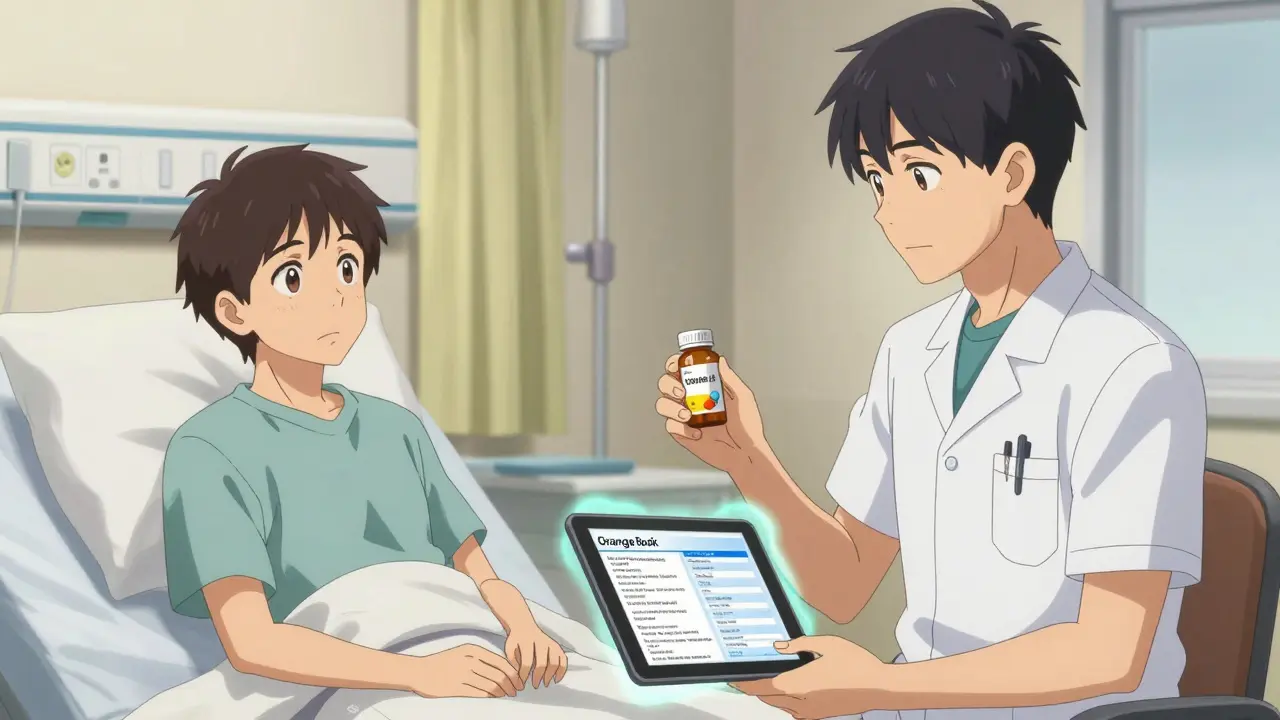
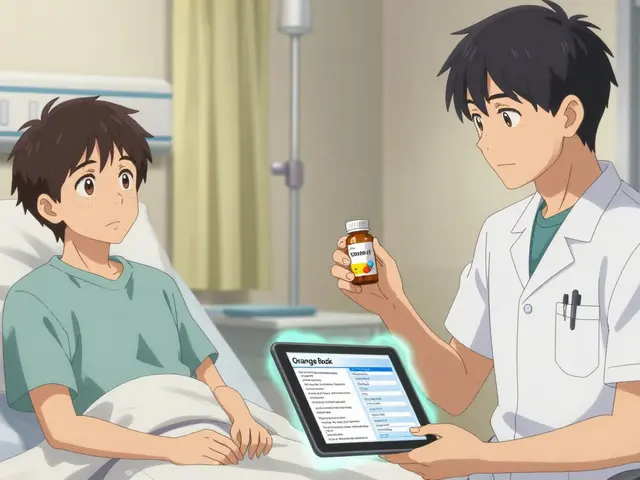
Nurses don’t recite FDA regulations. They speak like humans. They say things like: "This pill has the exact same active ingredient as the brand name. The FDA requires it to work the same way in your body. The only difference? It costs less." They point to the FDA’s "It’s the Same Medicine" materials. They show patients the Orange Book on their tablet. They compare pill images side by side. They don’t assume patients understand terms like "bioequivalence"-they say, "Your body absorbs this pill the same way it absorbed the other one." One nurse at Johns Hopkins shared how she turns confusion into calm: "I tell patients, the FDA checks every generic factory the same way they check brand-name ones. Same rules. Same inspections. Same standards. If it didn’t work, it wouldn’t be allowed on the shelf." The most powerful tool? The teach-back method. Nurses ask: "Can you tell me in your own words why we’re giving you this pill now?" If the patient says, "Because it’s cheaper," the nurse doesn’t move on. They correct gently: "It’s cheaper, yes. But it’s also just as strong. Can you tell me what makes it the same?" That’s how you know they really get it.
The hidden dangers nurses watch for
Not all drugs are created equal when it comes to switching. Nurses know which ones demand extra care. Drugs like warfarin, levothyroxine, phenytoin, and cyclosporine have what’s called a "narrow therapeutic index." That means even tiny differences in how the body absorbs the drug can cause serious harm. A 10% change in blood levels might mean the difference between a seizure and safety.
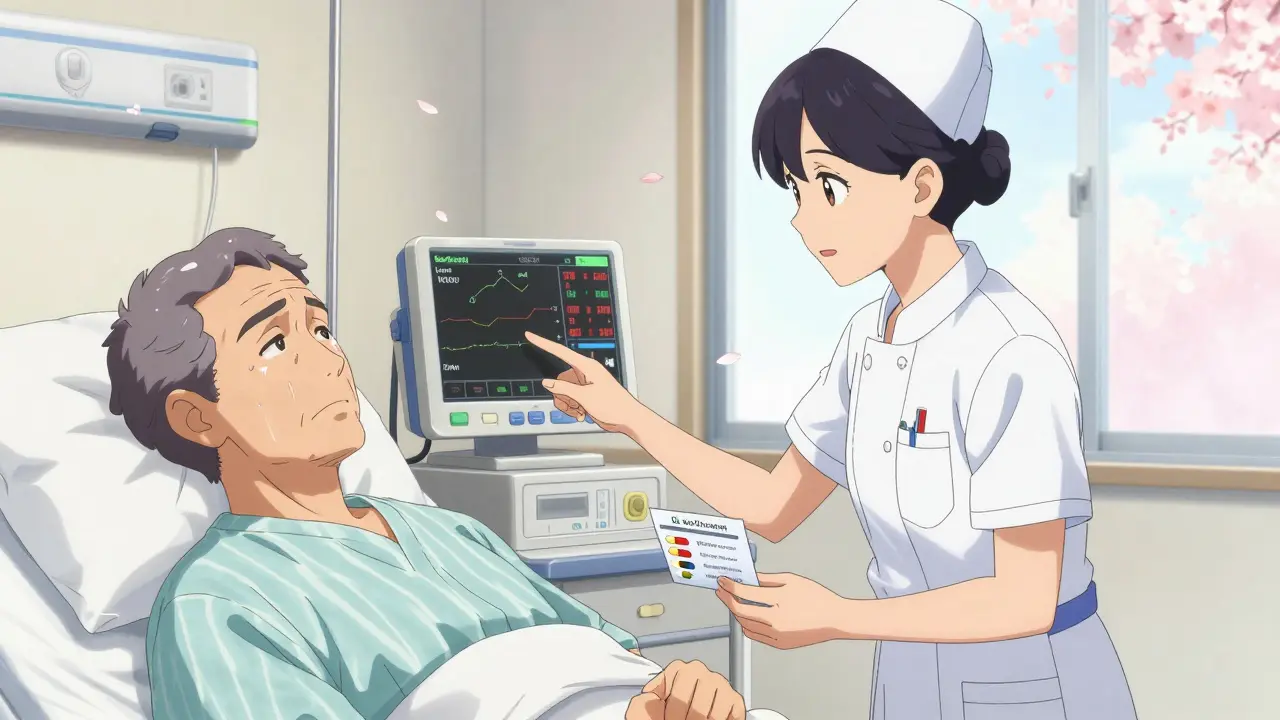
That’s why nurses don’t just hand out a new pill. They ask: "Have you taken this version before?" "Do you feel any different?" "Have you noticed any new symptoms?" They track lab results more closely after a switch. They document every concern. In the ICU, one nurse spent 15 minutes with a patient who refused a generic warfarin because the pill was blue instead of white. He’d been on the brand for years. He didn’t trust the change. The nurse didn’t rush. She pulled up the FDA’s approved list of generic manufacturers for warfarin. She showed him the exact batch his pharmacy used. She explained why the color changed-because the inactive ingredients (dyes, fillers) were different, not the medicine itself. He took it. He didn’t leave the hospital until he was confident.
How nursing counseling is different from pharmacy counseling
Pharmacists explain generics at the counter. Nurses explain them at the bedside. That’s the big difference.
Pharmacists have 8 to 12 minutes. Nurses have 90 seconds to 5 minutes-depending on how busy the unit is. But nurses have something pharmacists don’t: time with the patient over days, not just minutes. They see the patient eat, sleep, and react to meds. They notice if the patient’s mood changes, if they’re skipping doses, if they’re hiding pills.
A 2022 study found that while pharmacists scored slightly higher on patient comprehension (93% vs. 89%), nurses were far better at catching immediate concerns. Ninety-four percent of nurses successfully addressed questions about how to take the pill, what to do if a dose was missed, or whether it was safe with food. Pharmacists? Only 82% did.
Why? Because nurses are embedded in the patient’s daily life. They’re not handing over a bag of pills-they’re holding a hand, checking a pulse, asking, "How did you sleep?" That trust matters. Patients who see the same nurse every day are 44% less likely to worry about generics than those who only talk to pharmacists.
What nurses need to know-and what many still don’t
Not all nurses are trained the same way. A 2023 survey found that 41% of new nurses felt unprepared to counsel on generics. That’s a problem. Generic drugs make up 90% of all prescriptions filled in the U.S. Nurses give them in 98.7% of hospital administrations.
So what should every nurse know?
- Generics must be within 80-125% of the brand’s absorption rate to be approved by the FDA.
- Color, shape, and size changes are normal. They’re caused by inactive ingredients, not the medicine.
- The FDA’s Orange Book lists which generics are rated as equivalent (AB-rated) to brand names.
- Some states allow automatic substitution; others require the prescriber to say "dispense as written." Nurses must know their state’s rules.
- There are 15 drugs with narrow therapeutic indexes where switching requires extra caution.
Training takes 8 to 10 hours. It’s not just reading a handout. It’s role-playing tough conversations. It’s learning how to use the hospital’s EHR templates. It’s practicing teach-back with peers. Hospitals with Magnet status require nurses to document patient understanding in 92% of cases. That’s not a formality-it’s protection.
What’s changing in nursing practice
Things are getting better. In 2024, the Nursing Generic Medication Education Collaborative launched with support from the federal government. Its goal? Standardize counseling across 500 hospitals by 2026.
Technology is helping too. Forty-five percent of hospitals now use AI tools that give nurses real-time access to the FDA’s Orange Book data right at the bedside. One system alerts nurses when a patient is being switched to a generic for a narrow therapeutic index drug-and suggests talking points.
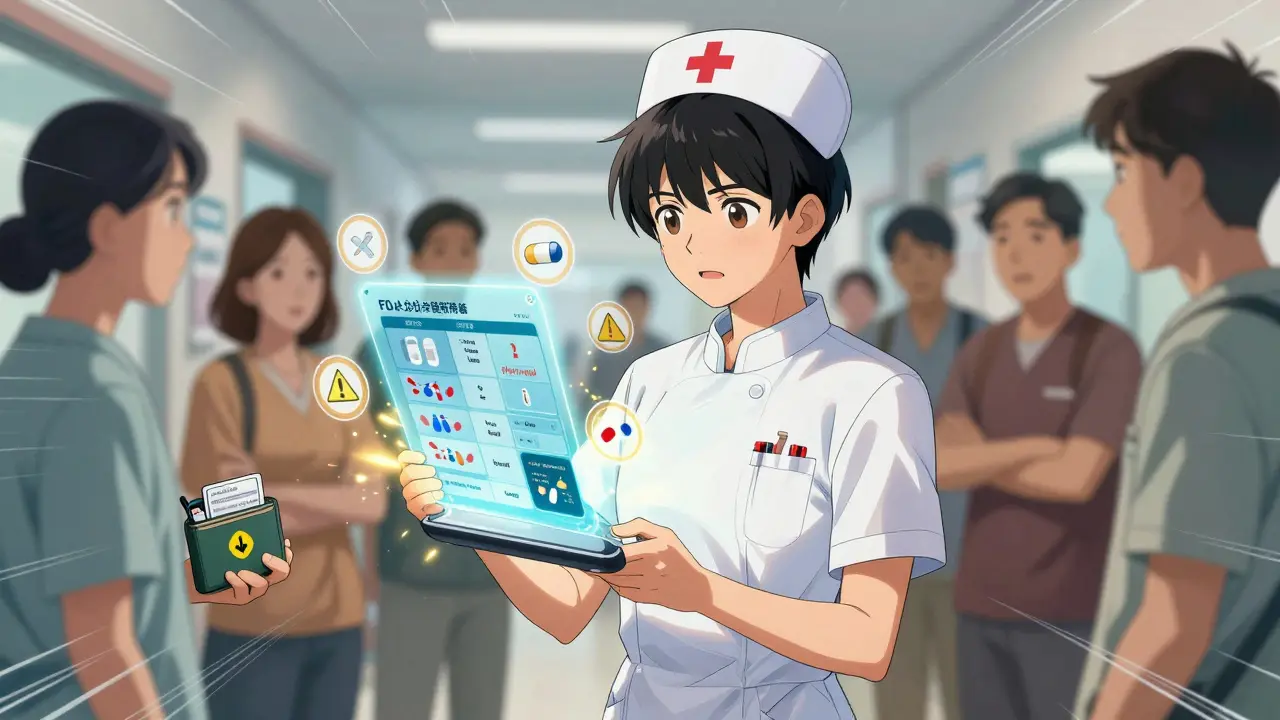
Some hospitals are trying something new: the "Generic Medication Passport." Nurses print a small card for patients that lists every generic they’ve been given, with photos of the pills and notes on why the switch happened. Patients keep it in their wallet. When they go to a new pharmacy or ER, they show it. No confusion. No guesswork.
What happens when nurses don’t speak up
It’s not just about cost. It’s about control. Patients who don’t understand generics feel like they’re being forced into something cheaper. They feel powerless. That’s when they stop taking meds. They skip doses. They switch back to the brand on their own-paying more, risking interactions, or taking expired pills.
One nurse on AllNurses.com wrote: "I had a woman who refused her generic blood pressure med for six months. She said, ‘I don’t trust it.’ She ended up in the ER with a stroke. She didn’t die. But she lost movement on one side. She cried and said, ‘I just didn’t know it was the same.’" That’s the cost of silence.
How to do it right: A simple 5-step method
It doesn’t take long. But it has to be done right. Here’s what works:
- Assess-Ask: "Have you taken this medicine before? What do you know about it?" (2 minutes)
- Explain-Use plain language: "This is the same medicine. Same active ingredient. Same effect. Just a different look." (3 minutes)
- Address-Show the pill. Point out the color change. Say: "The dye changed. The medicine didn’t." (2 minutes)
- Verify-Ask: "Can you tell me why we’re giving you this pill now?" (2 minutes)
- Document-Check the box in the EHR: "Patient understands therapeutic equivalence." (1 minute)
That’s it. Nine minutes total. Less than the time it takes to refill a coffee. But those nine minutes could mean the difference between healing and hospitalization.
What’s next for nursing and generics
As biosimilars-complex, biologic generics-become more common, nurses will need to learn new skills. These aren’t pills. They’re injections. They’re made from living cells. The rules are different. The fears are bigger.
The American Association of Colleges of Nursing already says all nursing graduates must be able to explain therapeutic equivalence by 2025. That’s a start. But it’s not enough. Nurses need ongoing training, better tools, and time to do this right.
Because the truth is simple: Generics save lives and money. But only if patients take them. And patients only take them when they trust them. Nurses are the ones who build that trust.
Are generic medications really as effective as brand-name drugs?
Yes. The FDA requires generic drugs to have the exact same active ingredient, strength, dosage form, and route of administration as the brand-name version. They must also be absorbed into the body at the same rate and to the same extent-within 80% to 125% of the brand’s performance. This is called bioequivalence. Generics are tested in clinical studies and inspected in the same facilities as brand-name drugs. The only differences are in inactive ingredients like color, shape, or fillers, which don’t affect how the medicine works.
Why do generic pills look different from brand-name ones?
Generic pills look different because U.S. law requires them to have a different appearance than the brand-name version to avoid trademark infringement. That means different colors, shapes, sizes, or markings. But those changes are only in the inactive ingredients-dyes, fillers, coatings. The medicine inside is identical. Nurses often show patients side-by-side photos from the FDA’s Orange Book to help them understand that appearance doesn’t equal effectiveness.
Which medications are risky to switch to generics?
Medications with a narrow therapeutic index are the most sensitive to changes in absorption. These include warfarin (blood thinner), levothyroxine (thyroid hormone), phenytoin (seizure control), cyclosporine (immunosuppressant), and lithium (mood stabilizer). For these, even small differences in how the body absorbs the drug can lead to serious side effects or treatment failure. Nurses monitor lab values more closely after a switch and ensure patients understand why the change is safe.
What should I do if my patient refuses a generic medication?
Don’t force it. First, listen. Ask why they’re refusing. Often, it’s fear of change, misunderstanding, or past bad experience. Use the teach-back method: explain the FDA’s standards, show them the pill comparison, and ask them to repeat back what they understand. Offer to contact the prescriber if they still feel uneasy. Some patients may need to stay on the brand if they’ve had consistent success with it-especially with narrow therapeutic index drugs. Patient autonomy matters as much as cost savings.
How can nurses improve their counseling skills for generics?
Start with training: 8-10 hours of focused education on therapeutic equivalence, FDA guidelines, and communication techniques. Use standardized scripts approved by your pharmacy and therapeutics committee. Practice teach-back with colleagues. Keep visual aids handy-pill images, FDA handouts, or digital tools that show bioequivalence data. Ask for feedback from patients: "Did this help you understand?" And always document what you said and how the patient responded. The more you do it, the more natural it becomes.





Rob Webber
January 30, 2026 AT 11:54Natasha Plebani
January 31, 2026 AT 20:00calanha nevin
February 2, 2026 AT 15:28Lisa McCluskey
February 4, 2026 AT 00:06owori patrick
February 4, 2026 AT 10:21Claire Wiltshire
February 6, 2026 AT 03:34Darren Gormley
February 7, 2026 AT 16:12Mike Rose
February 8, 2026 AT 18:29Russ Kelemen
February 9, 2026 AT 15:41