
Antihistamine Safety Calculator for Older Adults
Select your current or potential antihistamine to see its fall risk and safety profile for older adults.
Fall Risk Assessment
Using data from the CDC and American Geriatric Society:
Safety Recommendations
Every year, nearly one in four older adults in the U.S. falls. For many, the cause isn’t just slippery floors or poor lighting-it’s a medication they picked up at the drugstore without a second thought. Diphenhydramine, the active ingredient in Benadryl and many sleep aids, is one of the most common culprits. It’s cheap, easy to find, and marketed as harmless. But for people over 65, it’s a hidden danger. These first-generation antihistamines don’t just relieve allergies-they slow down the brain, blur vision, throw off balance, and increase the chance of a fall by more than half. And the worst part? Most older adults-and even their doctors-don’t realize how risky they are.
Why Sedating Antihistamines Are Dangerous for Older Adults
First-generation antihistamines like diphenhydramine, chlorpheniramine, and brompheniramine were designed decades ago to block histamine and stop sneezing. But they also cross the blood-brain barrier easily. That’s why they make you drowsy. In younger people, that’s fine. In older adults, it’s a recipe for disaster.
As we age, our liver and kidneys don’t process drugs as quickly. Diphenhydramine, which lasts about 8.5 hours in a healthy 30-year-old, can stick around for over 13 hours in someone over 65. That means drowsiness, dizziness, and poor coordination last longer-often into the morning. A 2025 study of nearly 200,000 older adults found that 8% of those who filled a prescription for a sedating antihistamine fell and needed medical care within two months. That’s not rare. That’s predictable.
These drugs also have strong anticholinergic effects. That means they interfere with acetylcholine, a brain chemical critical for memory, attention, and muscle control. The American Geriatric Society lists diphenhydramine as a potentially inappropriate medication for older adults in its Beers Criteria. Side effects aren’t just annoying-they’re life-threatening: confusion, dry mouth, constipation, blurred vision, and orthostatic hypotension (a sudden drop in blood pressure when standing). All of these increase fall risk.
The Clear Difference Between First- and Second-Generation Antihistamines
Not all antihistamines are the same. Second-generation options like loratadine (Claritin), cetirizine (Zyrtec), and fexofenadine (Allegra) were developed to avoid the brain. They barely cross the blood-brain barrier. That means they treat allergies without making you sleepy.
Here’s the numbers: First-generation antihistamines carry an anticholinergic burden score of 3 or 4 (high risk). Second-generation ones score 0 or 1 (low risk). A 2025 study showed that people taking first-generation antihistamines had an 87% higher risk of falling compared to those who didn’t. Those taking second-generation ones? No increased risk at all. Fexofenadine, in particular, causes drowsiness in only 6% of older adults-less than the placebo group in some trials.
Even among second-generation options, there’s variation. Cetirizine can still cause mild drowsiness in up to 14% of older users. Fexofenadine and loratadine are the safest bets. If you need an antihistamine, fexofenadine is the top choice. It’s just as effective for allergies, with almost zero sedation.
Why Doctors Keep Prescribing Them
It’s not because they don’t know better. They do. The problem is inertia. First-generation antihistamines are still sold over the counter without strong warnings. Many older adults self-medicate for allergies, insomnia, or even nausea, thinking it’s harmless. A 2019 study found that 12.7% of older adults were prescribed these drugs-almost the same rate as younger adults. That’s like giving a 90-year-old the same painkiller dosage as a 30-year-old. It doesn’t make sense.
Primary care doctors, dermatologists, and even pharmacists sometimes default to diphenhydramine because it’s familiar and cheap. But sales data tells a different story: diphenhydramine is the third most bought OTC sleep aid in the U.S., with over 28 million units sold annually to people 65 and older. That’s $142 million in revenue from a drug known to increase fall risk.
There’s also a lack of awareness among patients. Many don’t realize that Benadryl isn’t just for allergies-it’s also in nighttime cold medicines, sleep aids, and even some stomach remedies. A single bottle can contain multiple sedating ingredients. Without a full medication review, the danger flies under the radar.
How to Prevent Falls: The CDC’s Three-Step Plan
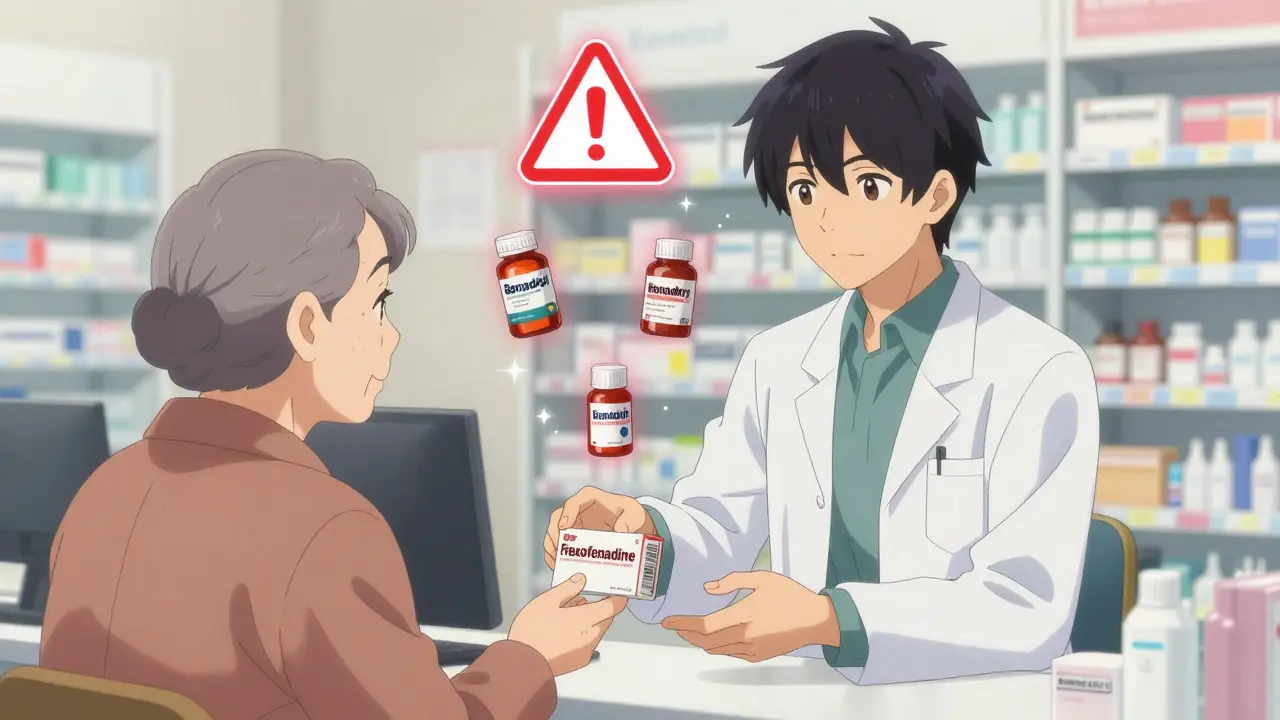
The CDC’s STEADI initiative gives a clear roadmap: STOP, SWITCH, REDUCE.
- STOP using first-generation antihistamines unless absolutely necessary. If someone is taking diphenhydramine for sleep, it’s not a long-term solution-it’s a fall waiting to happen.
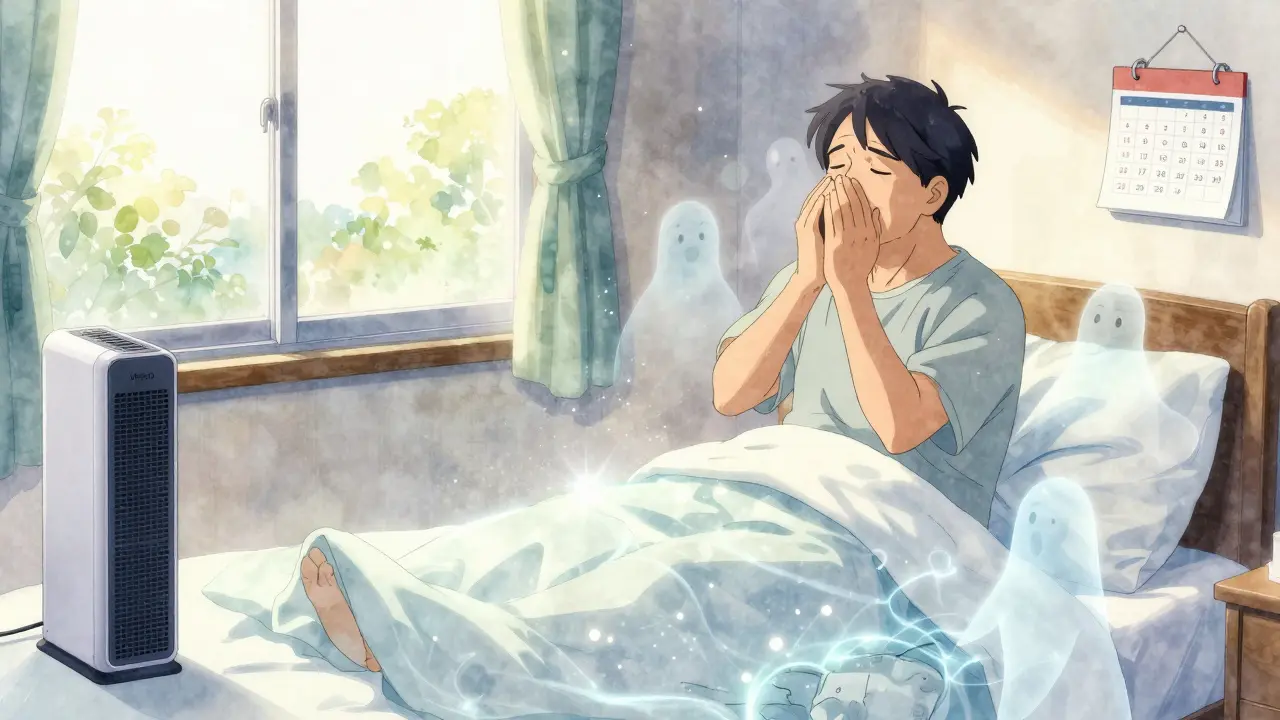
- SWITCH to safer alternatives. Fexofenadine, loratadine, or even nasal saline sprays are better choices. For allergies, allergen-proof bedding and HEPA filters reduce triggers without drugs. One study showed HEPA filters cut airborne allergens by 99.97%.
- REDUCE doses if switching isn’t possible. If diphenhydramine must be used, start with 12.5 mg instead of 25 mg. Give it at night, not in the morning. Never combine it with alcohol, benzodiazepines, or opioids.
Pharmacists play a key role. A simple “brown bag” review-where patients bring all their pills, supplements, and OTC meds to the pharmacy-can uncover 3.2 high-risk medications per person. One study found pharmacist-led reviews cut fall risk by 26%.
Non-Drug Alternatives That Actually Work
You don’t need a pill to manage allergies or sleep better. In fact, non-drug options are often safer and more effective.
- Nasal saline irrigation reduces allergy symptoms by 35-40%, according to JAMA Otolaryngology. It’s cheap, easy, and has no side effects.
- Allergen-proof bedding cuts dust mite exposure by 83%. That’s a huge win for people with seasonal allergies.
- HEPA air filters remove nearly all airborne allergens. Place one in the bedroom for the best results.
- For sleep: Stick to a regular bedtime, avoid caffeine after noon, keep the room cool and dark, and try relaxation techniques like deep breathing. These are more effective than diphenhydramine-and they don’t make you fall.
Environmental changes matter too. Install grab bars in the bathroom (cuts falls by 28%), improve lighting (cuts falls by 32%), remove loose rugs, and keep walkways clear. These fixes cost little but save lives.
What to Do If You’re Already Taking a Sedating Antihistamine
If you or a loved one is taking diphenhydramine, don’t quit cold turkey. Talk to a doctor or pharmacist first. Suddenly stopping can cause rebound symptoms like worse allergies or insomnia.
Instead, create a plan:
- Write down every medication, including OTC and supplements.
- Ask: Is this drug on the Beers Criteria list? Is there a safer alternative?
- Switch to fexofenadine or loratadine if possible.
- If switching isn’t an option, lower the dose and take it only at night.
- Monitor for dizziness, confusion, or unsteadiness after the change.
- Schedule a follow-up in 2-4 weeks.
Medicare now requires providers to review high-risk medications during the Annual Wellness Visit. Use that appointment to ask: “Am I on any drugs that could make me fall?”
The Future Is Safer-But We Need to Act Now
There’s hope on the horizon. Two new antihistamines designed specifically for older adults are in Phase II trials. Early results show an 89% reduction in drowsiness compared to diphenhydramine. But they’re years away from market.
In the meantime, change is possible. Every time a doctor switches a patient from diphenhydramine to fexofenadine, they prevent a potential fall. Every time a pharmacist catches an unsafe combo, they save a life. And every time a family member asks, “Is this really safe for Dad?” they become part of the solution.
The data is clear. The tools are available. The only thing missing is action.
Are over-the-counter antihistamines safe for older adults?
No, first-generation antihistamines like diphenhydramine (Benadryl) and chlorpheniramine are not safe for older adults. They increase fall risk by more than 50% and can cause confusion, dizziness, and blurred vision. Even though they’re sold without a prescription, they carry serious risks for people over 65. Second-generation antihistamines like fexofenadine and loratadine are much safer alternatives.
What’s the safest antihistamine for seniors?
Fexofenadine (Allegra) is the safest antihistamine for older adults. It has minimal sedative effects and no significant anticholinergic activity. Loratadine (Claritin) is also a good choice. Cetirizine (Zyrtec) is acceptable but can cause mild drowsiness in up to 14% of seniors. Avoid diphenhydramine, hydroxyzine, and chlorpheniramine entirely.
Can antihistamines cause dementia?
Long-term use of strong anticholinergic drugs-including first-generation antihistamines-has been linked to a higher risk of dementia in multiple studies. While they don’t directly cause dementia, they contribute to cognitive decline by blocking acetylcholine, a key brain chemical for memory and thinking. The American Geriatric Society advises avoiding these drugs in older adults for this reason.
How do I talk to my doctor about stopping Benadryl?
Say this: "I’ve been taking Benadryl for sleep/allergies, but I read it increases my fall risk. Can we switch to a safer option like fexofenadine?" Bring a list of all your medications. Ask if any are on the Beers Criteria list. Most doctors will agree-especially if you mention the CDC’s STEADI guidelines. If they hesitate, ask for a referral to a geriatric pharmacist.
What should I do if I’ve already fallen after taking an antihistamine?
Tell your doctor immediately. Request a full medication review. Ask for a fall risk assessment, including balance and gait tests. Get screened for osteoporosis if you haven’t already. Stop taking any sedating antihistamines unless your doctor says otherwise. Consider a home safety evaluation-many insurance plans cover it.






Rich Robertson
December 16, 2025 AT 17:38Been telling my dad for years not to take Benadryl for sleep. He swears it works, but last winter he took a tumble in the bathroom and broke his hip. Turned out he was taking it every night plus that cold medicine with diphenhydramine in it. Never even realized it was the same stuff. After we switched him to Allegra, his balance improved in weeks. No more midnight trips to the kitchen with a walker.
Rulich Pretorius
December 16, 2025 AT 20:40It’s not just about the drugs-it’s about the culture of quick fixes. We’ve normalized chemical sedation as a solution to aging. In South Africa, we call it ‘sleeping pills for the soul.’ But the body doesn’t have a soul button. It has receptors, enzymes, and time-dependent clearance rates. The real tragedy isn’t the fall-it’s that we treat old age like a malfunction to be pharmacologically silenced.
Thomas Anderson
December 17, 2025 AT 04:36My grandma used to take Benadryl for everything-itching, allergies, sleep. One day she just stopped walking right after dinner. Turned out it was the meds. We switched her to Claritin and she’s been fine since. Seriously, if you’re over 65 and still using Benadryl, just stop. It’s not worth it.
Edward Stevens
December 17, 2025 AT 08:30Oh wow, a whole article about how Benadryl is bad? Who knew? Next you’ll tell us oxygen is flammable or that water can drown people. Meanwhile, Big Pharma is quietly laughing as we all panic over OTC meds while ignoring the real problem: doctors prescribing opioids like candy and calling it ‘pain management.’
Daniel Wevik
December 17, 2025 AT 14:14Let’s get systemic here. The CDC’s STEADI protocol is gold-standard, but it’s not being implemented because reimbursement structures don’t incentivize geriatric medication reviews. Pharmacies don’t get paid for brown-bag sessions. Primary care docs are running on 12-minute visits. Until we fix the economics of aging care, this will keep happening. Fexofenadine isn’t the answer-it’s just the bandage.
jeremy carroll
December 19, 2025 AT 13:28i had no idea zyrtec could still make u drowsy 😳 my mom’s been on it for years and she’s fine… but now i’m gonna check her meds. thanks for the heads up! also, my aunt uses those saline sprays and she says it’s way better than pills. who knew?
Sinéad Griffin
December 19, 2025 AT 22:52AMERICA IS BEING POISONED BY BIG PHARMA AND THE FDA’S SLEEPWALKING REGULATIONS. THEY LET THIS SH*T BE SOLD ON SHELVES LIKE CANDY. WHY ISN’T THIS ILLEGAL?! MY GRANDMA GOT A HIP REPLACEMENT BECAUSE OF BENADRYL AND NO ONE CARES. WE NEED A REVOLUTION. #BANBENADRYL #OLDAGEISNTADISEASE
Alexis Wright
December 21, 2025 AT 12:51Let’s be honest: this article is a glorified marketing pamphlet for fexofenadine. The data is cherry-picked. What about the 14% of seniors who still get drowsy on loratadine? What about the fact that anticholinergic burden is cumulative across *all* medications? You’re ignoring polypharmacy, ignoring depression, ignoring sleep apnea, ignoring the fact that 60% of falls happen because of uncorrected vision problems. This isn’t prevention-it’s oversimplification dressed in clinical jargon.
Natalie Koeber
December 23, 2025 AT 10:18you know what they dont tell you? benadryl is part of the government's population control program. they want old people to fall so they can save money on social security. the 'beers criteria' is just a cover. look at the patents-fexofenadine is owned by the same company that makes the flu vaccine. they want you to buy the expensive one. also, HEPA filters are a scam. the real solution is quantum resonance detoxification. ask your holistic practitioner.
Wade Mercer
December 25, 2025 AT 00:44I’ve seen too many elderly patients on these meds. I don’t say anything. I just write it down. If they fall, it’s not my fault. I’m not their babysitter. I’m not responsible for their choices. They knew the risks. They chose it. I just prescribe what’s asked for. That’s my job.
Jonny Moran
December 26, 2025 AT 03:47My uncle switched from Benadryl to saline rinses and a humidifier last year. He’s 81. No more falls. No more confusion. He says he feels like himself again. Honestly? The best medicine isn’t a pill-it’s someone who cares enough to ask, 'Are you sure this is safe?' Don’t wait for a fall. Ask now.