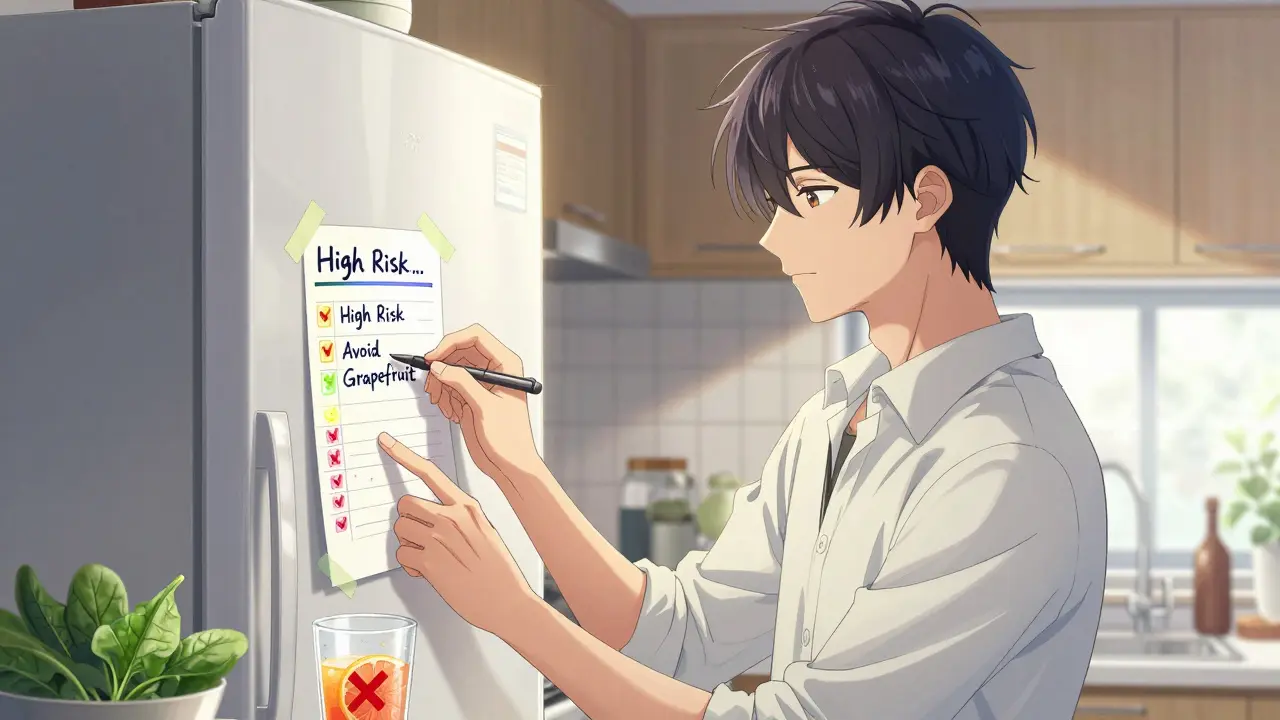
Every year, over 150,000 people in the U.S. end up in the emergency room because of food and medication interactions. Many of these cases are preventable. You’re not alone if you’re taking multiple pills and wondering what you can safely eat for breakfast. A simple, handwritten checklist can be the difference between feeling fine and ending up in the hospital.
Why This Checklist Matters
You might think, "I just take my pills with water. What’s the big deal?" But some everyday foods can turn your medicine into something dangerous-or useless. Grapefruit juice can make your cholesterol drug so strong it damages your muscles. A handful of spinach can undo the effect of your blood thinner. Dairy products can block antibiotics from working. These aren’t myths. They’re documented, life-threatening risks backed by the FDA and major medical societies.The problem isn’t that doctors don’t warn you. It’s that you forget. You get a new prescription. You start eating more salads. You switch to a different brand of orange juice. And suddenly, your body is reacting in ways you didn’t expect. A checklist keeps you in control. It turns guesswork into clarity.
What to Include on Your Checklist
Your checklist doesn’t need to be fancy. It just needs to be complete. Start with these six key sections for every medication you take:- Medication name (both brand and generic-e.g., "Lipitor (atorvastatin)")
- Dosage and schedule (e.g., "10 mg once daily at bedtime")
- Purpose (e.g., "lowers cholesterol")
- Prescribing doctor and phone number
- Food or drink interactions (be specific: "Avoid grapefruit juice", "Wait 2 hours after dairy before taking ciprofloxacin")
- Risk level (High, Moderate, Low)
For example, if you take warfarin (a blood thinner), your entry might look like this:
- Medication: Warfarin (Coumadin), 5 mg
- Take: Once daily at 8 AM
- Purpose: Prevent blood clots
- Doctor: Dr. Sarah Chen, Cardiology Associates, 555-202-1234
- Interactions: High risk: Kale, spinach, broccoli, Brussels sprouts. Do not avoid completely-eat the same amount every day. Low risk: Cranberry juice (limit to 8 oz/day).
- Risk Level: High
Don’t forget supplements. Many people don’t realize that vitamin E, fish oil, or even garlic pills can interfere with blood thinners. Add them to your list too.
How to Research Interactions
Don’t guess. Don’t rely on apps that might be outdated. Use trusted sources:- Medication guides that come with your prescription-look for section 4.5: "Drug Interactions"
- New Zealand Formulary Interaction Checker (a free, reliable online tool used by pharmacists worldwide)
- SEFH Drug-Food/Herb Interaction Guide (2024 edition)-available as laminated cards you can stick to your fridge
- FDA Drug Safety Communications (search "FDA [your drug name] interaction")
Example: If you take simvastatin (a statin), the FDA warns that grapefruit juice can raise drug levels by up to 500%. That’s not a small risk-it can cause kidney failure. So your checklist should say: "Avoid all grapefruit, pomelo, Seville oranges. Even one glass can last 24 hours."
For MAO inhibitors like tranylcypromine, tyramine-rich foods can cause a deadly spike in blood pressure. That means avoiding aged cheeses, cured meats, tap beer, and soy sauce. Write it down. Don’t assume your pharmacist told you once and you’ll remember.
Choose Your Format: Paper or Digital?
There’s no single right way. It depends on your life.Paper checklist is simple. Print the FDA’s "My Medicines" template (available at fda.gov/MyMedicines). Use colored pens: red for high-risk, yellow for moderate, green for low. Tape it to your fridge. Keep a copy in your wallet. In an emergency, first responders can find it fast-even if your phone is dead. Seniors over 75 are 92% more likely to use paper than apps, according to a 2023 study.
Digital apps like Medisafe or MyTherapy can send reminders and sync with pharmacies. But they’re not perfect. A 2024 review found that 62% of AI-powered apps give wrong advice about regional foods. One user reported her app didn’t recognize bok choy as a vitamin K source, even though it’s common in her Chinese diet. If you use an app, double-check its sources. Don’t trust it blindly.
Best of both worlds? Keep a printed checklist as your primary tool. Use a digital app as a backup-especially if you’re on five or more medications. A University of Michigan study found that people using both had 78% fewer errors than those using just one.
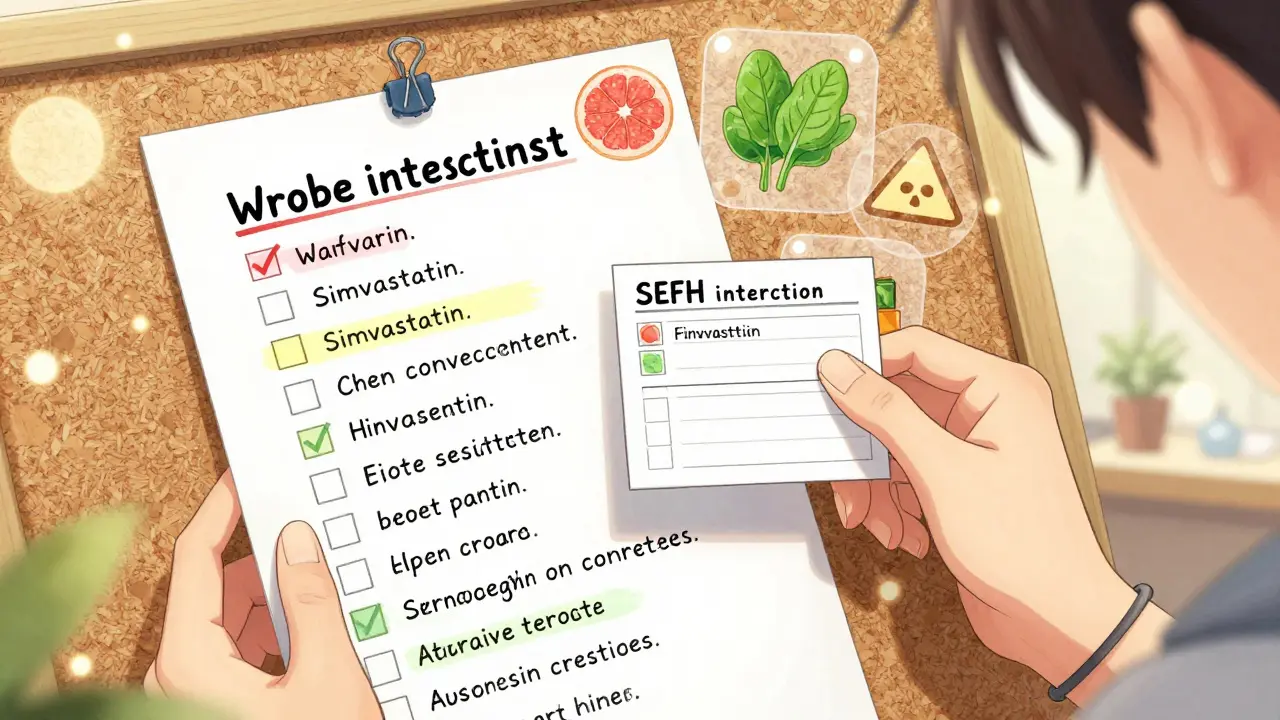
How to Keep It Updated
Outdated checklists are worse than no checklists. A 2023 FDA analysis showed that 28% of interaction-related errors happened because the list wasn’t updated after a medication change.Set a routine:
- Every time you refill a prescription, check if the dosage or name changed.
- Every month, sit down for 10 minutes. Review your list. Cross out anything you stopped taking.
- When your doctor adds a new drug, update the checklist before you leave the office.
- Mark the "Last Updated" date clearly at the top of the page.
Link updates to something you already do-like your monthly pill organizer refill. That way, it sticks.
Pro Tips That Actually Work
Here’s what real people have learned from years of using these checklists:- Be exact. Write "1 cup raw spinach" not "some greens." Cooked spinach has 70% less vitamin K than raw. That matters.
- Use measurements. Say "8 oz of grapefruit juice," not "a little bit."
- Color-code. Red = stop. Yellow = wait 2 hours. Green = okay.
- Share it. Give a copy to your pharmacist, your spouse, your adult child. They might spot something you missed.
- Review it with your pharmacist. Every 6 months, ask for a Medication Therapy Management (MTM) session. Medicare Advantage plans cover this for free. Pharmacists catch 65% more errors during these sessions.
One man on Reddit shared how his checklist saved his life. He took tacrolimus after a kidney transplant. He loved grapefruit smoothies. His checklist reminded him to avoid it. One day, he forgot. He got sick. His doctor found his toxin levels had spiked. He never made that mistake again.
What to Do in an Emergency
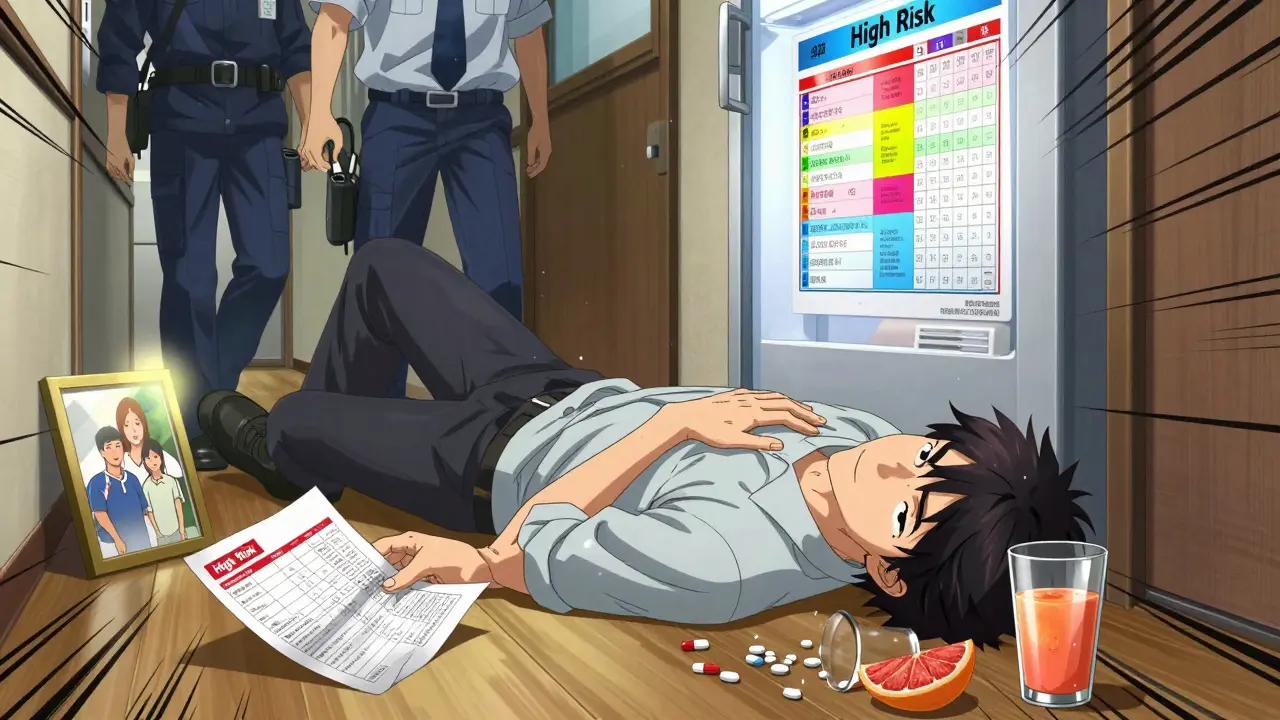
If you feel dizzy, have chest pain, or notice unusual bruising or bleeding, don’t wait. Call 911. But before you go, grab your checklist. Take it with you. Emergency staff see hundreds of patients. Your checklist gives them the one thing they need: clarity.Include two emergency contacts on your list. Someone who knows your meds. Someone who can answer questions if you can’t.
Common Mistakes to Avoid
- Thinking "I’ve been taking this for years, nothing’s happened." Interactions can build up over time.
- Ignoring over-the-counter drugs. Ibuprofen can raise blood pressure if you’re on ACE inhibitors.
- Assuming "natural" means safe. St. John’s Wort can make birth control, antidepressants, and heart meds fail.
- Not including alcohol. It can worsen drowsiness from painkillers or anxiety meds.
- Keeping the list in a drawer. It’s useless if you can’t find it when you need it.
Final Thought: This Is Your Safety Net
You don’t need to be a doctor to manage your health. You just need to be organized. A food and medication interaction checklist isn’t about control-it’s about peace of mind. It’s the difference between wondering if your headache is from stress… or from that cheese you ate with your blood pressure pill.Start small. Pick one medication. Write down its food risks. Add it to your fridge. Do it today. In a week, you’ll feel more confident. In a month, you might save yourself a hospital visit.
Can I still eat vegetables if I’m on warfarin?
Yes-but consistency is key. Warfarin works by blocking vitamin K, which helps blood clot. If you eat a lot of kale or spinach one day and almost none the next, your blood clotting levels will swing dangerously. The goal isn’t to avoid these foods entirely. It’s to eat the same amount every day. If you usually have one cup of cooked spinach with dinner, keep doing that. Don’t suddenly switch to three cups or stop eating it. Your doctor will adjust your warfarin dose based on your steady intake.
Is grapefruit juice really that dangerous with statins?
Yes. Grapefruit juice blocks an enzyme in your liver that breaks down certain statins like simvastatin and atorvastatin. This causes the drug to build up in your blood-sometimes up to five times higher than normal. That can lead to muscle breakdown, kidney damage, and even rhabdomyolysis, a life-threatening condition. One glass can affect you for over 24 hours. No amount is considered safe. Avoid grapefruit, pomelo, Seville oranges, and their juices completely if you’re on these medications.
What if I take supplements or herbal remedies?
Include them. Many people don’t realize that supplements can interact with medications. St. John’s Wort can reduce the effectiveness of antidepressants, birth control, and HIV drugs. Garlic pills can increase bleeding risk with warfarin. Fish oil can thin your blood further. Turmeric can interfere with blood sugar drugs. List every pill, powder, or tea you take daily-even if you think it’s harmless. Your pharmacist can check for hidden interactions.
Do I need to check interactions for every new medication?
Always. Even if you’ve taken similar drugs before, each one is different. A new antibiotic might interact with your blood pressure pill in a way your old one didn’t. Always ask your pharmacist: "What foods or drinks should I avoid with this?" Then update your checklist immediately. Don’t wait. Don’t assume it’s the same as last time.
Can I use a free app instead of a paper checklist?
Apps can help, but they’re not foolproof. Many don’t recognize regional foods or cultural diets. Some use outdated databases. One study found 62% of AI-powered apps gave incorrect advice. Use them as a helper-not your only source. Always cross-check with your pharmacist or the FDA’s official resources. And never rely on an app if your phone dies or you’re in a hospital where devices aren’t allowed. Keep a printed copy as your backup.


Tim Goodfellow
December 20, 2025 AT 04:08OMG this is a game-changer I’ve been winging it with my blood thinner and just prayed nothing weird happened
Now I’m printing this out and taping it to my fridge next to my coffee maker
Red for danger yellow for wait 2 hours green for go - I’m basically a medical ninja now
Elaine Douglass
December 21, 2025 AT 12:45I never thought about supplements being dangerous too
I take fish oil and garlic pills every day thinking they’re just healthy
Turns out I might be slowly turning into a human bleeding heart
Time to call my pharmacist
Takeysha Turnquest
December 22, 2025 AT 12:15We are told to trust science but never taught how to survive it
Medicine is a language we were never given the dictionary for
Our bodies are battlegrounds and the instructions are written in invisible ink
This checklist isn’t just paper it’s a rebellion against forgetting
It’s the quiet scream of a human who refuses to become a statistic
Emily P
December 22, 2025 AT 17:52Just checked my meds and realized I’ve been taking my antibiotic with yogurt for 3 months
So much for that sinus infection clearing up
Going to redo my whole list tonight
Thanks for the nudge
Alex Curran
December 22, 2025 AT 20:08As a pharmacist I’ve seen this too many times
People think if they’ve been on a med for years it’s safe
But interactions creep up like rust
Always update your list after every script refill
And yes grapefruit juice is the devil for statins
One glass = 24 hours of risk
Just say no
Allison Pannabekcer
December 24, 2025 AT 01:23My mom is 78 and she uses a handwritten list taped to the fridge
She colors everything in crayon because her eyes aren’t what they used to be
But she’s never been to the ER for a med issue
She’s the reason I’m doing this too
It’s not about being perfect
It’s about being present
And showing up for yourself even when it’s boring
Just write it down
It matters more than you think
Sarah McQuillan
December 24, 2025 AT 10:46Why are we letting Big Pharma scare us about grapefruit juice
People in Europe drink it with their meds for decades and they’re fine
This checklist feels like fearmongering wrapped in a wellness blog
Maybe if we stopped overmedicating we wouldn’t need these elaborate survival guides
Also why is everyone so obsessed with paper
My phone works fine
Kitt Eliz
December 25, 2025 AT 09:43🚨 EMERGENCY ALERT 🚨
IF YOU’RE ON WARFARIN AND EATING KALE YOU’RE PLAYING RUSSIAN ROULETTE WITH YOUR BLOOD
CONSISTENCY ISN’T A SUGGESTION IT’S A LIFESAVING PROTOCOL
USE THE NZ FORMULARY NOT SOME RANDOM APP THAT THINKS BOK CHOY IS A VEGETABLE FOR FUN
AND YES ST. JOHN’S WORT IS A TRAITOR TO YOUR ANTIDEPRESSANTS
DO NOT IGNORE THIS
YOUR LIFE IS NOT A GAMBLE
PRINT IT. TAPE IT. SHARE IT. LIVE IT
YOU’RE WORTH THE 10 MINUTES
Aboobakar Muhammedali
December 26, 2025 AT 05:28I’m from India and we use turmeric in everything
Never knew it could mess with diabetes meds
My aunt had a bad reaction last year
Now I’ve made a checklist in Hindi and English
Shared it with my whole family
Even my cousin in Canada got one
Small thing big impact
Thanks for reminding us we’re not alone in this