DRESS Syndrome Risk Assessment (RegiSCAR)
Your Score: 0/8
--
--
• 0-2 points: Unlikely
• 3-4 points: Probable DRESS (Seek immediate medical attention)
• 5+ points: Definite DRESS (Medical Emergency)
Imagine starting a new medication for a common condition like gout or seizures. You feel fine for weeks. Then, suddenly, you develop a high fever, a spreading rash, and your liver enzymes skyrocket. This isn’t just an allergic reaction; it could be DRESS syndrome, also known as Drug-Induced Hypersensitivity Syndrome (DIHS). It is a rare but life-threatening immune response to certain drugs, with a mortality rate of approximately 10% if not treated immediately.
DRESS stands for Drug Reaction with Eosinophilia and Systemic Symptoms. Unlike a simple skin allergy that resolves quickly, DRESS attacks multiple organs, including the liver, kidneys, lungs, and heart. The delay between taking the drug and showing symptoms-typically two to six weeks-makes it notoriously difficult to diagnose. By the time patients seek help, they often have already visited emergency rooms multiple times, misdiagnosed with viral infections or standard allergies.
Recognizing the Early Warning Signs
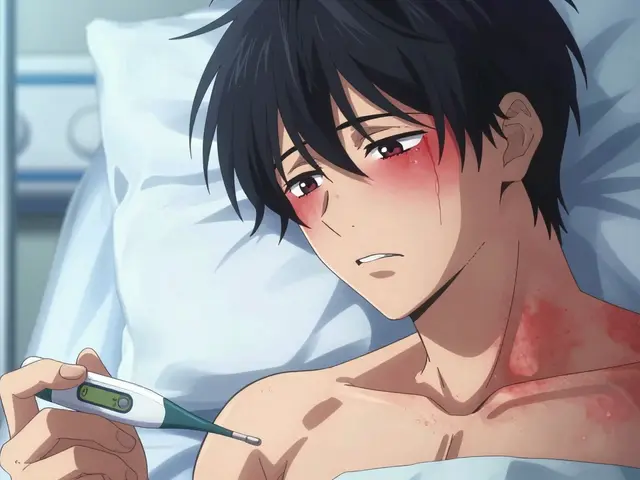
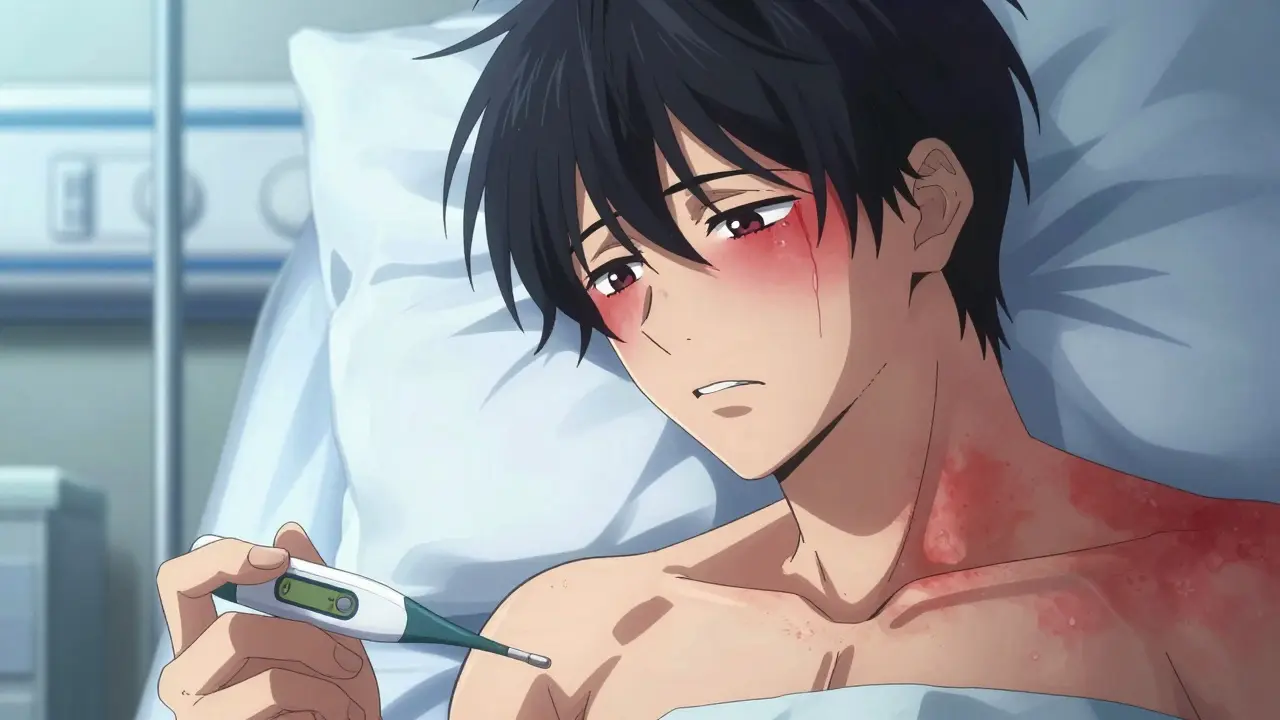
The hallmark of DRESS is its multisystem involvement. You won’t just see a rash; you will feel systemically ill. The most common initial sign is a widespread morbilliform rash, which looks like measles. It typically starts on the face and upper body before spreading to cover up to 90% of the body surface area within days. Facial swelling, particularly around the eyes, is present in nearly 70% of cases.
Beyond the skin, look for these critical indicators:
- Fever: Temperatures often exceed 38.5°C (101.3°F) and persist despite antipyretics.
- Lymphadenopathy: Swollen lymph nodes, especially in the neck and armpits, occur in about 75% of patients.
- Hematologic Abnormalities: Blood tests reveal eosinophilia (high eosinophil count >1,500 cells/μL) and atypical lymphocytes.
- Organ Involvement: Liver damage is the most frequent complication, affecting over 77% of cases. Elevated ALT levels can surpass 300 IU/L, sometimes reaching over 1,000 IU/L in severe instances.
If you experience these symptoms 2-8 weeks after starting a new medication, do not ignore them. The combination of fever, rash, and internal organ inflammation is a medical emergency.
Common Culprits: High-Risk Medications
Not all drugs trigger DRESS. Certain classes of medications are significantly more likely to cause this severe reaction. Knowing these risks is crucial for both patients and prescribers.
| Medication Class | Specific Drugs | Approximate Contribution to Cases |
|---|---|---|
| Uric acid-lowering agents | Allopurinol | 28% |
| Anticonvulsants | Carbamazepine, Phenytoin, Lamotrigine | 24% |
| Antibiotics | Vancomycin, Sulfonamides | 20% |
| Other Agents | Alclofenac, Minocycline | Remaining cases |
Allopurinol, used for gout, is the single largest contributor to DRESS cases globally. Anticonvulsants like carbamazepine and phenytoin are also major triggers. If you are prescribed one of these drugs, ask your doctor about genetic predispositions. For instance, individuals with the HLA-B*58:01 allele have a drastically higher risk of developing allopurinol-induced DRESS. Similarly, the HLA-A*31:01 allele is linked to carbamazepine reactions. Screening for these markers can prevent many cases, especially in Asian populations where these alleles are more prevalent.

Diagnosis: The RegiSCAR Criteria
Because DRESS mimics viral infections and other autoimmune conditions, diagnosis is challenging. Misdiagnosis rates hover around 30-40%, leading to dangerous delays in treatment. The gold standard for diagnosis is the RegiSCAR scoring system. Developed by international experts, this tool helps clinicians determine the likelihood of DRESS based on eight key factors:
- Hospitalization required?
- Reaction severity (mild, moderate, severe)?
- Known causative drug identified?
- Latency period (2-8 weeks)?
- Involvement of specific organs (liver, kidney, lung, etc.)?
- Blood abnormalities (eosinophilia, atypical lymphocytes)?
- Skin biopsy results consistent with DRESS?
- Exclusion of other causes (like viruses)?
A score of 3 or higher indicates probable DRESS, while 5 or higher confirms definite DRESS. The system boasts 80% sensitivity and 97% specificity. Recent updates in 2023 have incorporated viral reactivation markers, such as Human Herpesvirus 6 (HHV-6), into the diagnostic framework. HHV-6 reactivation occurs in 60-80% of DRESS cases and serves as a strong biological marker for the disease.
Treatment and Management Strategies
Time is tissue. The sooner the offending drug is stopped, the better the outcome. Here is the step-by-step approach to managing DRESS:
- Immediate Cessation: Stop the suspect medication within 24 hours of suspicion. Re-exposure can be fatal.
- Systemic Corticosteroids: Prednisone is the cornerstone of therapy. Most guidelines recommend starting high-dose steroids (e.g., 1 mg/kg/day) immediately upon diagnosis. Observational studies show 60-70% response rates when started within 72 hours.
- Supportive Care: Manage symptoms aggressively. This includes hydration, pain management, and monitoring vital signs.
- Organ-Specific Support: If the liver or kidneys are failing, intensive care unit (ICU) admission may be necessary. Dialysis might be required for renal impairment.
- Slow Tapering: Steroids cannot be stopped abruptly. Tapers typically last 3-6 months, reducing by 5-10 mg weekly. Stopping too soon can cause a relapse, which is often more severe than the initial episode.
In refractory cases where steroids fail, alternative treatments like intravenous immunoglobulin (IVIG) or mycophenolate mofetil may be considered. However, evidence for these alternatives is less robust than for corticosteroids.

Prognosis and Long-Term Outlook
While many patients recover fully, DRESS leaves lasting impacts. The acute phase lasts weeks to months, but complications can persist. Chronic autoimmune sequelae, such as thyroiditis, type 1 diabetes, or rheumatoid arthritis, have been reported in survivors. This phenomenon suggests that DRESS may trigger long-term autoimmunity in genetically susceptible individuals.
Mortality remains a significant concern, primarily due to liver failure, myocarditis, or interstitial pneumonia. Patients with severe hepatic involvement (ALT >1,000 IU/L) or respiratory distress require ICU-level monitoring. With early diagnosis and appropriate steroid therapy, however, the majority of patients survive and return to normal activities within 6-12 months.
Prevention and Future Directions
Prevention is the best strategy. Genetic screening for HLA-B*58:01 before prescribing allopurinol has reduced incidence by 80% in regions like Taiwan. In the United States, such screening is not yet universal but is increasingly recommended for high-risk groups. Patient education is equally vital. Individuals should carry a list of drugs that caused DRESS and avoid them lifelong. Cross-reactivity between aromatic anticonvulsants (carbamazepine, phenytoin, lamotrigine) is high, so avoiding the entire class is often advised.
Research is advancing rapidly. New point-of-care HLA tests allow same-day screening. Global registries are being established to track outcomes and identify new biomarkers. As personalized medicine grows, we move closer to a future where DRESS is predicted and prevented rather than merely treated.
How long does it take for DRESS symptoms to appear after starting a medication?
DRESS syndrome typically has a delayed onset, appearing 2 to 8 weeks after initiating the offending drug. This long latency period makes it difficult to link the reaction to the medication, unlike immediate allergic reactions which occur within minutes or hours.
Is DRESS syndrome fatal?
Yes, DRESS syndrome can be fatal. The mortality rate is approximately 10%. Death usually results from severe organ failure, particularly liver failure, myocarditis (heart inflammation), or interstitial pneumonia. Early diagnosis and prompt treatment significantly improve survival rates.
What is the difference between DRESS and Stevens-Johnson Syndrome (SJS)?
While both are severe cutaneous adverse reactions, they differ significantly. SJS presents rapidly (within 1-2 weeks) with blistering and skin detachment, and severe mucosal involvement. DRESS has a longer latency (2-8 weeks), features prominent systemic symptoms like fever and organ inflammation, and is characterized by eosinophilia and viral reactivation, rather than extensive skin peeling.
Can I take the medication that caused DRESS again in the future?
No, you should never take the causative medication again. Re-exposure can trigger a rapid and potentially fatal recurrence of DRESS. Additionally, cross-reactivity with similar drugs (especially among aromatic anticonvulsants) is common, so entire drug classes may need to be avoided.
Are there genetic tests available to predict DRESS risk?
Yes, genetic testing for specific HLA alleles can predict risk. For example, HLA-B*58:01 is strongly associated with allopurinol-induced DRESS, and HLA-A*31:01 is linked to carbamazepine-induced DRESS. Screening is particularly recommended for individuals of Asian descent before starting these medications.