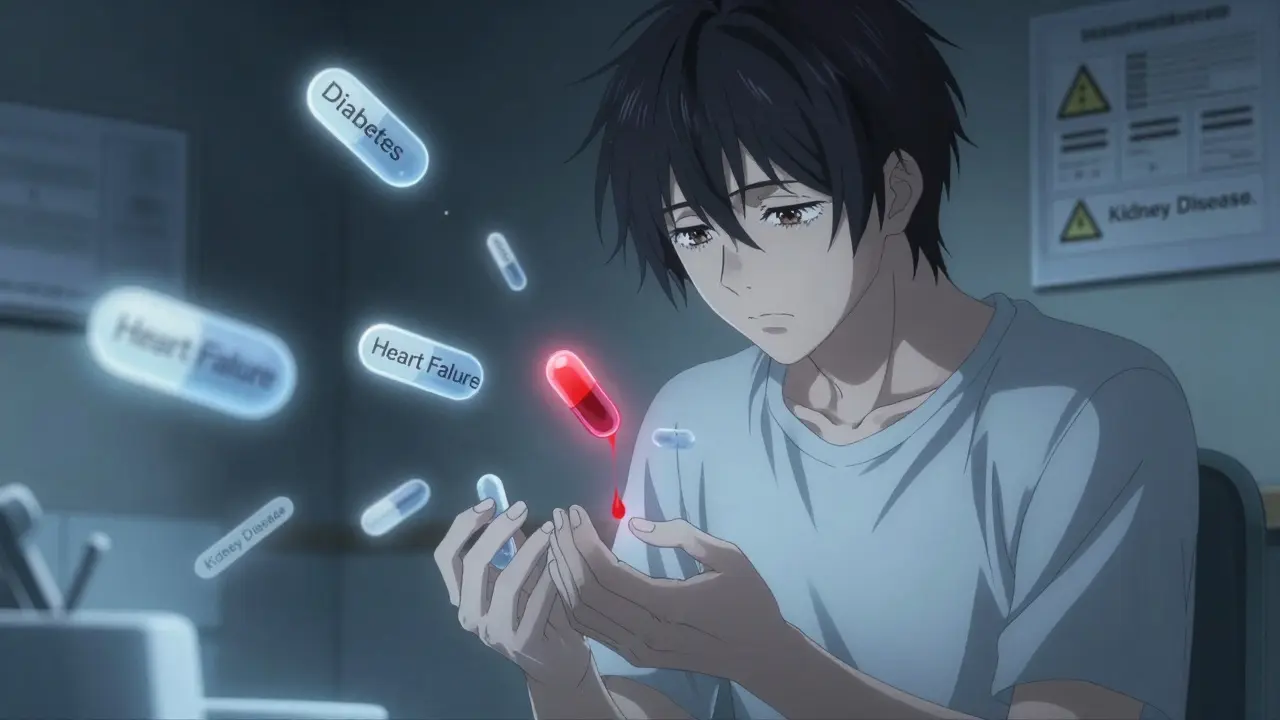
Comorbidity Drug Risk Calculator
Your Risk Assessment
Your Risk Factors
Medication Interactions
Discuss these results with your doctor or pharmacist. Consider a medication review to identify unnecessary drugs or safer alternatives.
When you take a medication, you expect it to help - not hurt. But for millions of people with chronic conditions, the very drugs meant to improve health can become dangerous. Comorbidities - having two or more chronic diseases at once - don’t just add complexity to treatment. They fundamentally change how your body reacts to drugs, often making side effects more likely, more severe, and harder to predict.
Consider this: a 2017 study found that patients with multiple health conditions were nearly three times more likely to experience harmful side effects from medications than those with just one condition or none. That’s not a small increase. It’s a massive leap in risk. And it’s not just about taking more pills. It’s about how your body changes when diseases like diabetes, heart failure, liver disease, or kidney problems are already present.
How Chronic Diseases Change How Drugs Work
Your body doesn’t treat every drug the same way. It absorbs, breaks down, and gets rid of medications using specific systems - mostly your liver and kidneys. But when those organs are damaged by disease, things go off track.
Take liver disease. When the liver is scarred from cirrhosis or fatty liver disease, it can’t process drugs as efficiently. One key enzyme system - the cytochrome P450 - drops its activity by 30% to 50%. That means drugs like painkillers, antidepressants, or blood thinners stick around in your bloodstream much longer. What’s meant to be a once-daily dose becomes a slow-release poison. The result? Higher chance of dizziness, confusion, bleeding, or even overdose.
Same thing happens with kidney disease. If your kidneys can’t filter waste properly, drugs that are cleared through urine - like certain antibiotics, diuretics, or diabetes meds - build up. A glomerular filtration rate (GFR) below 60 mL/min can turn a safe dose into a toxic one. Many patients don’t realize their kidney function has dropped until they start feeling sick from their own medication.
These aren’t rare cases. In fact, over 66% of all reported adverse drug reactions happened in people with multiple chronic conditions. Meanwhile, only 34% occurred in those without. The numbers don’t lie: if you have more than one illness, your drug risk goes up dramatically.
The Polypharmacy Trap
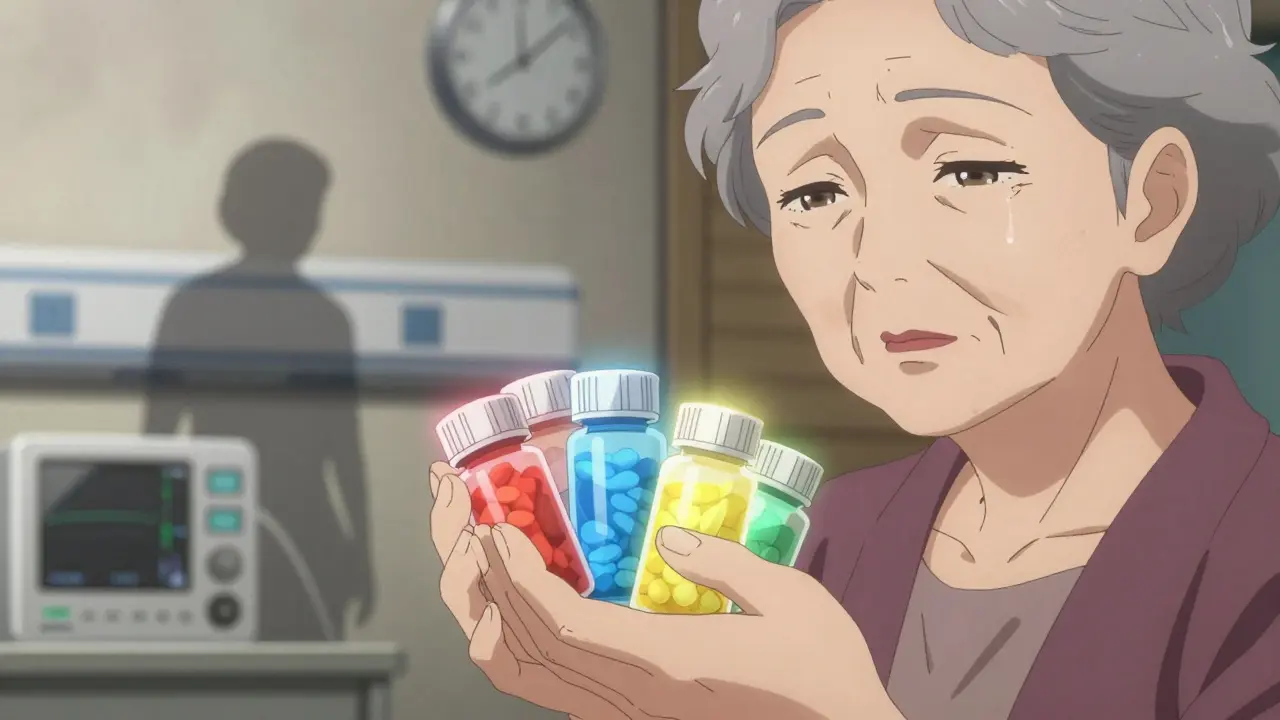
Most people with comorbidities don’t take one or two medications. They take five, six, or more. A study of seniors over 65 showed that 85% had multiple chronic diseases - and on average, they were taking over four medications every day. Nearly half of them were on five or more.
This is called polypharmacy. And it’s not just about quantity. It’s about dangerous combinations. When you take five drugs, you’re not just adding risks - you’re multiplying them. Each new drug can interact with another, creating unexpected side effects.
For example, a patient with heart failure might be on a beta-blocker, a diuretic, and an anticoagulant. Add in a painkiller for arthritis and a sleep aid, and suddenly you’ve got a perfect storm. The diuretic might lower potassium too much. The painkiller might strain the kidneys. The sleep aid might make the heart medication too strong. The result? Dizziness, fainting, falls, kidney injury - or worse.
One study of cancer patients found that 65% of them had at least one dangerous drug interaction - and over a third of those were serious enough to cause permanent harm. That’s not an outlier. It’s the rule.
Who’s Most at Risk?
Not everyone with comorbidities faces the same level of danger. Some conditions are far more dangerous when paired with certain drugs.
- Heart disease + stimulants: Medications for ADHD, weight loss, or even some cold remedies can spike blood pressure and heart rate. For someone with arrhythmia or heart failure, that’s a red flag.
- Liver disease + sedatives: Benzodiazepines, sleeping pills, and even some antibiotics can build up to toxic levels. The risk of confusion, falls, and coma jumps.
- Diabetes + steroids: Steroids used for inflammation or autoimmune diseases can cause dangerous blood sugar spikes. Patients may not even realize their diabetes is worsening until they’re in the ER.
- Parkinson’s + antipsychotics: Even low doses of certain antipsychotics can trigger severe movement problems in Parkinson’s patients - a reaction that’s much more common and more severe than in healthy people.
And then there’s age. People over 75 - especially women - are nearly three times more likely to be prescribed medications listed as potentially inappropriate for seniors. These are drugs the American Geriatrics Society says should be avoided in older adults because the risks outweigh the benefits. Yet they’re still prescribed regularly.
What Side Effects Show Up Most Often?
It’s not just about “feeling sick.” The side effects you see in someone with comorbidities are different from those in a healthy person.
Among patients with multiple chronic conditions, the most common side effects are:
- Weakness (36% of cases)
- Dizziness (12%)
- Headache (7%)
- Nausea and vomiting (under 5%)
- Insomnia (3%)
Notice something? Weakness and dizziness dominate. These aren’t just annoying - they lead to falls, fractures, hospital stays, and loss of independence. In fact, patients with three or more chronic conditions are 2.5 times more likely to be hospitalized because of a drug reaction.
And here’s the twist: in healthy people, dizziness is the #1 side effect. But in those with comorbidities, weakness is twice as common. That tells us something important - the body isn’t just reacting to the drug. It’s collapsing under the weight of too many diseases and too many drugs.
Why Clinical Trials Don’t Help
You might think, “If a drug is approved, it must be safe.” But here’s the problem: most drug trials exclude people with multiple chronic conditions. They want clean data, so they pick healthy volunteers or patients with just one disease.
That means 70% to 80% of older adults with comorbidities were never tested on the drugs they’re now taking. Doctors are prescribing based on data that doesn’t reflect real-world patients.
For example, a heart failure drug might show great results in a trial of 500 patients - all of whom had only heart failure and no diabetes, no kidney disease, no arthritis. But in real life, that same patient might have all four. And now, the drug is too strong. The side effects are worse. The dose? Wrong.
This is why so many side effects go undetected until someone ends up in the hospital.
What Can Be Done?
There’s no magic fix - but there are proven ways to reduce risk.
1. Medication reviews by pharmacists. A 2020 study showed that when clinical pharmacists reviewed medications for patients with multiple conditions, adverse drug reactions dropped by 22%. They don’t just check for interactions - they ask, “Is this drug still needed?”
2. Use of STOPP/START criteria. These are guidelines that help doctors decide which drugs to stop (STOPP) and which to start (START) in older adults with complex conditions. When used, they cut hospitalizations from drug reactions by 17%.
3. Electronic alerts. Modern electronic health records now flag dangerous combinations - especially for kidney or liver problems. One study showed a 35% drop in inappropriate prescribing when these systems were active.
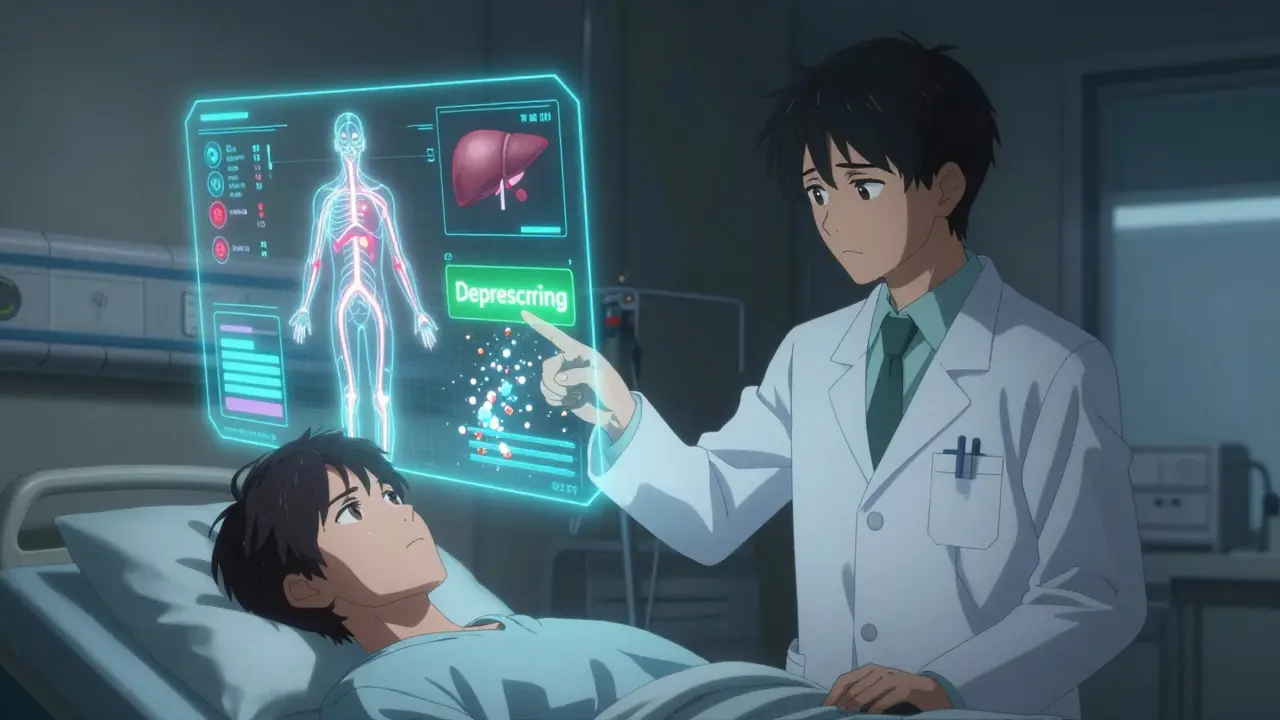
4. Deprescribing. Sometimes, the best treatment is stopping a drug. If you’re taking five pills and one of them is just “for safety,” ask: is it really helping? Many patients feel better once unnecessary meds are removed.
But barriers remain. Most doctors say they don’t have enough time. Patients see five or more specialists - each prescribing their own drugs. Communication between providers? Often nonexistent.
The Future Is Personalized
The good news? Science is catching up. In 2024, the NIH launched a new database called the Comorbidity-Drug Interaction Knowledgebase, built from 12 million patient records. It’s already identified 217 new dangerous combinations that weren’t on any warning list.
Machine learning tools are now predicting drug reactions with 89% accuracy - far better than human judgment. And new tools are being tested that adjust drug doses in real time based on lab results and disease changes.
One trial showed that using genetic data and comorbidity profiles to tailor drug doses cut adverse reactions by 40%. That’s not science fiction. It’s happening now.
By 2030, 90% of adults over 65 will have two or more chronic conditions. That’s not a future scenario - it’s a looming reality. The question isn’t whether we’ll face this problem. It’s whether we’ll act before it’s too late.
If you or someone you care for is managing multiple conditions, don’t assume your medications are safe just because they were prescribed. Ask: Are any of these drugs being taken just because they always have been? Have my liver and kidney function been checked recently? Could any of these drugs be causing my dizziness or fatigue?
One conversation with your doctor - or better yet, a pharmacist - could change everything.
What exactly are comorbidities?
Comorbidities are two or more chronic medical conditions that occur at the same time. Common examples include diabetes and heart disease, arthritis and high blood pressure, or depression and chronic pain. These conditions don’t just coexist - they interact with each other and with medications, often increasing the risk of harmful side effects.
Why do comorbidities make side effects worse?
Chronic diseases change how your body handles drugs. Liver or kidney disease slows down drug breakdown and clearance. This causes medications to build up in your system. Conditions like heart failure or diabetes can also make your body more sensitive to side effects. For example, someone with Parkinson’s may react badly to a standard dose of an antipsychotic - something a healthy person wouldn’t experience.
Is polypharmacy always dangerous?
Not always - but it’s risky. Taking five or more medications daily increases the chance of harmful drug interactions. Studies show that 47% of elderly patients on multiple drugs have at least one dangerous interaction. The more drugs you take, the higher the chance that one will worsen another condition or cause a new problem like dizziness, kidney injury, or internal bleeding.
Can my doctor miss these risks?
Yes. Most drug trials exclude patients with multiple chronic conditions, so doctors rely on data that doesn’t reflect real-world patients. Also, time limits and fragmented care - seeing five different specialists - mean no one has the full picture. That’s why it’s important to ask for a full medication review, especially if you’re over 65 or have three or more conditions.
What should I ask my pharmacist?
Ask: “Is this medication still necessary?” “Could it be causing my dizziness or weakness?” “Has my kidney or liver function been checked recently?” “Are there any interactions with my other drugs?” Pharmacists are trained to spot dangerous combinations and can often suggest safer alternatives or help reduce your pill count.
Are there tools to help manage these risks?
Yes. Many hospitals now use electronic systems that flag dangerous drug combinations based on your conditions and lab results. Tools like STOPP/START guidelines help doctors decide what to stop or start. And new AI tools are predicting side effects with over 85% accuracy by analyzing your full health history - not just your current prescriptions.






steve sunio
February 12, 2026 AT 12:55Neha Motiwala
February 12, 2026 AT 14:49athmaja biju
February 13, 2026 AT 07:57Robert Petersen
February 15, 2026 AT 07:36Craig Staszak
February 15, 2026 AT 15:35alex clo
February 17, 2026 AT 08:15Alyssa Williams
February 17, 2026 AT 23:29Ernie Simsek
February 19, 2026 AT 17:35Joanne Tan
February 21, 2026 AT 15:29