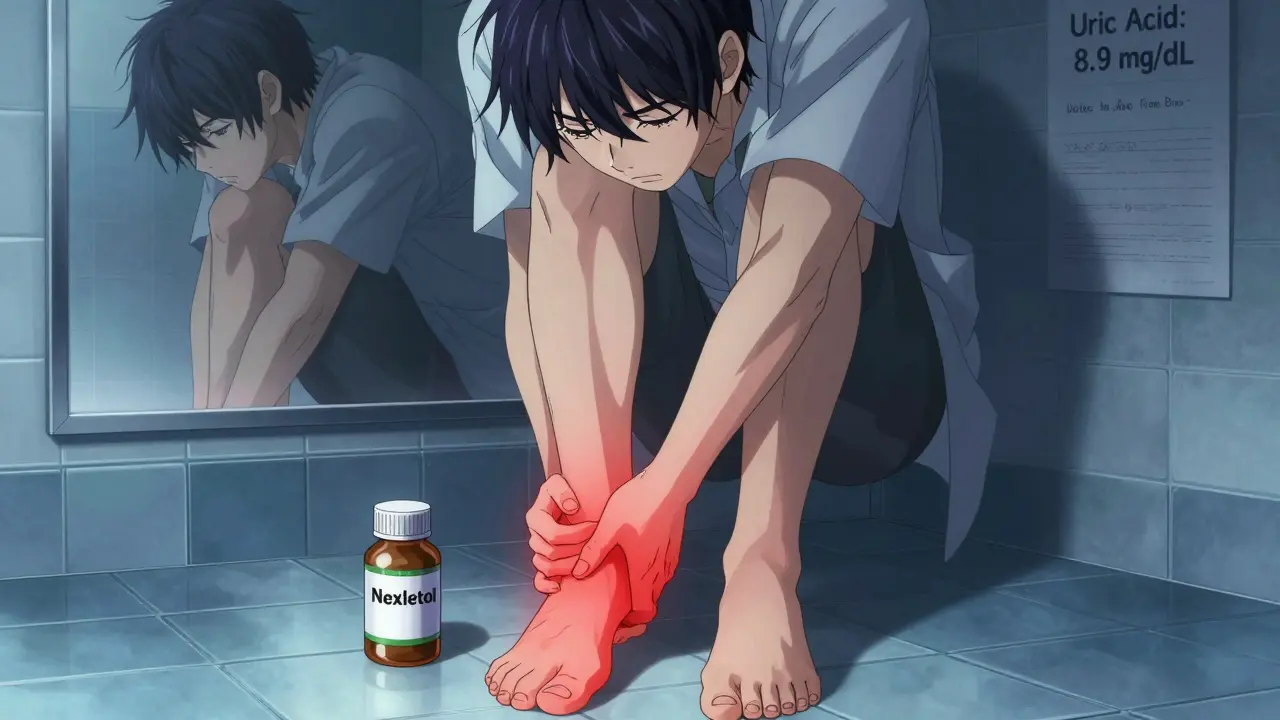
Bempedoic Acid Gout Risk Calculator
This tool estimates your gout risk while taking bempedoic acid based on your uric acid level. The FDA recommends monitoring uric acid and considering allopurinol if levels exceed 7 mg/dL.
When you're trying to lower your cholesterol but can't take statins because of muscle pain or other side effects, bempedoic acid (sold as Nexletol) might be your next option. It works differently than statins - instead of blocking an enzyme in the liver called HMG-CoA reductase, it stops ATP-citrate lyase, another key player in cholesterol production. The FDA approved it in 2020, and since then, over 250,000 people in the U.S. have filled prescriptions for it each month. But like all medications, it comes with risks. Two of the most serious? Gout and tendon injuries.
Why Bempedoic Acid Can Trigger Gout
Bempedoic acid doesn’t just lower cholesterol - it also raises uric acid levels in your blood. That’s not a bug; it’s a known side effect. In clinical trials, about 2.1% of people taking bempedoic acid saw their uric acid levels climb, compared to just 0.4% on placebo. For some, that spike leads to gout - a painful form of arthritis that usually hits the big toe first. Around 1.5% of users had a gout attack during trials, versus 0.5% on placebo. If you’ve had gout before, your risk jumps even higher: 2.3% of those with a history of gout had flares, compared to 1.2% without.
Here’s what that looks like in real life: A 62-year-old man started bempedoic acid after being told he couldn’t tolerate statins. Two weeks later, his big toe swelled up, turned red, and hurt so badly he couldn’t wear shoes. His doctor checked his uric acid - it had jumped from 5.8 mg/dL to 8.9 mg/dL. He wasn’t eating more seafood or drinking beer. The only new thing in his routine was the pill.
The FDA requires doctors to check uric acid levels before starting bempedoic acid and again at four weeks. If levels are high, doctors often prescribe allopurinol - a cheap, well-studied drug that lowers uric acid. Studies show this cuts gout risk by about 65%. If you’re on bempedoic acid and notice sudden joint pain, especially in your feet or knees, don’t ignore it. Talk to your doctor before the next scheduled visit.
Tendon Rupture: A Rare but Serious Risk
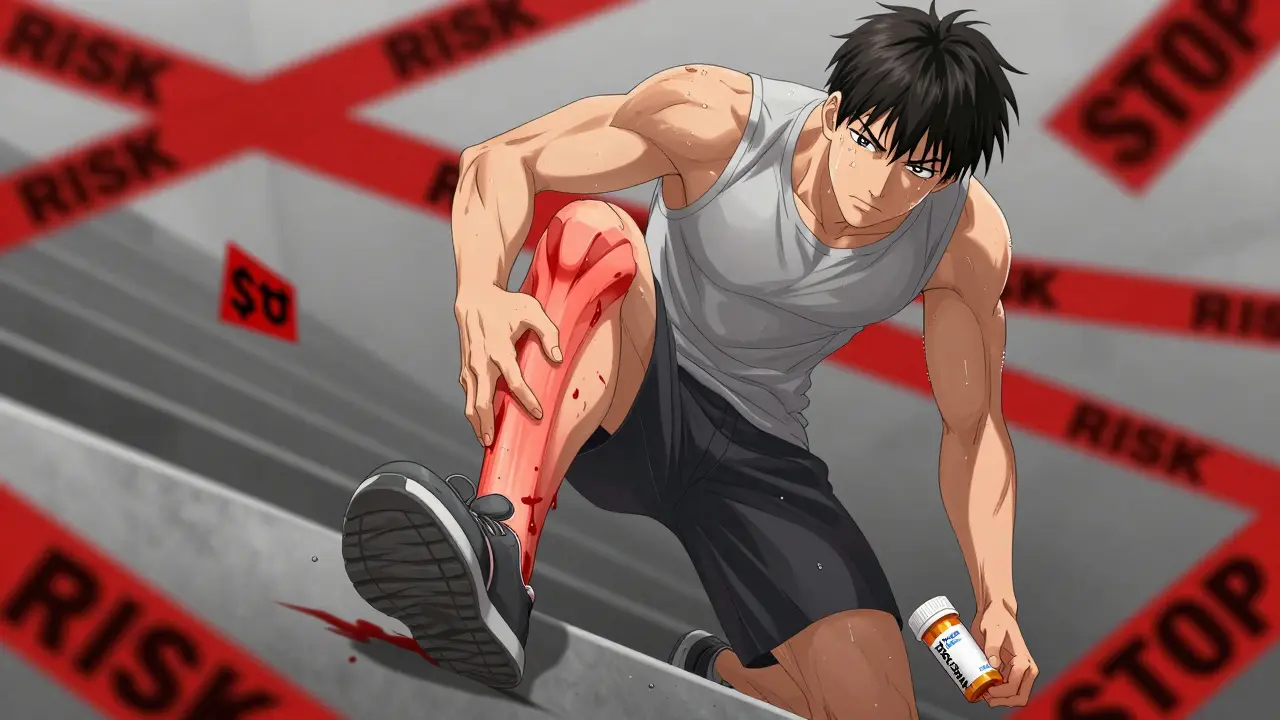
While muscle pain is common with statins, tendon problems are rare - unless you’re taking bempedoic acid. In trials, 0.7% of people on bempedoic acid had tendon injuries, compared to just 0.1% on placebo. That might sound small, but when you combine it with statins, the risk triples. One study found patients taking both drugs had a 3.5 times higher chance of tendon rupture than those on placebo alone.
Tendon ruptures aren’t always dramatic. You might not hear a loud snap. Instead, you might feel sudden pain in your Achilles tendon, shoulder, or hand after a simple movement - like climbing stairs or lifting a grocery bag. Bruising, swelling, or being unable to push off with your foot are red flags. If this happens, stop the medication immediately and go to urgent care. Tendon damage can get worse if you keep moving on it.
The European Atherosclerosis Society warns against using bempedoic acid if you’re already on fluoroquinolone antibiotics (like ciprofloxacin or levofloxacin). These drugs also raise tendon rupture risk. Combining them with bempedoic acid? That’s a dangerous mix. Even if you’ve never had tendon issues, this combo can be risky. Always tell your doctor what else you’re taking - even over-the-counter meds.
Other Side Effects You Should Watch For
Gout and tendons get the most attention, but they’re not the only concerns. Here’s what else showed up in clinical data:
- Muscle spasms - Happened in 5.8% of users, compared to 2.5% on placebo. Often mild and fades after a few weeks.
- Back pain - Reported by 4.9% of users. Not always related to injury; could be a direct effect.
- Pain in hands or feet - 3.4% of users. Sometimes mistaken for arthritis.
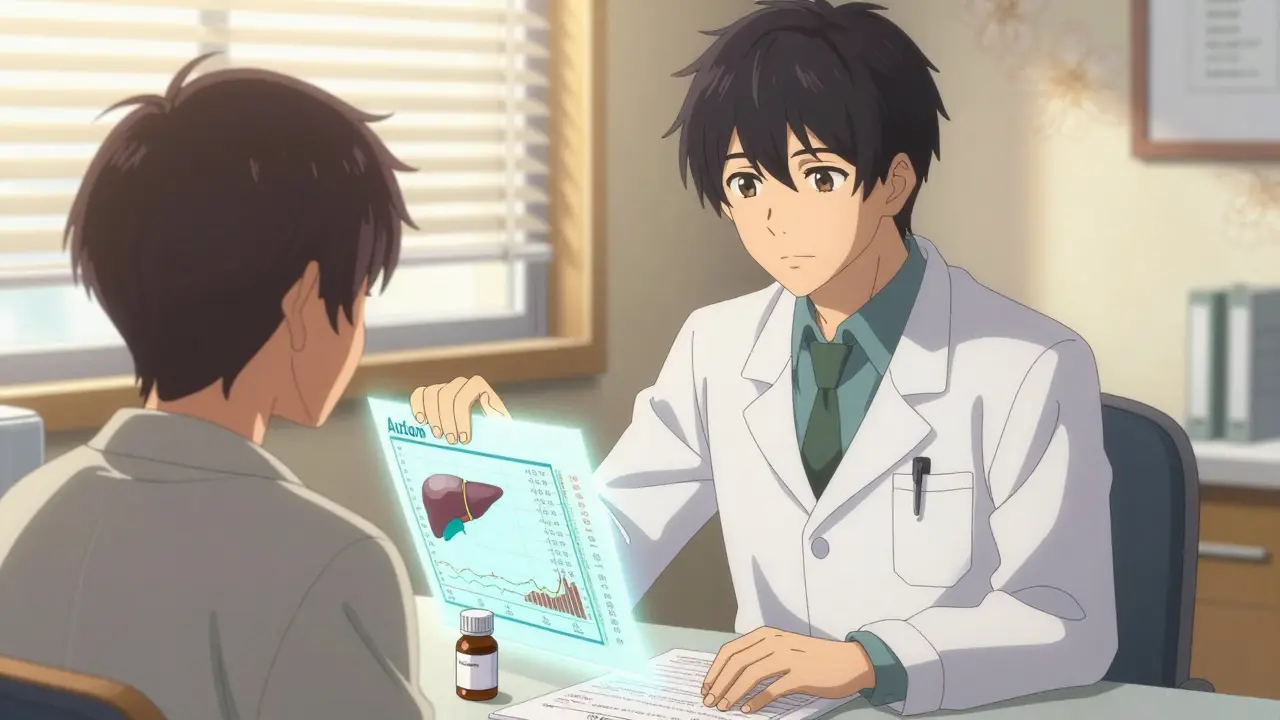
- Elevated liver enzymes - 2.2% had ALT or AST levels more than three times the normal limit. Your doctor should check liver function every 3 months.
- Anemia - Hemoglobin dropped slightly in 1.8% of users. Usually not severe, but can cause fatigue or dizziness.
- Upper respiratory infections - 7.7% of users got colds or bronchitis. Might be coincidence, but it’s worth noting.
Most of these are mild and don’t require stopping the drug. But if you feel unusually tired, notice yellowing of your skin or eyes, or have persistent joint or tendon pain, call your provider. These aren’t normal.
Who Should Avoid Bempedoic Acid?
This isn’t a drug for everyone. It’s designed for one group: people who truly can’t take statins. If you’ve tried at least two different statins and had muscle pain, weakness, or cramps that went away when you stopped, you might be a good candidate.
But avoid it if:
- You have a history of gout or high uric acid levels (unless you’re already on allopurinol)
- You’ve had a tendon rupture before
- You’re taking fluoroquinolone antibiotics
- You have severe liver disease
- You’re pregnant or planning to become pregnant
The American Heart Association says bempedoic acid should be reserved for statin-intolerant patients - not used as a first-line option just because it’s newer. Its benefits are clear: the CLEAR Outcomes trial showed a 13% reduction in heart attacks, strokes, and death from heart disease. But those benefits only make sense if you’re not trading one problem for two worse ones.
What to Do If You’re Already on Bempedoic Acid
If you’re taking it right now, here’s your action plan:
- Check your uric acid level - If it’s above 7 mg/dL, ask about allopurinol.
- Monitor for tendon pain - Especially in heels, shoulders, or wrists. Don’t push through pain.
- Get liver tests every 3 months - Even if you feel fine.
- Avoid fluoroquinolones - Tell every doctor you see that you’re on bempedoic acid before they prescribe antibiotics.
- Stay active, but don’t overdo it - Sudden increases in activity can strain tendons. Gradual movement is safer.
Most people tolerate bempedoic acid well. But if you’re not monitoring for these side effects, you’re flying blind. The drug works - but only if you’re paying attention.
What’s Next? New Formulations and Better Safety
Esperion Therapeutics, the company behind Nexletol, is testing a once-weekly version of bempedoic acid. Early results show it works just as well as the daily pill - and cuts gout-related side effects by 22%. That could be a game-changer. If approved, it might make the drug safer for more people.
For now, the message is clear: Bempedoic acid is a powerful tool for people who can’t take statins. But it’s not risk-free. The same people who benefit most from it - those with high cholesterol and heart disease - are also the ones most likely to have other health issues that make gout or tendon damage more dangerous. That’s why close monitoring isn’t optional. It’s essential.



Alec Stewart Stewart
February 4, 2026 AT 22:58Just started this med last month and my toe has been throbbing like crazy. Didn't think it was the pill until I read this post. Going to call my doc Monday. Thanks for the heads-up. 🙏
Geri Rogers
February 5, 2026 AT 23:35YESSSS this is so important!! I’m a nurse and I’ve seen THREE patients on bempedoic acid end up in urgent care for tendon pain. One guy thought he just ‘pulled something’ lifting groceries-turned out his Achilles was half-torn. If you’re on this, get your uric acid checked. Don’t wait. Allopurinol is cheap, safe, and saves your feet. 💪🩺
Jamillah Rodriguez
February 6, 2026 AT 08:56Wow. So this is why my grandma couldn’t walk for two weeks? She was on this and nobody told her anything. She just said ‘old age.’ 😒
Susheel Sharma
February 6, 2026 AT 21:17The FDA’s approval process is a farce. 2.1% uric acid spike? That’s not a side effect-it’s a pharmacological feature disguised as collateral damage. And let’s not pretend 0.7% tendon rupture is ‘rare’ when you’re talking about millions of prescriptions. This isn’t medicine-it’s actuarial risk management dressed in white coats. 🤷♂️
Demetria Morris
February 6, 2026 AT 22:12I knew someone would get hurt. I told my doctor this was too good to be true. Now people are paying the price for ‘innovation.’ It’s not progress if it breaks people. 💔
Nathan King
February 7, 2026 AT 09:30It is worth noting that the CLEAR Outcomes trial demonstrated a statistically significant reduction in major adverse cardiovascular events (MACE) with a hazard ratio of 0.87 (95% CI: 0.79–0.96), which, when contextualized against the incidence of gout (1.5%) and tendon rupture (0.7%), suggests a favorable risk-benefit profile for appropriately selected patients. One must exercise due diligence, but to dismiss this agent outright is to succumb to therapeutic nihilism-a position antithetical to evidence-based practice.
Samuel Bradway
February 9, 2026 AT 08:00I’ve been on this for 6 months. No gout, no tendon issues. Just a little back ache and tired sometimes. My doc checks my blood every 3 months. Honestly? Worth it. My LDL dropped from 180 to 90. I’m not perfect, but I’m alive. 🤝
Janice Williams
February 9, 2026 AT 16:53How is it that a drug approved by the FDA can be marketed to the elderly with a history of cardiovascular disease, when the very mechanism that lowers cholesterol also elevates uric acid-a known trigger for systemic inflammation and metabolic dysfunction? This is not a treatment; it is a calculated trade-off that prioritizes corporate profitability over patient longevity. The AHA’s cautious stance is commendable, yet insufficient. We are not patients. We are data points.
rahulkumar maurya
February 10, 2026 AT 01:57Interesting. In India, we rarely see this drug prescribed. Statin intolerance is often dismissed as ‘psychosomatic’ here. But if you’re in the U.S. and on this, you’re basically playing Russian roulette with your tendons. Allopurinol should be co-prescribed by default. No excuses. 🇮🇳💊