When a new drug hits the market, most people assume it’s protected by a patent that lasts 20 years. But that’s only the beginning. In reality, many blockbuster drugs enjoy market exclusivity for 15, 20, even 25 years-long after their core patent expires. This isn’t a loophole. It’s a system built into U.S. and EU drug laws, designed to reward innovation but often used to delay generic competition. Understanding how this works reveals why some medications stay expensive for over a decade, even when the science behind them is old.
How the System Was Meant to Work
The Drug Price Competition and Patent Term Restoration Act of 1984, better known as the Hatch-Waxman Act, tried to strike a balance. It gave brand-name drugmakers extra time to recoup R&D costs by extending patent terms for delays caused by FDA reviews. At the same time, it fast-tracked generic approvals once protection ended. The goal? Nine years of market protection after approval, plus up to five more years of patent extension. That’s 14 years total. Simple. Fair. Predictable. But that’s not what happened. Instead of one clear expiration date, drugmakers learned to stack layers of protection like Russian nesting dolls. Each layer-patent, exclusivity, pediatric add-on-pushes the clock forward. Today, 91% of drugs that get patent extensions keep their monopoly alive long after those extensions expire, thanks to a maze of secondary protections.The Five Main Tools Beyond Patents
In the U.S., there are five regulatory exclusivities that operate independently of patents. You don’t need a patent to qualify for any of them. Here’s how they work:- New Chemical Entity (NCE) Exclusivity: 5 years of market protection for a drug with a completely new active ingredient. No generics can be approved during this time, even if they have a patent.
- Orphan Drug Exclusivity: 7 years for drugs treating rare diseases affecting fewer than 200,000 Americans. Even if the drug isn’t patented, no competitor can get approval for the same use during this period.
- New Clinical Investigation Exclusivity: 3 years for a new indication, dosage, or formulation of an existing drug. But here’s the catch: the FDA now demands proof the new version offers real clinical benefit-not just a tweak.
- Pediatric Exclusivity: A 6-month bonus added to any existing exclusivity or patent. To get it, companies must complete FDA-requested studies in children. It’s not a reward for innovation-it’s a requirement with a payout.
- Patent Challenge Incentive: The first generic company to successfully challenge a patent gets 180 days of exclusive market access. This sounds like a win for generics, but it’s often used as leverage in legal battles that delay other competitors.
How the EU Does It Differently
Europe doesn’t use the same patchwork. Instead, it has the Supplemental Protection Certificate (SPC), which extends patent life up to 15 years after drug approval. The math is more structured: SPC duration = time from patent filing to first marketing approval minus five years, capped at five additional years. That’s simpler than the U.S. system, but still powerful. The EU also offers orphan drug exclusivity-10 years, extendable to 12 if pediatric data is submitted. And unlike the U.S., the EU combines data exclusivity (8 years) with market exclusivity (2 years) and a 1-year bonus for innovation. This means even if a patent expires, generics still can’t use the original company’s clinical trial data to get approved for 10+ years. The result? In both regions, the clock doesn’t stop at patent expiration. It just keeps ticking, thanks to regulatory rules.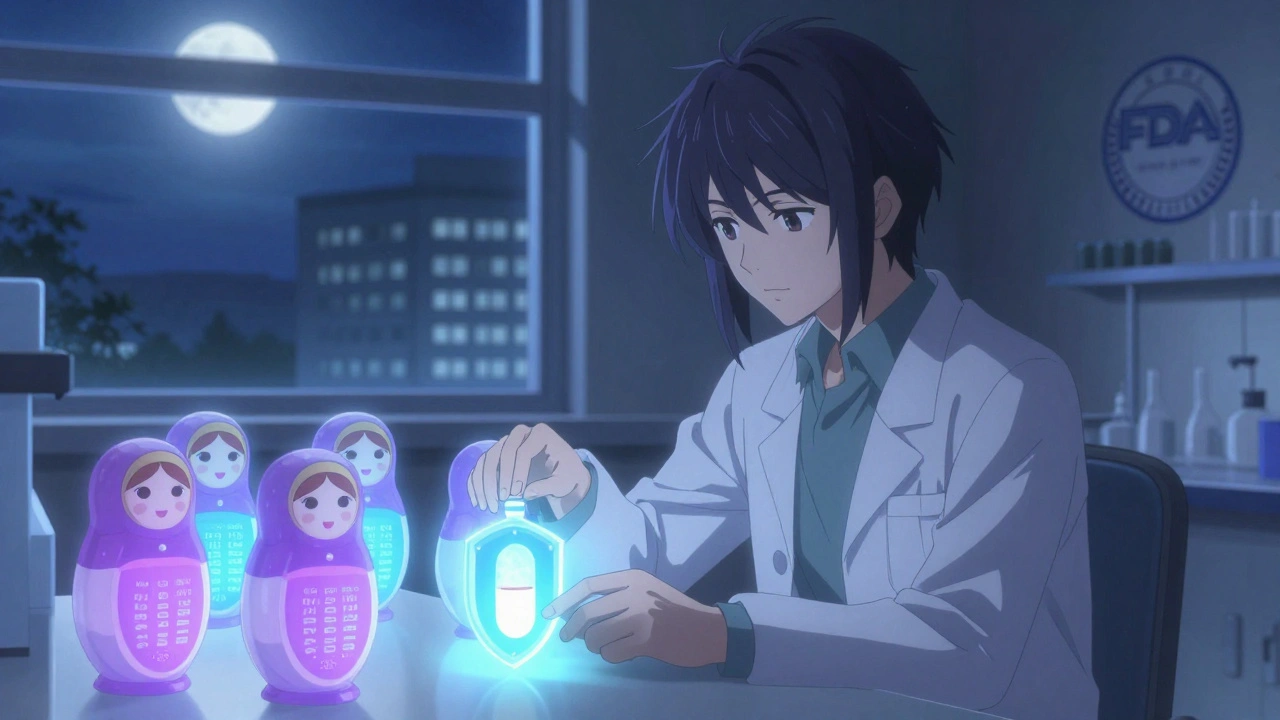
Strategic Playbook: How Companies Game the System
Big pharma doesn’t wait until the last minute to plan. Exclusivity strategy starts during Phase II clinical trials. Companies delay filing their main patent until after they’ve gathered enough data to prove the drug works. That way, the 20-year patent clock starts later, giving them more time to sell before generics arrive. Then comes the stacking. A drug might get:- 5 years of NCE exclusivity
- 6 months added for pediatric studies
- 7 years for orphan status
- 3 years for a new formulation
- 5 years of patent term extension
Why This Matters: The Real Cost
The financial impact is staggering. In 2022, the U.S. pharmaceutical market hit $621 billion. Branded drugs made up 78% of revenue-even though they made up only 10% of prescriptions. Why? Because they’re the only ones allowed to sell. A 2023 JAMA Health Forum study looked at four top-selling drugs: bimatoprost, celecoxib, glatiramer, and imatinib. After generics finally entered the market, those four drugs still cost consumers $3.5 billion more over two years than they would have if exclusivity had expired on schedule. For patients with rare diseases, orphan drug exclusivity is vital. Without it, companies wouldn’t spend $2 billion to develop a drug for 50,000 people. But for common conditions like high blood pressure or diabetes, these extensions are pure profit protection.
Is the System Breaking Down?
Regulators are starting to push back. In 2023, the FDA tightened rules for 3-year exclusivity, requiring stronger proof that a new formulation actually improves patient outcomes-not just convenience. The FTC filed an amicus brief arguing that product hopping violates antitrust laws. The European Commission proposed overhauling the SPC system to reward true innovation, not minor tweaks. But change is slow. The average market exclusivity period for new drugs has grown from 12.7 years in 2018 to an estimated 16.3 years by 2028. For patients, that means longer waits for affordable options. For insurers, it means higher premiums. For taxpayers, it means more money spent on Medicare and Medicaid for drugs that could be generics.What’s Next?
The tension isn’t going away. Drugmakers argue they need these protections to fund risky R&D. The average cost to bring a new drug to market is now $2.3 billion. But critics point out that many of these extensions are used for drugs that cost pennies to make but sell for hundreds of dollars a pill. The real question isn’t whether innovation should be rewarded. It’s whether the system is still serving its original purpose-or if it’s become a tool for profit maximization disguised as incentive. For now, the rules stay the same. And companies? They’re already planning their next stack.Can a drug have market exclusivity without a patent?
Yes. Regulatory exclusivities like orphan drug status, pediatric extensions, and new indication protections operate independently of patents. A drug can be off-patent but still legally protected from generic competition for years due to these exclusivity periods.
How long can a drug stay exclusive in the U.S.?
There’s no single cap, but the maximum effective exclusivity can reach 20+ years. For example: 5 years of NCE exclusivity + 6 months pediatric extension + 7 years orphan status + 5 years patent term extension = 17.5 years. Add in multiple new indications or formulations, and it can stretch further.
What’s the difference between patent extension and regulatory exclusivity?
Patent extensions (like PTE) adjust the legal patent term to account for FDA review delays. Regulatory exclusivity is a separate FDA-granted period that blocks generic approval regardless of patent status. One is about intellectual property; the other is about data and market access.
Why do generics still take so long to appear after a patent expires?
Because other exclusivities are still active. Even if a patent runs out, the FDA can’t approve a generic if NCE, orphan, or pediatric exclusivity is still in effect. Companies often time their patent filings and exclusivity applications to ensure no gap exists.
Are market exclusivity extensions good or bad?
It depends. For rare diseases, they’re essential-they make development financially viable. For common conditions, they often delay affordable access without adding meaningful innovation. The system works as intended for some drugs, but has been exploited for others through stacking and minor modifications.




Donna Anderson
December 13, 2025 AT 11:56so like… i just found out my insulin costs 300 a month because they tweaked the packaging? that’s wild. why am i paying for a new bottle shape??
Laura Weemering
December 14, 2025 AT 22:06It’s not just “tweaks”-it’s systemic rent-seeking disguised as innovation. The FDA’s regulatory architecture has been weaponized by corporate legal teams to manufacture artificial scarcity, thereby extracting supra-competitive rents from vulnerable patient populations. The moral hazard is staggering: we incentivize litigation over lumen.
sandeep sanigarapu
December 16, 2025 AT 16:51This system was designed to help patients, not to let companies profit indefinitely. In India, generics are available within months after patent expiry. We need balance, not endless extensions.
Ashley Skipp
December 18, 2025 AT 04:39Why do we even care if Big Pharma makes money theyre just trying to survive
Nathan Fatal
December 19, 2025 AT 09:13The real issue isn’t that companies extend exclusivity-it’s that regulators don’t enforce the intent behind the laws. The Hatch-Waxman Act was meant to balance access and innovation, not to create a legal arms race where the only winners are shareholders and patent attorneys. If a new formulation doesn’t improve outcomes, it shouldn’t get a new clock.
Robert Webb
December 20, 2025 AT 16:04It’s fascinating how the entire pharmaceutical regulatory framework has evolved into a complex, multi-layered game of procedural chess-each exclusivity type acting like a pawn that can be moved independently, yet collectively creating an impenetrable fortress around the original drug. What’s often missed is that this isn’t accidental; it’s the result of decades of lobbying, legal precedent, and regulatory capture. The FDA, while well-intentioned, has become less a gatekeeper of public health and more a referee in a corporate negotiation where the rules were written by the players themselves.
nikki yamashita
December 21, 2025 AT 10:55OMG this is so true!! I had to switch my meds last year and my bill doubled. They just changed the color of the pill 😭
Adam Everitt
December 23, 2025 AT 06:53its not just pharma… its the whole system. patents, exclusivity, data rights-it’s all a smokescreen. we’re paying for hype, not healing.
wendy b
December 24, 2025 AT 19:24Let’s be clear-this isn’t innovation, it’s intellectual property laundering. The term ‘pharmaceutical advancement’ has been co-opted by lawyers and CFOs to justify obscene pricing. The public is being systematically fleeced under the guise of R&D reimbursement, when in reality, much of the ‘innovation’ is cosmetic, statistically insignificant, and clinically irrelevant.
Rob Purvis
December 25, 2025 AT 23:39Wait-so if a company files 48 secondary patents on one drug, and the FDA approves each one as a ‘new use’ or ‘new formulation,’ even if the clinical benefit is negligible… then technically, they’re playing by the rules? That’s not innovation. That’s exploitation dressed up as compliance.
Audrey Crothers
December 26, 2025 AT 13:52My dad’s heart med went generic after 18 years… and he cried because he finally could afford it. This isn’t about ‘rewarding innovation’-it’s about people dying because they can’t pay. 💔
Stacy Foster
December 26, 2025 AT 18:48They’re not just extending exclusivity-they’re colluding with the FDA. You think this is coincidence? No. The revolving door between Big Pharma and regulators is wide open. This is a cartel. They control the data, the approvals, the pricing. And we’re the suckers paying for it.
Lawrence Armstrong
December 28, 2025 AT 15:10Just read this and cried. My sister needed a rare drug that cost $12k/month. No generics for 14 years. They didn’t make it better-they just made it more expensive. 🤕
Reshma Sinha
December 28, 2025 AT 21:10In India, we see the consequences: patients on waiting lists for generics that never arrive because of US/EU exclusivity extensions. This isn’t global health equity-it’s health apartheid.
Levi Cooper
December 29, 2025 AT 14:09Why are we letting foreign regulators dictate how American companies protect their IP? The EU’s SPC system is outdated. America leads in drug innovation-we should be leading in protection, not playing by Europe’s slower rules.