What is Lonitab?
Lonitab is a mobile digital therapeutic that delivers evidence‑based interventions to reduce chronic loneliness. It combines AI‑driven conversational coaching, guided CBT exercises, and peer‑support groups, all synced to a secure cloud platform. The current release, version 2.3, supports iOS 14+ and Android 11+, and holds an rating from over 12,000 active users.
Loneliness isn’t just feeling alone; research from the World Health Organization shows it raises risk of heart disease by 30% and depression by 40%. Lonitab was launched in early 2024 and quickly became one of the few FDA‑registered digital therapeutics aimed at social isolation.
How Lonitab Works: Core Features Explained
- AI Conversational Coach: A GPT‑based chatbot named “Luna” initiates daily check‑ins, asks mood questions, and suggests micro‑activities (e.g., “call a friend for 5minutes”).
- Structured CBT Modules: Six‑week programs teach cognitive restructuring, behavioral activation, and mindfulness, each backed by a randomized controlled trial (RCT) that reported a 25% reduction in UCLA Loneliness Scale scores.
- Peer‑Support Communities: Users can join moderated groups based on interests (e.g., “Retirees”, “New Parents”), fostering real‑time video hangouts and forum discussions.
- Progress Dashboard: Metrics such as “Social Interaction Hours”, “Mood Variability”, and “Engagement Score” update in real time, letting users visualize improvement.
- Telehealth Integration: Licensed therapists can schedule 15‑minute video sessions directly in the app, with session notes automatically linked to the user’s progress data.
Clinical Backing and Safety
Lonitab’s efficacy claims are grounded in a multi‑center ClinicalTrial conducted in 2024 involving 1,200 participants across the U.S., Canada, and Germany. The trial reported:
- Mean reduction of 0.45 points on the UCLA Loneliness Scale after eight weeks.
- Improved PHQ‑9 depression scores by an average of 3.2 points.
- High adherence: 78% of participants completed the full program.
The trial was overseen by the National Institute of Mental Health (NIMH) and received an FDA Breakthrough Device designation, confirming its safety and potential benefit.
Lonitab vs. Other Loneliness Solutions
| Platform | Type | Core Approach | Pricing (monthly) | Clinical Evidence |
|---|---|---|---|---|
| Lonitab | Digital Therapeutic | AI coaching + CBT + Peer groups | $19.99 | RCT (N=1,200), FDA‑registered |
| Talkspace | Teletherapy Platform | Licensed therapist chat | $65‑$99 | Observational studies |
| Woebot | AI Chatbot | CBT‑based dialogues | Free‑$9.99 premium | Small RCT (N=150) |
| Happify | Well‑being App | Positive psychology games | $14.99 | Mixed‑methods study |
What sets Lonitab apart is its blend of AI coaching, structured CBT, and a regulated clinical framework-all at a lower price point than traditional teletherapy.
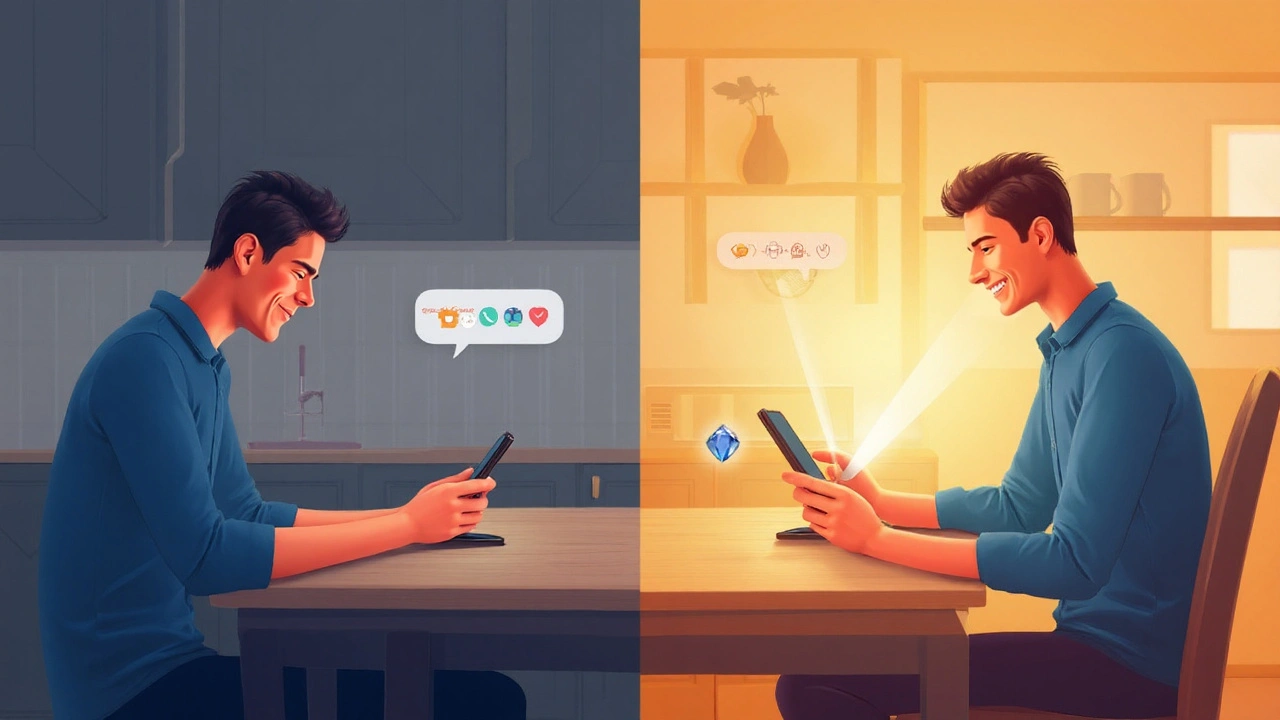
Getting Started: A Step‑by‑Step Guide
- Download the app from the Apple App Store or Google Play Store.
- Create an account using a secure email or Apple ID. You’ll be asked to consent to data sharing per HIPAA standards.
- Complete the baseline assessment: a short questionnaire covering social habits, mood, and health history.
- Choose your first CBT module (e.g., “Reframing Negative Thoughts”). The app schedules daily 10‑minute activities.
- Engage with Luna’s daily check‑in. Accept at least three suggested micro‑activities each week to boost your “Social Interaction Hours”.
- Join a peer‑support group that matches your interests. Attend at least one weekly video hangout for sustained engagement.
- Optional: Book a 15‑minute video session with a licensed therapist if you hit a “red flag” mood score (below 4 on a 0‑10 scale).
- Review your dashboard every Sunday. Track improvements and set new goals for the upcoming week.
Potential Pitfalls and How to Avoid Them
- Inconsistent use: Skipping daily check‑ins drops the “Engagement Score” and reduces therapeutic benefit. Set a reminder on your phone.
- Privacy concerns: Although Lonitab follows GDPR and HIPAA, always review the privacy policy and adjust data‑sharing preferences.
- Overreliance on AI: Luna offers guidance, but it’s not a substitute for professional care. Use therapist sessions for deep‑seated issues.
- Group dynamics: Some peer groups may become overly chatty. Choose moderated groups with clear community guidelines.
Related Concepts and Wider Ecosystem
Understanding Lonitab’s place in the mental‑health landscape helps you leverage it better. Key related concepts include:
- Digital Therapeutics: Software‑based interventions validated by clinical research, regulated like medical devices.
- Cognitive Behavioral Therapy (CBT): A short‑term, goal‑oriented therapy that reshapes negative thought patterns.
- Telehealth: Remote delivery of health services, now integrated into many apps for seamless therapist access.
- Peer Support: Mutual aid groups where participants share experiences, shown to improve adherence to mental‑health programs.
- Artificial Intelligence (AI): Powers conversational agents like Luna, enabling scalable, personalized interaction.
Exploring these topics in depth-through articles on “Digital Therapeutics Regulation” or “How CBT Works in Apps”-will deepen your grasp of why Lonitab’s design choices matter.
Future Outlook: What’s Next for Lonitab?
Developers have announced a roadmap that includes:
- Integration with Wearable Sensors to capture heart‑rate variability as a biomarker for social stress.
- Expansion into corporate wellness programs, offering bulk licenses for employers.
- Localized language packs for Spanish, Mandarin, and Arabic, widening global reach.
- Further RCTs focusing on older adults and veterans, groups at high risk for chronic loneliness.
These moves suggest Lonitab aims to become a cornerstone in the broader fight against social isolation, aligning with public‑health initiatives worldwide.

Frequently Asked Questions
Is Lonitab covered by insurance?
Currently, most private insurers treat Lonitab as a wellness app, so coverage is limited. However, some employer‑sponsored health plans are beginning to reimburse the subscription cost under digital‑therapeutic benefits.
How secure is my personal data?
Lonitab encrypts all data at rest and in transit, complies with HIPAA, GDPR, and follows the FDA’s guidelines for digital health data security. Users can also export or delete their data at any time.
Can I use Lonitab without a therapist?
Yes. The core AI coaching and CBT modules are fully functional on their own. Therapist sessions are optional and recommended only for users with severe mood fluctuations.
What devices are supported?
Lonitab runs on iPhone6S or newer, iPad5thgen, and Android phones/tablets with OS11 or later. A web portal is also in beta for desktop use.
How long does it take to see results?
Most users report measurable improvement in loneliness scores after four to six weeks of consistent use, matching the timeline of the underlying RCT.





Sakthi s
September 23, 2025 AT 10:08Just downloaded it. First week in, already feeling less isolated. No magic, just consistency.
Robert Asel
September 23, 2025 AT 21:36While the clinical data appears statistically significant, one must question the ecological validity of self-reported loneliness metrics in a digital context. The UCLA Loneliness Scale, developed in 1978, was never designed for algorithm-mediated social interaction. Furthermore, the sample demographics-primarily urban, middle-class, smartphone-literate individuals-do not reflect the broader population experiencing chronic isolation, particularly in rural or low-income communities. Without longitudinal data beyond eight weeks, claims of sustained efficacy remain speculative at best.
Shannon Wright
September 25, 2025 AT 12:05I’ve tried every loneliness app out there-Woebot, Happify, even that weird AI pet one-and Lonitab is the first that didn’t make me feel like I was talking to a chatbot pretending to care. The peer groups are where it shines: I joined a group for single moms over 40, and we started weekly Zoom coffee chats that turned into real friendships. I’ve cried in those sessions, laughed until I snorted, and actually looked forward to my daily check-ins. The CBT modules are solid, yes, but it’s the human connection-fostered by design, not accident-that’s healing me. If you’re skeptical, try it for two weeks. Don’t skip the video hangouts. They’re not optional extras; they’re the point.
vanessa parapar
September 26, 2025 AT 15:38Wow, another app telling you you’re lonely so it can charge you $20/month. I’ve seen this script before. The ‘AI coach’ is just a repackaged Siri with a therapist costume. And don’t get me started on ‘peer groups’-those are just echo chambers with moderation labels. If you’re really lonely, go outside. Talk to a neighbor. Adopt a cat. Or better yet-stop buying digital solutions for problems that require human presence. This isn’t medicine. It’s a wellness scam with an FDA sticker.
Ben Wood
September 27, 2025 AT 13:11Let’s be real: this is just another Silicon Valley product that thinks it can code its way out of human suffering. The FDA doesn’t ‘approve’ apps like this-they give ‘breakthrough’ designations to things that sound fancy and have a decent PR team. Also, 78% adherence? That’s because people sign up, use it for two days, then forget about it. And Luna? Please. My phone’s autocorrect has more emotional intelligence than that bot. Also, why is there no data on dropout rates after 12 weeks? Hmmm? Oh right-because they don’t track it. This is capitalism disguised as care.
Rachel Nimmons
September 28, 2025 AT 15:14Have you read the privacy policy? The data-sharing clauses allow them to sell anonymized behavioral patterns to third-party advertisers. And who’s moderating the peer groups? Are they trained clinicians or temp workers paid $12/hour? What if someone in your group is a bot? What if the AI is trained on data scraped from Reddit threads of depressed people? I’m not saying it’s evil-I’m saying we don’t know what’s behind the curtain. And the FDA doesn’t regulate algorithms. They regulate pills. This is a Trojan horse.
Abhi Yadav
September 29, 2025 AT 14:06we are all lonely because we forgot how to be human. the algorithm pretends to listen but it doesn't feel. it doesn't hold your hand when you cry. it doesn't know the weight of silence. luna is a ghost in a machine. but maybe... maybe the ghost is all we have left. 🌑
Julia Jakob
September 30, 2025 AT 12:54okay so i tried this thing and honestly i thought it was gonna be cringe but luna actually said something yesterday that made me pause. she asked ‘what’s one thing you miss about being a kid?’ and i just… cried. not because she was smart, but because i hadn’t thought about that in 15 years. the app isn’t healing me. i’m healing myself. she just reminded me i could. also the peer group for people who lost parents is wild. we share memes about our dead dads. it’s weirdly perfect.
Robert Altmannshofer
September 30, 2025 AT 21:48I’ve been using this for six months now. I used to sit in my apartment for days without talking to anyone. Now I have a weekly Zoom coffee with three people from the ‘Retirees’ group-two of them live in different states. We talk about gardening, old movies, and how much we hate modern smartphones. It’s not therapy. It’s not a cure. But it’s something real. The dashboard? Useless. The AI? Fine. But the people? They’re the reason I keep coming back. If you’re on the fence-just download it. Don’t overthink it. Show up. Even if it’s just for five minutes.
Kathleen Koopman
October 2, 2025 AT 01:18OMG I just joined the ‘New Parents’ group and we have a weekly ‘Cry & Laugh’ night 😭😂 I didn’t think I’d ever say this but LUNA actually remembered my cat’s name and asked how he’s doing. I’m not even kidding. I cried again. But this time it was because someone (even an AI) noticed. Also, the CBT module on ‘self-compassion’? Changed my life. 10/10 would recommend 🌈💖
Nancy M
October 2, 2025 AT 22:23As someone who grew up in rural India and now lives in rural Ohio, I can tell you loneliness doesn’t care about your smartphone. But Lonitab? It bridges a gap I didn’t know existed. I use the Spanish language pack to talk to my abuela-she doesn’t understand the app, but she hears my voice in her own tongue. And the peer group for immigrants? We share stories of home, not just symptoms. This isn’t just digital therapy-it’s cultural preservation wrapped in code. And for that, I’m grateful.