
Polypharmacy & Deprescribing Assessment Tool
Medication Profile Review
Simulation ModeSelect medications currently taken by the patient to assess polypharmacy risk.
What is Polypharmacy?
Defined as the concurrent use of multiple medications, typically five or more, by a single patient. It increases the risk of adverse drug reactions, falls, and cognitive confusion.
Calculating...
Analyzing selection...
Based on current research, here are potential candidates for review. Click "Evaluate" to see the rationale.
The Deprescribing Process:
- Identify: Review necessity.
- Evaluate: Benefits vs. Risks.
- Taper: Gradual reduction.
- Monitor: Watch for recurrence.
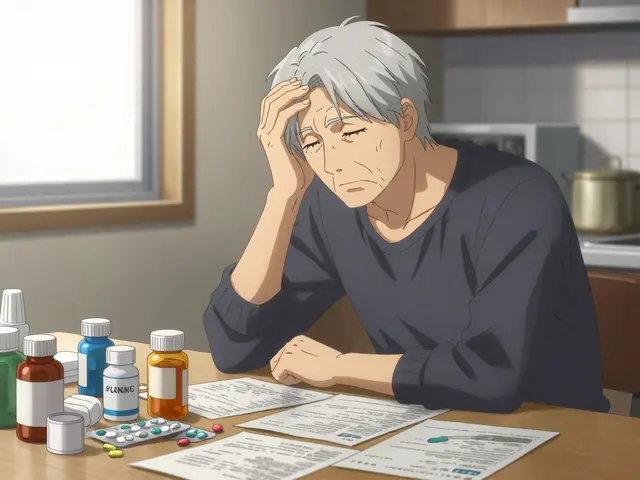
Imagine taking six pills every morning and four at night. You’ve been told these are necessary for your blood pressure, cholesterol, sleep, and joint pain. But lately, you feel more tired than rested, dizzy when you stand up, and confused about which pill does what. This isn’t just a hypothetical scenario-it’s the daily reality for millions of older adults. The medical term for this is polypharmacy, defined as the concurrent use of multiple medications, typically five or more, by a single patient. And the emerging solution? Deprescribing.
Deprescribing isn’t just “stopping drugs.” It’s a deliberate, evidence-based process to reduce or stop medications that may be causing harm or no longer provide benefit. Recent research shows that while the concept sounds simple, the outcomes are complex. Some studies show dramatic improvements in quality of life; others show minimal change in hospital admissions. So, what does the data actually say about reducing medications?
The Core Definition: What Is Deprescribing?
To understand the outcomes, we first need to define the practice. According to the American Geriatrics Society (AGS), deprescribing is the planned and supervised process of dose reduction or stopping of medication that might be causing harm, or no longer be of benefit. This definition, updated in 2023, emphasizes two key points: it must be supervised, and it focuses on harm reduction rather than just pill count.
This differs from simply forgetting to refill a prescription. It requires a multidimensional evaluation of the patient’s actual function, life expectancy, and personal preferences. For example, a 75-year-old with advanced dementia and limited mobility might not benefit from aggressive statin therapy aimed at preventing heart attacks decades down the line. In such cases, deprescribing shifts the focus from long-term prevention to immediate comfort and safety.
- Identify: Review all current medications for necessity.
- Evaluate: Determine if benefits outweigh risks given current health status.
- Taper: Gradually reduce dosage to avoid withdrawal symptoms.
- Monitor: Watch for symptom recurrence or adverse effects.
- Document: Record outcomes to guide future decisions.
What Does the Latest Research Say About Outcomes?
In March 2023, a major systematic review and meta-analysis published in JAMA Network Open analyzed data from numerous trials involving community-dwelling older adults. The findings were nuanced. On average, deprescribing interventions reduced the mean number of medications from a baseline of 9.74. However, the individual impact was modest: approximately seven patients needed intervention to reduce just one prescribed medication per person.
Does that mean deprescribing doesn’t work? Not necessarily. Think of it like cancer screening. The benefit for any single individual might seem small, but when applied across a population of thousands, the cumulative effect is significant. A primary care clinician with 2,000 patients-half of whom meet criteria for polypharmacy-could potentially reduce 140 unnecessary medications through structured deprescribing programs. That’s fewer side effects, lower costs, and less confusion for hundreds of people.
However, other studies paint a different picture. A 2013 analysis in the Canadian Journal of Hospital Pharmacy noted that while deprescribing successfully reduced medication usage and costs, few studies found statistically significant differences in functional outcomes, hospital admissions, or mortality rates. Researchers attributed this lack of clear clinical improvement to short follow-up periods and insufficient statistical power in most trials. Essentially, we know we can stop pills, but proving that stopping them extends life or prevents falls remains challenging.
| Metric | Observed Change | Clinical Significance |
|---|---|---|
| Medication Count | Reduced by ~1-2 meds per patient | High (Directly measurable) |
| Hospital Admissions | No significant difference in most trials | Low/Uncertain (Requires long-term data) |
| Quality of Life | Improved in subjective patient reports | Moderate (Self-reported) |
| Falls Risk | Mixed results; some reduction observed | Moderate (Context-dependent) |
| Mortality | No significant difference in short-term studies | Low (Long-term studies needed) |

Who Benefits Most From Deprescribing?
Not everyone needs to cut back on medications. Deprescribing is particularly critical for specific groups where the risk of drug interactions and side effects outweighs potential benefits. Research highlights several high-priority populations:
- Patients with Advanced Disease: Those with terminal illness or severe frailty often take preventive medications that offer no meaningful improvement in their remaining lifespan.
- Individuals with Severe Dementia: Cognitive decline changes how drugs are metabolized and perceived. Many psychotropic medications used in dementia care have black box warnings due to increased mortality risk.
- Those Experiencing Adverse Drug Reactions: New symptoms like dizziness, confusion, or fatigue may be side effects rather than new diseases. Identifying and removing the culprit drug can resolve these issues without adding more treatment.
- Polypharmacy Patients: Older adults taking ten or more medications face exponentially higher risks of drug-drug interactions. Simplifying regimens reduces this complexity.
For instance, proton pump inhibitors (PPIs) are commonly prescribed for acid reflux. Long-term use has been linked to bone fractures and kidney issues. Studies suggest many patients can safely taper off PPIs if lifestyle changes are implemented, yet they often remain on them indefinitely because no one revisits the original indication.
The Implementation Challenge: Why Is It Hard?
If deprescribing is so beneficial, why isn’t it happening everywhere? The answer lies in systemic and psychological barriers. First, there’s the “prescriber inertia.” Doctors are trained to add treatments, not remove them. Stopping a medication feels risky because if a condition worsens, the prescriber might be blamed. As Dr. Dan Gnjidic, a leading researcher in this field, notes, deprescribing requires the same professional rigor as prescribing, including informed consent and close monitoring.
Second, patients are often reluctant to stop medications. They view pills as symbols of care and protection. The American Academy of Family Physicians reports that patients generally want to take fewer medications but rarely initiate the conversation. They expect clinicians to lead. This creates a stalemate: doctors hesitate to start the discussion, and patients wait for permission to stop.
Third, hospital settings complicate matters. Hospital stays are often too short to see the full effects of medication changes. A patient might be discharged after having a beta-blocker stopped, only to experience rebound hypertension weeks later at home. Effective deprescribing requires seamless coordination between hospitalists and primary care providers, which is frequently lacking in fragmented healthcare systems.

How to Start: A Practical Framework for Clinicians and Patients
Implementing deprescribing doesn’t require a complete overhaul of medical practice. It starts with a shift in mindset. Here’s a practical approach based on guidelines from the Institute for Healthcare Improvement (IHI) and the AGS:
- Conduct a Comprehensive Medication Review: Don’t just look at the list. Ask why each drug was started, what problem it solves, and whether that problem still exists. Use tools like the Beers Criteria to identify potentially inappropriate medications (PIMs).
- Set Shared Goals: Talk to the patient. What matters most to them right now? Is it walking to the mailbox, staying independent, or avoiding hospital visits? Align medication goals with these priorities.
- Stop One Drug at a Time: Changing multiple medications simultaneously makes it impossible to determine which change caused any new symptoms. Taper slowly, especially with benzodiazepines, opioids, and antidepressants, to avoid withdrawal.
- Monitor Closely: Schedule follow-up appointments specifically to assess the effects of deprescribing. Document both positive outcomes (e.g., improved energy) and negative ones (e.g., return of pain).
- Engage Pharmacists: Pharmacists are medication experts. Involve them in the decision-making process to manage interactions and dosing strategies.
Recent pilot programs using electronic health record (EHR) alerts have shown promise. By flagging patients with high medication burdens or known PIMs during routine visits, clinicians can initiate conversations more naturally. One study reported a 15% reduction in PIMs in clinics using these digital tools compared to control groups.
The Future of Deprescribing Research
As the U.S. population ages-with the CDC projecting that 20% of Americans will be 65 or older by 2030-the demand for effective deprescribing strategies will grow. Current research is moving beyond simple medication counts toward more sophisticated endpoints. Scientists are exploring genetic factors that influence drug metabolism, aiming to personalize deprescribing plans. For example, certain genetic markers may indicate a higher risk of side effects from specific antidepressants, guiding safer withdrawal protocols.
There is also a push for longer-term studies. Most existing trials last only six to twelve months. We need data spanning years to understand the true impact on mortality, cognitive decline, and overall longevity. Until then, deprescribing remains a best-practice recommendation supported by moderate-quality evidence, rather than a guaranteed cure-all.
Ultimately, deprescribing is about respecting the patient’s body and life stage. It acknowledges that medicine is not static. What worked ten years ago might not be appropriate today. By embracing this dynamic approach, healthcare providers can help patients live not just longer, but better.
Is deprescribing safe for elderly patients?
Yes, when done correctly. Deprescribing is a supervised process that involves gradual tapering and close monitoring. While abrupt cessation can be dangerous, structured deprescribing under medical guidance minimizes risks and often improves safety by reducing side effects and drug interactions.
Which medications are most commonly targeted for deprescribing?
Common targets include proton pump inhibitors (for acid reflux), benzodiazepines (for anxiety/sleep), anticholinergics (for bladder/urinary issues), and statins (for cholesterol) in patients with limited life expectancy. These drugs often have significant side effects or diminishing returns in older adults.
How do I talk to my doctor about reducing my medications?
Start by asking for a comprehensive medication review. Express your concerns about side effects or complexity. You can say, "I’d like to review which of my medications are still essential for my current health goals." Bring a list of all your prescriptions and over-the-counter supplements to the appointment.
Can deprescribing improve quality of life?
Many patients report improved quality of life after deprescribing, citing less dizziness, better mental clarity, and fewer daily routines to manage. However, objective measures like hospital admission rates show mixed results, suggesting benefits are highly individual and depend on careful selection of candidates.
What is the Beers Criteria?
The Beers Criteria is a widely used guideline developed by the American Geriatrics Society to identify potentially inappropriate medication use in older adults. It lists drugs that should generally be avoided or used with caution due to increased risk of adverse effects in this population.
Does deprescribing save money?
Yes, deprescribing can reduce pharmacy costs significantly. Health systems implementing these programs often report savings that can be reallocated to other high-value care areas. Additionally, reducing adverse drug events lowers emergency room visits and hospitalizations, further cutting costs.





Wendy Engelmann
June 5, 2026 AT 10:47I find this perspective quite comforting. It really highlights how medicine can sometimes feel so impersonal when we are just handed a list of pills without understanding why. The idea of aligning medication goals with personal priorities, like walking to the mailbox or staying independent, resonates deeply with me. It shifts the focus from abstract numbers to real life experiences. I appreciate the emphasis on shared decision making because it empowers patients to take ownership of their health journey. The mention of pharmacists being involved is also a great point since they have such specialized knowledge about drug interactions. It makes me think about my own family members who struggle with multiple prescriptions. Seeing them overwhelmed by daily routines is heartbreaking. This approach could truly restore some dignity and clarity to their lives. It is not just about stopping drugs but about starting conversations that matter. Thank you for sharing this thoughtful analysis.
Mike Crump
June 5, 2026 AT 12:41G'day everyone! Look, I reckon there's a lot of truth in what William says about the system being broken, but let's not get too down on the progress we're making. Deprescribing is basically common sense wrapped up in fancy medical jargon. If you're taking ten pills and feeling like garbage, something's gotta give. The bit about PPIs stuck out to me because I've seen mates stay on those for years after their original reflux issue sorted itself out. It's wild how easily we forget to revisit old prescriptions. But hey, it's not all doom and gloom. The fact that we're even having these conversations now is huge. Doctors are starting to listen more, and patients are asking better questions. That's a win in my book. Let's keep pushing for simpler regimens and more holistic care. Cheers!
Samantha Arbuckle
June 5, 2026 AT 18:04This is such an important topic! 🌟 I love how the article breaks down the steps clearly. It’s empowering to know that we can advocate for ourselves. The part about setting shared goals really hit home for me. What matters most to YOU right now? That question changes everything. 💊➡️🚫 I’ve noticed my own energy levels improve when I simplify my routine. It’s not just about fewer pills; it’s about mental clarity too. ✨ Let’s normalize talking to our doctors about reducing meds if they’re no longer helping. We deserve to feel good, not just be medicated. Keep spreading the word! 🙌
Stephanie Francis
June 7, 2026 AT 06:32The author presents a compelling case for deprescribing, yet fails to adequately address the legal ramifications for physicians who choose to deviate from standard protocols. In many jurisdictions, the liability associated with stopping a medication far outweighs the potential benefits of reduced polypharmacy. This creates a perverse incentive structure where defensive medicine thrives at the expense of patient well-being. Furthermore, the reliance on subjective measures such as quality of life is problematic given the inherent bias in self-reported data. Objective metrics such as hospital admission rates and mortality should remain the primary endpoints for evaluating efficacy. Until the legal framework evolves to support clinical judgment over rigid adherence to guidelines, widespread adoption will remain limited. The proposed framework is theoretically sound but practically unfeasible in a litigious environment.
Hassan Bukhari
June 8, 2026 AT 11:39Look, most people don't actually want to stop their meds. They like the routine. They like feeling like someone is taking care of them, even if it's just a pharmacist calling to refill a script. Deprescribing sounds great in theory, but in practice, it's just another buzzword for cutting costs. Insurance companies love it because it saves money. Patients hate it because they feel abandoned. The whole 'shared decision-making' thing is a joke when the doctor has five minutes to see you. You can't have a deep philosophical conversation about your mortality and medication list in that timeframe. So yeah, keep dreaming about personalized medicine, but reality is still about volume and speed.
Lenny Cruz
June 8, 2026 AT 15:28Actually, the premise that deprescribing is primarily about harm reduction is somewhat misleading. Often, it is about cost containment disguised as benevolence. The pharmaceutical industry would prefer we never talk about stopping drugs. The data cited shows modest reductions in medication counts, which is hardly revolutionary. Moreover, the claim that patients view pills as symbols of protection is a generalization that ignores the vast number of individuals who are desperate to escape the burden of chronic disease management. The real barrier isn't patient reluctance; it's physician laziness. Most doctors are trained to prescribe, not to unprescribe. It requires more effort to taper a drug safely than to add a new one. Until medical education fundamentally changes, this will remain a niche practice for the privileged few who have access to geriatric specialists.
Alyssa Zucker
June 8, 2026 AT 19:04I hear what you're saying about the difficulty of these conversations. It’s scary to think about changing something that’s been a part of your daily routine for so long. I remember when my mom tried to stop her blood pressure meds because she felt fine. She ended up in the ER. It’s a delicate balance. I guess that’s why the monitoring part is so crucial. You can’t just wing it. It takes trust between the patient and the provider. I hope more clinics start offering dedicated time for these reviews. It would make such a difference for families trying to navigate this complexity.
Francis Saul
June 9, 2026 AT 11:01im glad u brought this up fransis. its easy to say just stop the meds but its hard when ur scared. i had my dad try to cut back on his sleep aids and he was a mess for weeks. we had to go super slow. like one tiny bit less every other week. it took months. but eventually he started sleeping better naturally. so yeah, patience is key. dont rush it. talk to yer doc and pharmacist. they can help u make a plan that works for u. its worth the hassle in the end tho. feeling clear headed again is amazing.